Best LT1 Intake Manifold Options for Gen v LT1 and LT-Based Engines
The LT1 and Gen V LT-based engines offer impressive performance potential with the right intake manifold. This article examines five prominent options—from factory-style to high-flow performance manifolds—so you can compare fitment, airflow, and upgrade impact. Each product is evaluated on compatibility, materials, and expected airflow improvements to help you decide which manifold best fits your build and goals.
| Product | Brand | Key Features |
|---|---|---|
| 102 Low-rise Intake Manifold | Pateyney | For 14-21 Corvette Camaro Gen V LT1 |
| GM Performance Parts 24502592 | GM Performance Parts | Standard size packaging dimensions |
| LT2 Intake Manifold | Michigan Motorsports | Fits LT2; popular power upgrade; requires minor mods |
| BTR LT1 Trinity | BTR Brian Tooley Racing | Gen V LT 12663577 LT4 fuel line note; US-made |
| Atomic 2701 AirForce | Atomic | High-flow, 103mm throttle bore, reduced heat soak |
The following sections summarize each manifold’s profile, highlighting where it shines and where to expect trade-offs. This should help readers align a manifold choice with their engine type, fuel system, and desired power band.
102 Low-rise Intake Manifold For Gen V LT1

The 102 Low-rise intake manifold is designed specifically for 14-21 Corvette Camaro Gen V LT1 engines. This manifold favors a compact, lower-rise profile to minimize hood clearance issues while still delivering improved airflow over stock manifolds. It is well-suited for street-driven LT1 builds seeking enhanced throttle response and mid-range power without excessive height adjustments. Material and exact runner geometry are optimized to support daily driving reliability and straightforward installation.
GM Performance Parts 24502592 Intake Manifold

GM Performance Parts 24502592 offers a factory-backed upgrade with dependable OE compatibility. While the listed features emphasize packaging dimensions, this manifold is typically selected for straightforward installation and proven integration with GM engine control systems. It can serve as a reliable upgrade path for enthusiasts seeking a direct fit that preserves factory calibration while delivering modest airflow gains for Gen V LT1 setups.
LT2 Intake Manifold For LT2 (GM 12697714)

The LT2 intake manifold is a common upgrade for LT2-equipped builds and is described as a popular power upgrade for LT1, L86, and other Gen V LT-based engines. It may require minor installation modifications for forward-facing applications, but it offers significant airflow improvements for higher RPM and performance-oriented builds. This makes it appealing for enthusiasts pursuing more aggressive horsepower curves while maintaining reasonable reliability with proper tuning.
BTR LT1 Trinity Intake Manifold Gen V LT

The BTR LT1 Trinity manifold is a performance-focused option for direct-injected Gen V LT engines. Notable notes include a recommended LT4 fuel line for optimal clearance and a stated compatibility constraint that it will not work with LT4 cylinder heads. This makes it best suited for builds specifically using Gen V LT motor families and emphasizes high-flow characteristics and tailored clearances. It is proudly made in the USA, aligning with durability expectations for higher-performance applications.
Atomic 2701 AirForce Intake Manifold
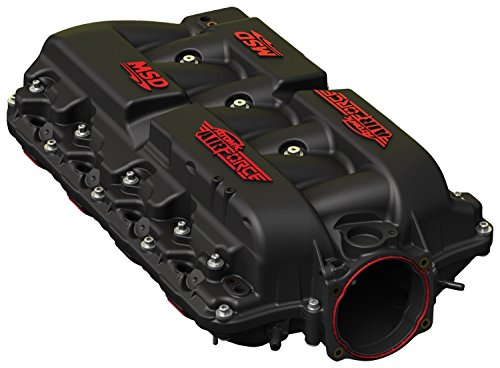
The Atomic 2701 AirForce intake manifold emphasizes high-flow performance with a polymer-based design to resist heat soak and reduce weight. It features a 103mm throttle bore, enabling the use of larger throttle bodies for greater airflow. Lingenfelter testing suggests notable power gains at the rear wheels, which makes it attractive for enthusiasts seeking substantial horsepower improvements while maintaining reasonable reliability and heat resistance during extended driving.
Dtomi Engine Intake Manifold Gasket Runner Seals

Dtomi’s gasket runner seals are designed as a compatible replacement for multiple LT-based engines, ensuring a reliable seal within intake manifolds. While not a manifold itself, these seals play a critical role in optimizing manifold-to-head sealing, reducing the risk of vacuum leaks, and supporting consistent air-fuel delivery. The packaging references multiple 2014-2023 GM platforms, including LT1 and LT2 configurations, making it a sensible addition to a performance upgrade kit.
DEEPMOTOR LS1/LS2/LS6 102mm Casting Bolted Manifold

DEEPMOTOR’s bolt-in, cast aluminum manifold supports up to a 102mm throttle body and includes fuel rails. This makes it a robust option for serious performance builds that require a strong intake plenum and integrated fueling hardware. It’s particularly relevant for LS-based engines, where similar manifold architectures are common, but it can be adapted for broader Gen V LT applications with appropriate compatibility checks.
JEGS Fabricated Intake Manifold

JEGS offers a fabricated intake manifold designed for GM LS1, LS2, and LS6 engines, with capacity for 92mm or 102mm throttle bodies. It includes a fuel rail kit, intake seals, hardware, and vacuum fittings, presenting a comprehensive upgrade package for performers who want a ready-to-install solution with expanded throttle body compatibility. It suits builders aiming for a broad RPM range and modernized intake performance.
Buying Guide: Key Purchase Considerations
When choosing an LT1 or Gen V LT-based intake manifold, consider these factors to align with performance goals and installation constraints.
- Engine compatibility: Verify whether the manifold is designed for LT1, LT2, or other Gen V LT engines, and check whether forward-facing or standard configurations are required for your setup.
- Throttle body size: Larger throttle bores (e.g., 103mm) enable higher airflow but may require upgrades to the throttle body, sensors, and tuning. Ensure the rest of the intake and fuel system can support the change.
- Mounting and clearance: Some manifolds have height or clearance constraints. Check hood clearance, brake booster proximity, and accessory interference for your vehicle and setup.
- Fuel system integration: Certain manifolds include fuel rails or require additional fuel-line considerations. Confirm compatibility with your current fuel system and ECU.
- Delivery and tuning: Upgrading intake can necessitate ECU recalibration and fuel mapping. Plan for a professional tune or data-logging to optimize power and reliability.
- Material and weight: Aluminum and polymer materials offer benefits in heat resistance and weight. Polymer options often reduce heat soak but may have different durability characteristics under high-stress conditions.
- Installation complexity: Some manifolds are direct fits, while others require minor or significant modifications. Assess your mechanical skill level or budget for professional installation.
- Brand support and compatibility notes: Some sections mention specific constraints (like LT4 heads or US-made components). Read manufacturer notes to avoid compatibility pitfalls.
In choosing a manifold, users should balance intended use (street, daily driving, or track), the power target, and the level of supported tuning. Evaluating airflow improvements in relation to other upgrades, such as camshafts, exhaust, and fueling, helps ensure the manifold delivers meaningful benefits without compromising reliability.