Best Gas Caddy for Boat: Durable Marine Fuel Storage Solutions
When refueling boats, having a reliable, portable gas caddy is essential for safety, efficiency, and convenience. This guide highlights five top options designed for marine use, featuring robust materials, easy transfer pumps, and corrosion resistance. Each product is evaluated for capacity, transfer mechanics, portability, and spill prevention to help you choose the right fuel caddy for dockside fueling, on-deck topping off, or transporting gasoline, diesel, or kerosene to fixed locations.
| Product | Brand | Capacity | Transfer Type | Special Features |
|---|---|---|---|---|
| Garvee 16 Gallon Gas Can | Garvee | 16 gallons | Manual siphon & hose | Durable HDPE, dual shut-off valves, 360° nozzle |
| LAUCO Portable Marine Fuel Tank | LAUCO | 6.34 gallons | Hose & vented-cap transfer | Leak-preventing vent seal, marine-grade construction |
| Scepter Flo ’N Go 14 Gallon | Scepter | 14 gallons | Manual or gravity siphon | 6″ wheels, durable HDPE, gravity/pump modes |
| Scepter 14 Gallon Gas Caddy with Electric Pump | Scepter | 14 gallons | Electric pump with 10 ft hose | Fast transfer, no-spill pump handle |
| EltraWors 15 Gallon Gas Can With Pump | EltraWors | 15 gallons | Manual pump siphon | Industrial-grade HDPE, dual shut-off valves |
Below are five selected models tailored for boat fueling, docks, and on-water operations. Each entry includes a direct Amazon link, an image, and a concise feature summary to aid quick comparison.
Garvee 16 Gallon Gas Can With Wheels
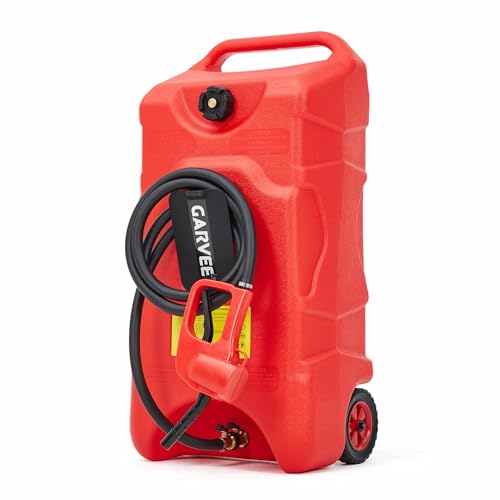
The Garvee 16 Gallon Gas Can provides substantial capacity for on-board fuel needs and remote topping off. It uses industrial-grade HDPE for corrosion resistance and includes dual shut-off valves with vapor-tight seals to minimize spills. A manual transfer pump and a 10 ft hose enable precise refueling from the caddy to marine equipment, generators, or trailers. Built for rugged outdoor use, it supports transportation across varied terrains with wheels and a top handle.
LAUCO Portable Marine Fuel Tank

LAUCO’s marine fuel tank delivers compact capacity with a focus on secure transfer. The 6.34-gallon tank uses a long transfer hose and a robust cap design, ensuring a tight seal and minimizing leakage. The unit emphasizes strong compatibility with common marine interfaces and is suited for decks, docks, and in-boat fuel transfers where space is a consideration.
Scepter Flo ’N Go 14 Gallon

The Flo ’N Go 14 Gallon is a versatile, lightweight option designed for marine and rural fueling. It features 6-inch wheels for traversing docks and uneven surfaces, a high-density polyethylene body, and dual fueling modes: gravity flow and manual siphon. The 10-foot hose allows reach to aboard engines, generators, and lawn equipment, making it a practical choice for boats needing dependable shore-to-boat transfers.
EltraWors 15 Gallon Gas Can With Pump

EltraWors combines a 15-gallon capacity with a robust hand pump system to support efficient fuel transfer on boats and trailers. Its industrial-grade HDPE construction provides resistance to UV exposure, while dual shut-off valves and vapor-tight seals help prevent spills. The ergonomic pump and a long hose facilitate controlled refueling of marine equipment, ATVs, and power generators from the caddy.
Scepter Duramax Flo ’N Go 14 Gallon (2025)

The Duramax Flo ’N Go 14 Gallon is engineered for demanding marine and outdoor environments. It includes a large-capacity 14-gallon tank, a rugged wheel system, and a gravity/pump-siphon mode with a 2.0 GPM siphon flow. This model emphasizes durability and spill prevention, with corrosion-resistant materials and a secure nozzle arrangement for reliable, mess-free fueling on boats, farms, and work sites.
Buying Guide: Key Considerations For Marine Gas Caddies
- Capacity and duration: Choose a size that matches typical fueling needs on your boat, dock setup, and backup storage. Larger tanks reduce frequent refills but are heavier to move.
- Transfer mechanism: Manual siphon, gravity flow, and electric pumps each have trade-offs. Manual pumps are simple and reliable; electric pumps offer speed and convenience but require power sources.
- Material and durability: HDPE is common for fuel caddies due to corrosion resistance and UV stability. Look for reinforced walls and impact resistance for rough docks or deck use.
- Portability and handling: Wheels and top handles ease transport on varying terrain and boat ramps. Consider wheel size and overall weight when loaded.
- Leak prevention and safety: Dual shut-off valves, vapor-tight seals, and anti-static grounding reduce spills and static hazards. A secure cap design minimizes accidental openings.
- Compatibility and versatility: Some models support multiple fuels (gasoline, diesel, kerosene) and may feature both siphon and gravity modes, expanding their use beyond boats.
- Maintenance and storage: Hose length, nozzle design, and venting influence maintenance needs. Store in a shaded area to minimize aging from sun exposure.
- Regulatory considerations: Ensure the design complies with local fuel handling standards and maritime safety guidelines for portable fuel containers used near water.