Best OBDII Code Reader for Cars in 2026
The right OBDII code reader helps drivers and DIYers quickly diagnose and clear engine trouble codes, monitor vehicle data, and confirm repairs. This guide focuses on five reliable options that cover a wide range of features—from basic code reading to live data, freeze-frame, MIL reset, and advanced diagnostics. Each product is evaluated on compatibility, ease of use, data depth, and value for American readers seeking a dependable tool for ongoing vehicle maintenance.
Product Snapshot
- ANCEL AD310 Classic Enhanced Universal OBD II Scanner
- VDIAGTOOL VD10 OBD2 Scanner
- MOTOPOWER MP69033 Car OBD2 Scanner
- VEKOOTO VK310 OBD2 Scanner
- Autel AL319 OBD2 Scanner
Summary Table
| Product | Typical Uses | |
|---|---|---|
| ANCEL AD310 | Compact, quick read/clear, active on emission systems | DIY diagnostics, quick CEL checks |
| VDIAGTOOL VD10 | Clear code definitions, large built-in database, user-friendly | Frequent readers, needs straightforward interpretations |
| MOTOPOWER MP69033 | Wide protocol support, real-time data, cost-effective | Most 1996+ cars, multi-language |
| VEKOOTO VK310 | Comprehensive data, freeze frame, I/M readiness | Standard CEL checks with live data |
| Autel AL319 | Plug-and-play, broad vehicle coverage, easy interface | First-time users, basic diagnostics and resets |
ANCEL AD310 Classic Enhanced OBD II Scanner
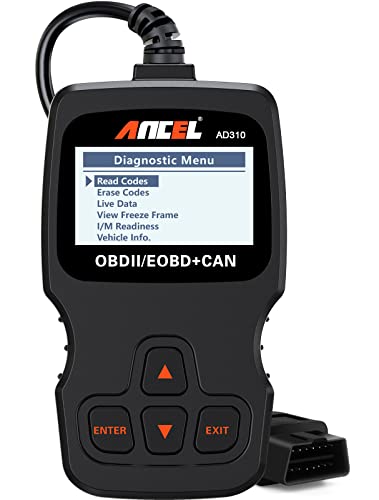
The ANCEL AD310 is a compact, widely compatible OBD II scanner designed for 1996 and newer vehicles. It provides quick fault code reading and clearing for emission systems, along with live data, freeze-frame, I/M readiness, and vehicle information. It supports standard OBDII protocols and is praised for straightforward operation, making it suitable for DIYers and pros who need fast results without extra setup. Built with a dense, durable cable and a readable display, the AD310 prioritizes reliability in a small form factor. It powers directly from the vehicle, avoiding battery requirements.
Key features include a durable 2.5-foot cable, a simple button layout, and a bold display that presents diagnostic results clearly. The device succinctly covers reading and clearing codes, data stream, and readiness monitors, helping users identify issues and verify repairs quickly. While compact, its performance aligns with common repair tasks and routine maintenance checks.
VDIAGTOOL VD10 OBD2 Scanner
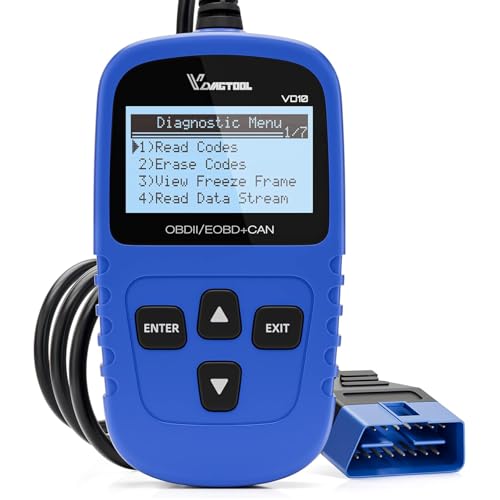
The VDIAGTOOL VD10 is positioned as a user-friendly tool for DIYers and casual car owners. It focuses on quick diagnosis with the ability to read and clear codes, view live data, and access I/M readiness and vehicle information. The built-in database provides immediate DTC definitions, reducing the need to search online. This model also emphasizes ease of use, offering straightforward navigation and a TFT-style display for clarity in different lighting conditions.
VD10 can retrieve generic and manufacturer-specific codes, supporting a broad array of engines and systems. The device aims to help users confirm root causes, interpret faults, and resolve issues efficiently, with a focus on practical, on-the-spot troubleshooting. It’s particularly appealing to those who want reliable diagnostics without investing in more advanced or expansive scanner kits.
MOTOPOWER MP69033 OBD2 Scanner

The MOTOPOWER MP69033 offers robust OBD II diagnostics with a built-in DTC lookup, detecting the cause of the check engine light, reading and erasing codes, and displaying live data. It supports nine protocols to cover most 1996 US-based, 2000 EU-based, and Asian vehicles, along with 12V diesels. The 2.8-inch LCD with backlight makes data visible in variable lighting, while the device powers directly from the car, eliminating the need for external batteries. It also provides basic data like engine speed, coolant temperature, and vehicle speed, enabling quick assessments during road tests or maintenance.
With multilingual support and broad compatibility, MP69033 is a versatile choice for households with multiple vehicles or for use in community mechanics setups. The interface is designed to be straightforward, making it accessible for drivers who are new to OBD scanning yet need reliable, actionable information.
VEKOOTO VK310 OBD2 Scanner

The VEKOOTO VK310 is built for broad OBDII compatibility, supporting CAN, KWP2000, J1850 VPW/PWM, and ISO9141 protocols. It provides quick read/clear of CELs, shows fault code definitions, and includes freeze-frame data and I/M readiness to assist with pre-smog checks. The device emphasizes a straightforward workflow: connect, scan, interpret, and clear codes after repairs. The VK310’s live data and freeze-frame capabilities help users pinpoint abnormal sensor readings and trends, improving diagnostic confidence during repairs or routine maintenance.
Autel AL319 OBD2 Scanner
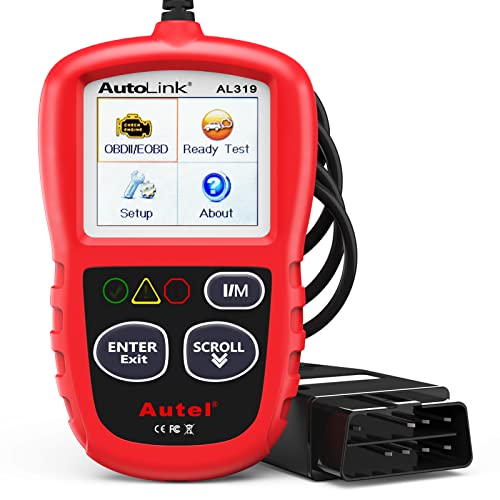
Autel’s AL319 is a user-friendly OBD2 scanner designed for end users and DIYers. It offers Reading and Clearing DTCs, DTC Look Up, Live Data, Freeze Frame, and I/M Readiness. The AL319 supports multiple languages and a broad spectrum of post-1996 OBDII vehicles, making it suitable for households with diverse car models. Its plug-and-play design and intuitive interface appeal to those who want quick, practical diagnostics without steep learning curves. This model emphasizes fast results and a simple workflow to help users identify root causes early in the repair process.
Buying Guide: Choosing The Right OBDII Code Reader
- Vehicle compatibility: Verify that the device supports your car’s year, make, and model, as well as the required protocols (OBDII, CAN, ISO9141, KWP2000, J1850, etc.).
- Core functions: Decide which features you need—basic code reading and clearing, live data streaming, freeze-frame, I/M readiness, VIN retrieval, or more advanced diagnostics like EVAP tests and O2 sensor checks.
- User experience: For beginners, a straightforward interface and clear DTC definitions are crucial. More experienced users may want deeper data graphs, multiple languages, or expanded data logging.
- Data presentation: Look for readable displays, backlit screens, and intuitive menus. Larger screens with clear units help interpret data quickly during roadside or garage use.
- Power and portability: Most units draw power from the vehicle’s OBDII port. Consider a compact design with durable build quality for frequent use in workshops or on cars in the driveway.
- Updateability and support: Some models offer database updates and ongoing support. This can extend the utility of the tool across multiple vehicles and model years.
- Value considerations: If you own multiple vehicles or work with friends’ cars, a model with broader protocol support and reliable DTC lookup may provide better long-term value despite a higher upfront cost.
- Limitations: Some scanners only read codes and cannot perform reset actions on all systems (ABS, SRS, transmission). Review the product notes to ensure it meets your expectations for reset capabilities.
- Language and region: For non-English speakers or users in multilingual households, consider tools with multi-language support and clear translations for DTC definitions.
Choosing an OBDII code reader involves balancing budget, vehicle compatibility, and the level of diagnostic depth you require. For casual use, entry-level scanners like the ANCEL AD310, VEKOOTO VK310, or Autel AL319 offer essential code reading with straightforward interfaces. For more detailed insight—live data trends, comprehensive DTC libraries, and deeper fault analysis—models like the MOTOPOWER MP69033 or the VD10 may deliver more value over time. When in doubt, verify that the device covers your preferred car brands and supports essential features you plan to use regularly.