Best Carb for LS Swap: Essential Upgrades for Modern V8 Swaps
Carburetor replacements and intake solutions play a critical role in optimizing an LS swap. This guide highlights practical carb and intake-related upgrades that improve airflow, throttle response, and overall engine performance in LS1/LS2/LS3/LS6 and LSX builds. Each option below is analyzed for fit, compatibility, and value to help you choose the best carb-related component for your project.
| Product | Brand | Key Benefit | Link |
|---|---|---|---|
| RiAiCiING 4” LS Swap Cold Air Intake Kit | RiAiCiING | Improved airflow for horsepower and throttle response | https://www.amazon.com/dp/B0DK2RK1HG?tag=atlantaspandsix-20 |
| LS Swap Retrofit Engine Aluminum Oil Pan Kit | Hypertune | Increased clearance and improved oiling for LS swaps | https://www.amazon.com/dp/B0BYZ1PMQB?tag=atlantaspandsix-20 |
| LS Engine Serpentine Bracket Alternator & Power Steering Pump Swap | RJSPHH | Streamlined serpentine routing for LS installs | https://www.amazon.com/dp/B0B7G2ZCW1?tag=atlantaspandsix-20 |
| maXpeedingrods LS Engine Swap Mount Adapter Kit | maXpeedingrods | Solid mounting solution for G-Body swaps | https://www.amazon.com/dp/B083KDM5DD?tag=atlantaspandsix-20 |
| Aluminum Single Plane Carb Intake Manifold For GM LS Gen III/IV | Bario | Precise intake airflow for LS engines | https://www.amazon.com/dp/B0DF2JD64K?tag=atlantaspandsix-20 |
style=”margin-top: 14px;”>Note: The table lists five representative options that align with carb and intake-focused LS swap needs. Each product page offers additional details on compatibility and installation considerations.
Below are in-depth sections for five selected products, including direct product links and image references. Each entry highlights how the item contributes to LS swap performance without assuming site-wide pricing or promotions.
RiAiCiING 4” LS Swap Cold Air Intake Kit
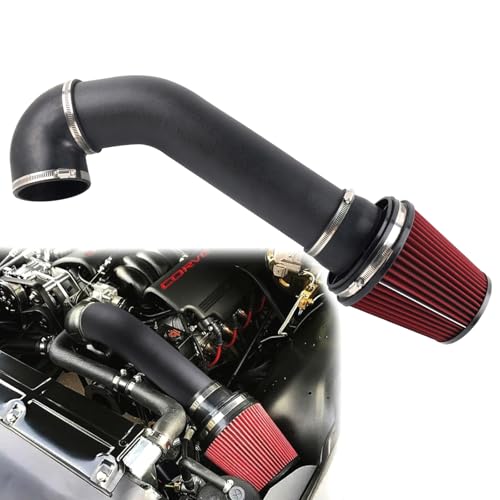
The RiAiCiING 4” LS Swap Cold Air Intake Kit provides a universal design suitable for a wide range of LS engines, including LS1, LS2, LS3, LQ4, LQ9, and beyond. Its primary benefit lies in delivering a less restrictive air path, enabling increased airflow to the engine. This can translate to improved horsepower, torque, and throttle response. The kit supports speed density and round MAF sensors, though some components (such as couplers and clamps) may be required separately. The design prioritizes clearance between radiators and accessories to accommodate various swap configurations.
Compatibility notes indicate the kit’s versatility for Restomod and classic-era builds, with examples shown on a 5.7L LS1-swapped Chevelle. For builders seeking an upgrade that emphasizes air intake efficiency and a deeper engine note on throttle, this kit represents a straightforward path to better air delivery without extensive custom fabrication.
LS Swap Retrofit Engine Aluminum Oil Pan Kit

This aluminum oil pan kit is designed for 55-87 GM rear-wheel-drive applications originally equipped with small- or big-block Chevys, now adapted for LS swaps. Cast aluminum offers a lightweight, high-strength solution with enhanced heat dissipation. The kit emphasizes maximum clearance to the chassis, helping with installation efficiency in tight engine bays. The reference notes indicate compatibility with various oil filter models and a windage tray option, supporting consistent oil control and engine longevity in long-hood, swap-based builds.
Key considerations include ensuring the oil pan geometry aligns with the intended oil capacity and crankshaft stroke. The product promises durability, corrosion resistance, and improved engine location flexibility, which can be critical for achieving a robust LS swap fitment without compromising under-hood space or oiling performance.
LS Engine Serpentine Bracket Set for Alternator & Power Steering

RJSPHH’s LS Engine Serpentine Bracket Set focuses on simplified belt-driven accessory routing for LS swaps. By repositioning the power steering pump and rotating the alternator, the kit helps consolidate the serpentine system, reducing interference with intake manifolds and throttle assemblies. The bracket design aims to fit LS intake manifolds smoothly, contributing to a cleaner engine bay layout and more straightforward installation.
When planning an LS swap that requires careful accessory alignment, this bracket kit can minimize fitment challenges and offer improved belt contact points. It’s notable for applications where a tight packaging of components is essential and where a single, organized serpentine path increases reliability under demanding driving conditions.
maXpeedingrods LS Engine Swap Mount Adapter Kit

This mount adapter kit from maXpeedingrods provides a practical mounting solution for LS-based Gen3/Gen4 engines into G-Body vehicles (1973-1988). It supports a broad range of LS variants, including LS1, LS2, LS3, LS6, LSX, LQ4, and LQ9, with a focus on ease of installation and corrosion resistance through powder-coated spacers. The design aims to position the crankshaft centerline for improved performance and alignment, a key consideration when swapping into older platforms that require precise engine and drivetrain alignment.
Engine swap projects must verify alignment tolerances, drive shaft clearance, and sensor compatibility. This adapter kit emphasizes accuracy, durability, and fitment quality, making it a reliable choice for builders prioritizing a solid, repeatable installation process in classic to modern swap contexts.
Aluminum Single Plane Carb Intake Manifold For GM LS Gen III/IV

The Aluminum Single Plane Carb Intake Manifold from Bario targets LS Gen III/IV engines with LS3/L92-style rectangular ports. The single-plane design is intended to optimize high-RPM air delivery, typically benefitting performance-oriented builds. This manifold emphasizes precise fitment and reliable power delivery, providing a strong base for tuning and improving throttle response in LS swaps where airflow efficiency is a priority.
Engineers should consider port matching and compatibility with the chosen throttle body, fuel rails, and intake sensors. The part number references and compatibility notes indicate a focus on performance accuracy, making this option appealing for builders seeking a robust, purpose-built intake solution for LS engines configured in modern or restomod applications.
Buying Guide: Key Purchase Considerations For An LS Swap Carb/Intake Upgrade
- Fitment and vehicle type: Verify compatibility with your specific chassis and engine family (LS1, LS3, LSX, etc.). Some parts list broad applicability, while others target particular engine bays and configurations.
- Airflow and performance goals: For throttle response and horsepower gains, prioritize components that reduce restriction, such as high-quality cold-air intakes and well-matched intake manifolds.
- Oil pan and clearance: When swapping into older bodies, oil pan geometry and chassis clearance are critical. Aluminum pans can reduce weight but require careful installation to ensure ground clearance and sump capacity.
- Accessory routing: Serpentine brackets and mounts can simplify belt routing and reduce interference with intake runners. Proper alignment reduces belt wear and improves reliability.
- Materials and durability: Aluminum components provide strength with lighter weight, but verify corrosion resistance and coating quality for long-term performance in varied climates.
- Sensor compatibility: Some intake kits require additional couplers, clamps, or sensors. Plan for battery, MAF, MAP, and fuel sensor compatibility to avoid fitment issues.
- Welding, cutting, and fabrication needs: Certain swap components may necessitate minor modifications. Decide whether a kit’s level of fabrication work fits your skill or if you’ll need a shop.
- Warranty and support: Check product warranties and seller support, especially for critical drivetrain components used in high-stress LS swaps.
- Budget vs. benefit: Compare price against gains in airflow, reliability, and ease of installation. Some higher-priced kits offer better fitment and durability, reducing install time and risk of leaks or malfunctions.
- Installation time and complexity: Some kits are plug-and-play, while others require engine-location adjustment, drilling, or custom mounting. Plan accordingly to minimize downtime.