Best Disc Brakes for MTB: Top Hydraulic and Mechanical Kits
Choosing reliable disc brakes is essential for mountain biking safety and performance. This guide highlights five standout MTB brake kits, spanning hydraulic and mechanical systems, to help riders compare pros, compatibility, and maintenance needs. Each option emphasizes strong stopping power, rotor compatibility, and durable materials for diverse terrain and weather conditions.
| Product | Type | Rotors | Key Benefit |
|---|---|---|---|
| TOBWOLF 1 Pair MTB Disc Brake Set (Hydraulic) | Hydraulic | 160mm | Ceramic pads; aluminum calipers; left front/right rear setup |
| TOBWOLF Upgrade Four-Piston MTB Disc Brake Set | Hydraulic | 160mm | Four-piston; self-adjusting pad system; strong braking |
| BUCKLOS MTB Hydraulic Disc Brakes Set | Hydraulic | 160mm | Dual piston; ergonomic lever; heat dissipation |
| Liuceny 2-Pistons MTB Disc Brake Set | Hydraulic | 160mm | Two-piston; integrated oil cylinder; quiet braking |
| TOBWOLF 1 Pair MTB Front & Rear Cable Disc Brake | Mechanical | 160mm | Post mount; budget-friendly; straightforward install |
TOBWOLF 1 Pair MTB Disc Brake Set, Hydraulic Disc Brake Kit

TOBWOLF’s hydraulic kit features a left-front and right-rear control scheme, with 160mm rotors and aluminum calipers. The upgraded ceramic brake pads reduce rotor wear and improve heat resistance. The system is designed to withstand diverse weather and riding conditions, though installation requires proper alignment and exhaust of hydraulic fluid. The kit includes pads and hardware, and notes that lever placement can be adjusted by switching the brake cable if needed.
TOBWOLF Upgrade Four-Piston MTB Disc Brake Set

This four-piston hydraulic system uses a dual-sided caliper design with CNC-machined aluminum bodies. It delivers strong stopping power with improved heat dissipation for long descents. Includes a self-adjusting brake pad retraction system and tool-free pad replacement. Like other hydraulic sets, the left-front/right-rear operation may vary by rider and region, and cable switching is possible if needed.
BUCKLOS MTB Hydraulic Disc Brakes Set

BUCKLOS HB-323 hydraulic set uses dual pistons and 160mm rotors for balanced braking. The design emphasizes heat dissipation and rotor alignment. The ergonomic three-finger lever suits many riders, and the system is compatible with 22.2 mm handlebars. The kit emphasizes lightweight aluminum components and corrosion resistance, providing reliable braking across varied MTB terrains.
Liuceny 2-Pistons MTB Disc Brake Set

Liuceny’s 2-piston hydraulic set features a robust aluminum alloy build with an integrated oil cylinder design for strong, consistent braking. It supports precise control and lever reach suitable for a wide range of handlebars. The pads are resin-metal composite for quiet operation while avoiding rotor damage, and the design emphasizes reliable performance with one- or two-finger braking in most situations.
TOBWOLF 1 Pair MTB Front & Rear Cable Disc Brake
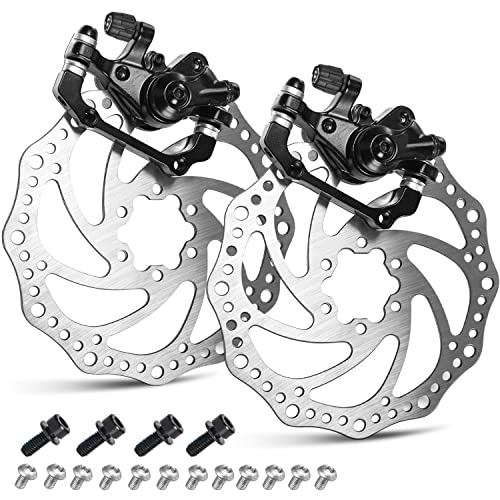
This mechanical, cable-actuated system uses 160mm rotors with post-mount calipers. It includes rotors, cables, levers, and fixing bolts. The kit provides front and rear compatibility with standard 74mm and 51mm mounting spacings. It’s a cost-effective option for riders who prefer straightforward servicing and compatibility with a broad range of frames.
Buying Guide: Key Purchase Considerations
- System type: Hydraulic brakes offer stronger, more consistent stopping power and better modulation, especially under heat, but require more maintenance. Mechanical brakes are simpler and cheaper but may offer less consistent performance in long descents.
- Rotor size and compatibility: 160mm rotors are common; larger rotors provide more stopping power but may require frame or caliper clearance adjustments. Check hub compatibility and mounting standards (post mount vs IS).
- Caliper design and piston count: Four-piston setups generally provide greater grip and fade resistance on steep, technical terrain; two-piston setups are common and lighter, suitable for casual to mid-level riding.
- Pad material and heat management: Ceramic or resin-metal pads influence wear, noise, and heat transfer. Look for good heat dissipation channels and rotor design to prevent warping during long descents.
- Lever ergonomics: Ensure lever reach and pull feel match your hand size; consider three-finger lever options for easier control on rough trails.
- Maintenance and compatibility: Confirm the kit includes necessary hardware, and verify compatibility with your frame, handlebars, and prior components. Some kits allow cable-side swaps to adjust front/rear control if needed.
- Durability and weather resistance: Aluminum calipers and corrosion-resistant rotors improve longevity in rain, mud, and snow. Ensure proper sealing and regular maintenance for peak performance.
- Installation complexity: Hydraulic systems typically require more careful setup, bleeding, and alignment. Mechanical kits are more forgiving for DIY installations but still require proper alignment and tightening.