Best Car Diagnostic Tester: Top OBD2 Scanners for 2026
In today’s vehicle maintenance landscape, a reliable car diagnostic tester is essential for quickly identifying engine issues, monitoring emissions readiness, and clearing trouble codes. This guide curates five standout OBD2 scanners that cover a range of needs—from budget-friendly basics to advanced diagnostics. Each model reads and clears codes, displays live data, and supports common OBDII protocols. Read on to compare key capabilities, compatibility, and how each tool can help keep your vehicle running smoothly.
Summary Table of Chosen Products
| Product | Brand | Key Benefit | OBDII Features |
|---|---|---|---|
| ANCEL AD310 Classic Enhanced Universal OBD II Scanner | ANCEL | Compact, accurate engine fault code reader with quick results | Read/clear codes, live data, freeze frame, I/M readiness |
| MOTOPOWER MP69033 OBD2 Scanner | MOTOPOWER | Wide protocol support, multi-language display | 9 protocols, read/erase codes, live data, I/M readiness |
| FOXWELL NT301 OBD2 Scanner | FOXWELL | Live data and VIN retrieval for quick diagnosis | Read codes, live data, MIL turn-off, VIN read |
| ANCEL AD410 Enhanced OBD2 Scanner | ANCEL | Advanced diagnostics with O2/EVAP testing | Read/clear codes, O2/EVAP tests, MIL reset |
| VDIAGTOOL VD10 OBD2 Scanner | VDIAGTOOL | Affordable, user-friendly with extensive DTC library | Read/clear codes, live data, I/M readiness |
ANCEL AD310 Classic Enhanced Universal OBD II Scanner
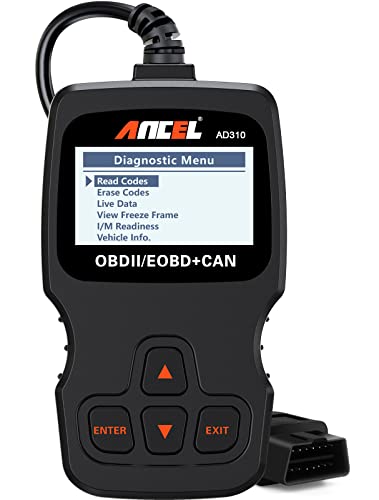
The ANCEL AD310 combines affordability with essential OBD2 capabilities. It is widely recommended for quickly identifying the cause of a check engine light and reading or clearing emission-related trouble codes. The device supports live data and freeze-frame viewing, which helps in diagnosing the root cause after repairs. It is powered via the vehicle’s OBDII port, so no battery or charger is needed, simplifying field use. The AD310’s compact build and clearly labeled buttons support straightforward operation for both DIYers and professionals.
Its key strengths include a robust build with a thick 2.5-foot cable, portability, and a screen that presents results clearly. The AD310 is designed to provide fast, accurate results, enabling users to understand vehicle health without specialized knowledge. It handles a wide range of OBDII vehicles manufactured after 1996 and supports common diagnostic functions such as reading and clearing codes, viewing live data streams, and monitoring readiness tests. This model is a practical entry point into vehicle diagnostics.
Ideal use cases encompass routine maintenance, quick checkups before an oil change, and interim troubleshooting before a trip. It’s particularly suited for those seeking a no-fuss scanner that delivers reliable DTC information in seconds, directly from the OBDII port. While it lacks some advanced features found in pricier tools, the AD310 remains a solid choice for essential diagnostics and ongoing vehicle monitoring.
MOTOPOWER MP69033 Car OBD2 Scanner

The MOTOPOWER MP69033 scanner emphasizes broad compatibility and practical diagnostics. It supports nine protocols, making it suitable for most cars manufactured since 1996, including US, EU, and Asian models. The device includes a built-in DTC lookup library, which speeds up fault code interpretation, reducing the need for online searching. A clear 2.8-inch LCD display with backlighting ensures readability in various lighting conditions. Like many OBD2 readers, it draws power directly from the vehicle, avoiding the need for external batteries or chargers.
Users gain access to features such as code reading and erasing, freeze-frame data, I/M readiness checks, vehicle information retrieval, and real-time data streams. The MP69033’s multilingual support—English, German, Dutch, Spanish, French, and Italian—broadens its appeal for an international audience. This scanner is a strong option for budget-conscious buyers who still want robust diagnostic capabilities and broad vehicle coverage.
Overall, the MP69033 is well-suited for DIY maintenance, quick diagnostics before road trips, and educational use for those learning about car electronics. It’s not as feature-rich as premium models, but its balance of price, protocol support, and user-friendly interface makes it a dependable everyday tool for car owners and hobbyists.
FOXWELL NT301 OBD2 Scanner

The FOXWELL NT301 focuses on essential diagnostic features with a professional touch. It enables users to read DTCs, access emissions readiness status, and turn off the check engine light (MIL) once repairs are complete. The device supports live data graphs and data logging, which helps identify trends in sensor performance over time. A VIN retrieval feature provides quick vehicle identification, useful when troubleshooting multiple vehicles or when model-specific codes appear.
While NT301 handles core functions well, it is designed primarily as a basic diagnostic tool rather than a comprehensive, multi-system scanner. It does not support ABS, SRS, or transmission system scanning, and its capabilities are best suited for fundamental code reading, live data viewing, and basic MIL management. This makes it an excellent choice for beginners or users who prioritize straightforward, fast diagnostics without a steep learning curve.
In summary, the NT301 delivers reliable, straightforward diagnostics with clear results. It’s a practical option for everyday use, small repair shops, and automotive learners who need a dependable tool to identify common engine-related faults and monitor vehicle readiness for inspections.
ANCEL AD410 Enhanced OBD2 Scanner

The ANCEL AD410 is designed for more comprehensive OBDII diagnostics, with enhanced capabilities for emissions-related diagnostics and system testing. It can quickly read and clear fault codes, with a large built-in DTC library and multivariate code lookup, enabling faster fault identification without external searches. It also supports testing of O2 sensors and EVAP systems, offering insights into fuel system performance and leak detection that can help refine repairs and improve efficiency.
Important considerations for AD410 users include its focus on engine-related diagnostics; it does not support ABS, SRS, or certain other systems. This makes it best suited for users who want deeper engine diagnostics and EVAP/O2 testing without incurring the cost of a full-system scanner. The device derives power from the vehicle’s OBDII port, requiring no external power source.
Overall, the AD410 provides a balance of depth and usability for DIY enthusiasts and small shops who need advanced engine-focused diagnostics, battery health indicators, and clear fault data for quicker turnarounds on repairs.
VDIAGTOOL VD10 OBD2 Scanner
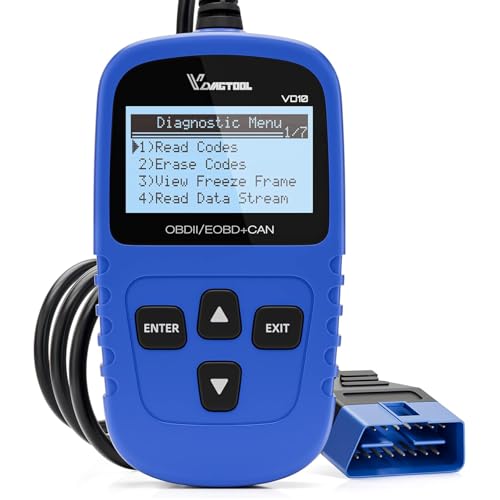
The VDIAGTOOL VD10 is positioned as an affordable, user-friendly option with broad OBDII coverage and a substantial DTC library. It supports reading and clearing codes, live data streams, and I/M readiness checks, helping users diagnose and verify repairs efficiently. The device emphasizes ease of use and provides quick access to fault code definitions from its built-in database, which can minimize time spent searching for meanings online.
As with other entry-to-mid level scanners, VD10 focuses on engine and emissions diagnostics rather than full system diagnostics. It is well-suited for DIY owners and beginners who want a straightforward tool to identify engine faults, monitor vehicle readiness, and confirm repairs before driving to an inspection or shop. Its straightforward interface and robust DTC database contribute to practical, everyday diagnostic usefulness.
Buying Guide: Key Purchase Considerations
- Vehicle compatibility and protocols: Confirm that the scanner supports the vehicles you own or service. Most modern cars use OBDII/CAN, but some brands may require broader protocol support for full diagnostics.
- Core diagnostics vs. advanced features: Decide whether you need basic code reading and live data, or advanced tests like EVAP, O2 sensors, or battery health assessments. Higher-end models offer more in-depth tests and broader system coverage.
- Live data visualization: Look for scanners that provide clear live data graphs and freeze-frame data, which help interpret sensor behavior and identify intermittent faults.
- Ease of use and readability: A bright display, intuitive menus, and straightforward code definitions save time, especially for DIY users or technicians new to the tool.
- Power and portability: Most OBD2 scanners draw power from the vehicle, but consider form factor and durability if you work in tight spaces or on the road frequently.
- Language and regional support: Multilingual interfaces can help international users or shops with diverse customers.
- Data storage and additional features: Some scanners offer data logging, VIN retrieval, and multi-language support. Decide which features add the most value for your typical use cases.
When choosing among these options, consider your primary use case: occasional home maintenance, a small workshop, or a professional setting. Basic readers like the AD310 or NT301 deliver essential functions effectively, while the AD410, VD10, and similar models provide deeper diagnostics and expanded testing capabilities. Always verify compatibility with your vehicle lineup and ensure the tool’s feature set aligns with your diagnostic goals.