Best Aftermarket Fuel Injection System Upgrades for Vehicles
Finding the right aftermarket fuel injection components can improve performance, reliability, and efficiency. This guide highlights five compatible products that fit a range of systems, from throttle body kits to external pumps and diagnostic tools. Each option is evaluated on fit, compatibility, and practical benefits for enthusiasts and professionals alike.
| Product | Brand | Key Benefit |
|---|---|---|
| EZ-EFI Base Kit | Part Synergy | Direct-fit throttle body injection with reliable performance |
| CarBole External In-Line Pump | CarBole | High-pressure pump for aftermarket systems |
| BETOOLL 0-140PSI Tester Kit | BETOOLL | Precise fuel pressure measurement across systems |
| RAParts LUC10512 Cleaner | Reliable Aftermarket Parts | System cleaner that helps maintain performance |
| Fuel Injection Lines Set | Reliable Aftermarket Parts | Replacement lines for Ford engines and similar platforms |
EZ-EFI Base Kit | Throttle Body Fuel Injection

The EZ-EFI Base Kit from Part Synergy provides a universal throttle body fuel injection solution designed for straightforward installation. It is marketed as a direct OE replacement, aiming to restore factory look and performance. The kit is built for compatibility with a range of engines and focuses on reliable, precise fueling with minimal fitting required. This makes it a favorable option for users seeking a drop-in upgrade without extensive modifications.
Key features include direct-fit compatibility, minimizing installation time and ensuring proper fuel delivery. Quality testing is highlighted to ensure dependable operation and accurate fitment. Users should verify engine compatibility and intake manifold requirements prior to purchase to ensure optimal performance and clearance with existing components.
CarBole External In-Line Fuel Pump (Red)

This CarBole external in-line fuel pump is designed for 12V electrical operation and supports 72.5–116 psi range, suitable for many aftermarket fuel injection setups. The model is non-tank mounted, with a mounting bracket included, offering flexibility in placement. Flow rates vary by pressure, and the pump is positioned as a reliable replacement for several common OEM part numbers while not being an exact OEM match.
Considerations include compatibility with your injector size and fuel system pressure, along with the mounting space available in the engine bay. The pump is intended for aftermarket configurations, so ensure proper electrical supply and fuel line routing to prevent vapor lock or pressure drops during high-demand driving.
BETOOLL 0-140PSI Fuel Pressure Tester Kit
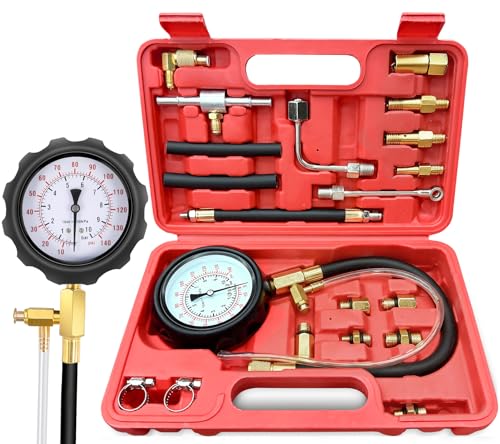
This fuel pressure tester kit from BETOOLL offers a universal design with adapters, hoses, and fittings suitable for most gasoline engines, including cars, trucks, and motorcycles. It is a diagnostic tool intended to verify fuel pressure and system integrity, helping identify weak points in the fuel delivery path. The kit is designed to cover a broad range of systems, though users should verify valve sizes and pressure specs before use to avoid misreadings or equipment damage.
Practical use cases include diagnosing fuel starvation, pressure drop due to leaks, or pump and regulator issues. The kit’s versatility makes it a valuable addition for mechanics working on aftermarket EFI installations or performance upgrades, especially when tuning or troubleshooting is needed before final calibration.
RAParts LUC10512 Fuel System Cleaner

The RAParts LUC10512 Fuel System Cleaner is designed to support maintenance of the fuel system by aiding lubrication and cleanliness within the fuel pathway. The product notes emphasize reference compatibility with OEM numbers, while acknowledging that some listings may use stock images for reference. The cleaner is positioned as meeting or exceeding OEM specifications, making it a practical choice for routine maintenance or as part of a broader EFI upgrade plan.
When selecting a cleaner, consider engine type, fuel quality, and service intervals. Using a cleaner can help prevent injector clogging and improve spray pattern consistency, which is beneficial for aftermarket injections where precise atomization matters for performance and efficiency.
Fuel Injection Lines Set for Ford Tractors

The Reliable Aftermarket Parts Fuel Injection Lines Set is tailored for Ford 2000, 2110, 3000, 3400, 3500, and 4000 tractors. This set covers multiple lines (1-3) and includes replacement seals, washers, and copper components. While specifically marketed toward agricultural machinery, the kit demonstrates how injector line replacement can be part of an EFI refresh for engines with older or non-original fuel paths.
Consider the suitability of these lines for your vehicle or equipment, including material compatibility (rubber or plastic), line length, and connector sizes. For non-automotive applications, verify that the line pressure, coupling types, and mounting provisions meet your system’s requirements before purchase.
Buying Guide: Key Purchase Considerations for Aftermarket EFI Upgrades
- System compatibility: Verify engine type, intake manifold design, injector size, and fuel pressure requirements. Universal kits may require adapters or tuning adjustments for optimal performance.
- Pressure and flow specifications: Ensure the fuel pump and pressure regulator are matched to the injector flow rate and the engine’s expected power output. Inaccurate pressure can lead to performance loss or component damage.
- Installation effort: Direct-fit or OE-replacement components save time and reduce fitment issues. For non-OEM parts, assess required modifications, space constraints, and wiring considerations.
- Diagnostics and testing: Having a pressure tester or diagnostic kit helps verify system integrity during and after installation. Regular testing can prevent lean or rich conditions.
- Durability and warranty: Look for components with quality testing, robust housings, and manufacturer warranties. This can reduce maintenance costs over time.
- Maintenance needs: Consider serviceability, ease of replacement parts, and availability of substitutes (e.g., injectors, seals, lines) to keep the EFI system reliable.
- Compatibility with existing sensors: Ensure that any added ECU or EFI controller can communicate with existing sensors (MAP, MAF, O2) if you’re upgrading chronically.
- Vehicle application type: Some products are targeted at tractors or off-road vehicles; confirm that the kit’s performance expectations align with your intended use and environment.
- Safety and quality standards: Choose parts that meet or exceed OEM specifications and include installation instructions, warranty terms, and safety notes for high-pressure fuel systems.