Best Mountain Bike Forks for Any Trail You Ride
style=”display:none;”>This article reviews top mountain bike forks to help riders choose the right suspension and travel for 26/27.5/29-inch bikes. We cover travel ranges, lockout features, and materials across five focused models, with buying guidance at the end.
Choosing the right front fork can elevate control, comfort, and traction on rugged trails. The following selections cover a range of travel, stiffness, and damping options to suit cross-country, trail, and enduro riders. The table below summarizes the featured forks to help compare key specs at a glance.
| Product | ||||
|---|---|---|---|---|
| BUCKLOS 140mm MTB Air Suspension Fork | 140 mm | 29.6 mm Threadless Straight | 9×100 mm | Remote lockout option; rebound adjust |
| BUCKLOS 100mm MTB Suspension Fork | 100 mm | 28.6 mm Straight | 9×100 mm | Manual ABS adjustment; crown lockout |
| ZTZ 180mm Mountain Bike Fork | 180 mm | 1-1/8″ Straight | 9×100 mm | Rebound and air damping; heavy-duty Arch design |
| Exceedhub 120mm Suspension Fork | 120 mm | 28.6 mm Straight | 9×100 mm | Aluminum + magnesium alloy; crown lockout |
| BestParts 27.5″ Carbon Fork | 27.5″ (approx. 27.5″ wheel) | 1-1/8″ Threadless | N/A | Full carbon construction; lightweight rigidity |
BUCKLOS 140mm MTB Air Suspension Fork

BUCKLOS offers a versatile 140 mm travel option designed for XC and trail bikes. The fork features a 34 mm aluminum-magnesium alloy upper tube set, which enhances rigidity and steering precision. Its crown lockout and rebound adjust provide trail feedback tuning, while a 9×100 mm quick-release (QR) maximizes compatibility with many 29er and 27.5″ frames. The fork maintains 140 mm travel with external rebound control, delivering a balanced feel across varied terrain.
The suspension is engineered to accommodate a maximum tire width up to 3.0 inches and includes a crown lockout to improve climbing efficiency. With a light-to-moderate weight around 1976 g, it aims to deliver robust stiffness without a heavy posture on the bike. Riders seeking direct trail feedback and reliable lockout performance will appreciate the combination of compression damping that adapts to rider weight (50–120 kg) and external 20-click rebound adjustability.
BUCKLOS 100mm Suspension Fork with Crown Lockout

This 100 mm travel fork is tailored for XC and light trail riding. It uses a 28.6 mm straight tube and a 9 mm x 100 mm QR, with a 30 mm crown race. Manual lockout offers immediate firming on climbs or sprints. The offset is 36 mm, and the tube diameter sits at 32 mm for improved front-end stiffness. A notable feature is the ABS adjustment that allows riders to manually tune the suspension softness or stiffness in response to terrain, rider weight, and ride style.
Weighing around 2598 g, this fork emphasizes visual branding with a removable BUCKLOS sticker, designed to be aesthetically pleasing and customizable. The combination of crown lockout and ABS-assisted adjustment positions this fork as a practical option for riders who want straightforward on-trail tuning without complicated electronics.
ZTZ 180mm Mountain Bike Front Fork

The ZTZ fork pushes into more demanding terrain with an aggressive 180 mm travel, ideal for enduro and aggressive trail riders. Its 1-1/8″ straight steerer and 9×100 mm QR are widely compatible with AM/Enduro frames. The aero arch design adds stiffness, improving steering precision on steep descents and technical lines. External rebound damping and crown lockout support rider control across varying slopes, while the 7000-series aluminum construction keeps weight reasonable for a long-travel fork.
Riders should note the emphasis on downhill capability and fork torsion resistance. The reinforced dual-arch design helps maintain alignment under heavy impact, and the adjustable air/oil damping system supports fine-tuning to rider weight and riding conditions for more consistent performance on long descents.
Exceedhub 120mm Suspension Fork
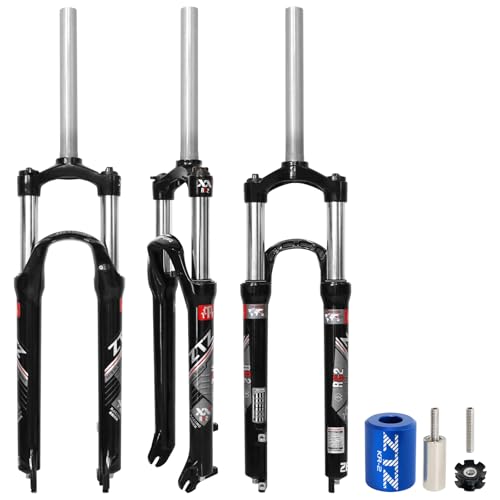
Exceedhub’s 120 mm fork blends aluminum and magnesium alloys for a balanced stiffness-to-weight ratio, suitable for all-terrain trekking and cross-country racing. It uses a 28.6 mm straight steerer and 9 mm QR for compatibility with most AM frames. The crown lockout and external rebound damping offer on-the-fly adjustments to sharpening handling on climbs and descents. The design emphasizes stable handling and fatigue reduction on longer rides with a focus on robust arch support for better tracking and control.
With 120 mm of travel and a lighter overall weight profile, riders can expect confident handling on rock gardens and rooty sections while maintaining a manageable front-end feel on steep sections and loamy corners. The kit’s compatibility with 100 mm hub spacing makes it a versatile choice for many wheel setups.
BUCKLOS 120mm Remote Lockout Fork

This BUCKLOS model blends 120 mm travel with a remote lockout option for on-the-fly firming during climbs or smooth pavement sections. The fork features a 28.6 mm threadless straight steerer and a crown lockout design to optimize gradient performance. A lightweight frame contributes to punchy acceleration and crisp steering in technical terrain. The external rebound damping complements the lockout, enabling riders to tailor the fork’s response to weight, speed, and trail conditions.
With its 32 mm tube diameter and aluminum-magnesium alloy construction, this fork balances stiffness and weight. It’s suitable for riders seeking a responsive front end that can adapt quickly from technical descents to smooth climbs during mixed-terrain adventures.
BestParts 27.5″ Carbon Fork

This BestParts front fork is built from 3K Toray T800 carbon fiber, delivering a rigid, ultralight option for 27.5″ wheels. The carbon construction absorbs road vibration more effectively than metal forks, providing a smoother ride across imperfect terrain. The 28.6 mm threadless straight tube and 1-1/8″ steerer ensure compatibility with a wide range of XC and lightweight build configurations. The rigid carbon blades are designed to minimize weight while preserving front-end stiffness for precise steering and efficient climbing.
Riders considering a weight-focused setup or a carbon upgrade will find this option appealing for sprinting, fast cornering, and technical climbing where a light, responsive front end is advantageous. The absence of internal damping means it’s best paired with appropriate rear suspension and overall bike geometry designed for carbon forks.
Buying Guide: Key Purchase Considerations
- Travel and intended riding style: Choose travel that matches your terrain. 100–120 mm is common for XC/trail, 120–140 mm suits enduro-lite, and 180 mm targets aggressive downhill riding.
- Lockout and damping features: Crown lockout and external rebound controls allow on-trail tuning. Remote lockouts are convenient for climbs, while external rebound knobs offer quick adjustment without tools.
- Steerer diameter and tube construction: Verify compatibility with your frame (threadless straight vs tapered) and choose aluminum, magnesium, or carbon depending on weight, stiffness, and budget.
- Weight versus stiffness: Lighter forks improve acceleration but may feel less planted on rough terrain. Heavier, stiffer designs offer confident handling on big descents at the expense of weight.
- Maintenance and serviceability: Consider forks with easy service intervals and widely available spare parts. External damping adjustments are beneficial for riders who frequently tune for varying trail conditions.
- Wheel compatibility: Check tire width compatibility, hub spacing, and axle standards (QR 9×100 mm is common; ensure your bike supports it).
- Carbon versus alloy: Carbon forks reduce weight and dampen road vibration but can be pricier and require careful handling. Alloy options are typically more affordable and robust for rough use.
- Intended bike type: XC, trail, AM, and enduro forks have different sweet spots—select a fork calibrated for your bike’s geometry and riding goals.
All five selected forks offer varied travel and damping options, spanning lightweight carbon setups to rugged alloy builds. When comparing, prioritize how the fork’s travel, lockout behavior, and damping responsiveness align with your typical riding conditions, frame compatibility, and maintenance preferences. This approach helps ensure you choose a fork that improves control, comfort, and confidence on your favorite trails.
style=”text-align:center;”>Note: Specifications, features, and availability may vary by seller and region. Always confirm compatibility with your frame, wheel size, and brakes before purchasing.