Best Boat Engine Sound Deadening Materials for Quieter Rides
Boats and watercraft generate engine and hull vibrations that travel through panels and into the cabin. The right sound deadening material can significantly reduce engine noise, vibration, and heat transfer, improving comfort and overall efficiency. Below are five top options commonly used for boat engines and related compartments, with key specs to help you compare performance and ease of installation.
| Product | Brand | Thickness | Total Coverage |
|---|---|---|---|
| BuyUneed 590 mil Auto Boat Sound Deadening | BuyUneed | 15 mm | 13.6 sq ft |
| uxcell 1inch 10sqft Sound Deadening Mat | uxcell | 25.4 mm (1000 mil) | 5 sq ft |
| KILMAT 80 mil Car Sound Deadening Mat | KILMAT | 80 mil | 10 sq ft |
| X AUTOHAUX 394mil 10mm Heat Shield Mat | X AUTOHAUX | 10 mm | 2.16 sq ft |
| Storystore 394 mil 10mm Heat Shield Mat | Storystore | 10 mm | 16.5 sq ft |
BuyUneed 590 mil Auto Boat Sound Deadening

BuyUneed offers a 15 mm closed-cell foam sound deadener designed for automotive and boat applications. The mat comes with an aluminum layer and is specified to reduce heat transfer and noise significantly. It is sold in a roll form with a large coverage area (approximately 13.6 square feet) and is described as easy to cut and apply in three simple steps: clean the surface, cut to size, and peel-and-stick. This material targets engine-induced noise and heat, helping to keep cabins cooler and quieter in varying temperatures.
uxcell 1inch 10sqft Sound Deadening Mat
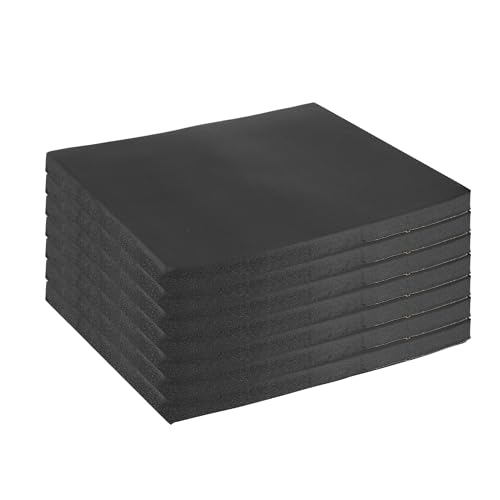
uxcell’s 1 inch thick, 25.4 mm (1000 mil) closed-cell foam mat is designed to dampen engine, road, and transmission noise. Supplied as seven sheets totaling about five square feet of coverage, this product also features a closed-cell surface designed to reflect heat away from the cab. Its self-adhesive backing makes it straightforward to install on boat engine covers, hoods, and other panels, contributing to a quieter cabin and potentially lower cooling costs.
KILMAT 80 mil Car Sound Deadening Mat

KILMAT offers a lightweight, highly adhesive 80 mil foam and foil combination. It is marketed as thicker and more effective relative to thinner mats, which can translate to better vibration control and sound dampening for engine compartments and boat storage areas. With a moderate coverage plan, this product is suitable for DIY installations where you want a balance between ease of use and acoustic gains. Weight per square foot remains manageable for on-board installation projects.
X AUTOHAUX 394mil 10mm Heat Shield Mat

This single-sheet solution uses a 10 mm aluminum-backed foam designed for heat shielding and noise reduction. It aims to block heat transfer from the sun, engine, and exhaust to the cab area, aiding in reducing AC load and maintaining cabin temperatures. While its coverage is smaller per sheet, it is a good option for targeted panels or tight spaces where heat and noise are concerns on boats.
Storystore 394 mil 10mm Heat Shield Mat

Storystore presents a 10 mm heat and sound deadening mat, with a larger total coverage of about 16.5 square feet. The material aims to provide comprehensive heat insulation and vibration dampening across larger boat panels, reducing engine heat transfer and creating a quieter cabin environment. Its broad coverage makes it well-suited for entire engine bays or roomy storage compartments on boats.
Buying Guide
- Material type: Most options use closed-cell foam with a foil or aluminum layer. Closed-cell foam resists water absorption and provides good vibration damping, while the foil layer reflects heat.
- Thickness and coverage: Heavier mats (thicker) generally offer better damping but may be harder to fit in tight spaces. Calculate the surface area to decide how many sheets you need for full or partial coverage.
- Adhesive backing and surface prep: A strong self-adhesive backing saves time, but clean, dry surfaces are essential for long-term adhesion. Some products require additional primer or cleaning steps for optimal sticking power.
- Heat resistance: Look for ratings that withstand hot engine environments. For boats, solar exposure and engine temperatures can demand heat-shield capabilities as well as moisture resistance.
- Water and salt exposure: Materials used on boats should resist humidity, salt spray, and occasional immersion. Look for corrosion-resistant aluminum layers and marine-grade adhesives where available.
- Ease of installation: Pre-cut sheets, roll formats, and peel-and-stick designs simplify installation. For larger areas, consider forming a plan to minimize waste and seams.
- Durability and durability under motion: Boat environments involve vibrations and shifting panels. Materials with flexible backing and strong bonding tend to perform better over time.
- Cost vs. performance: Heavier mats often deliver better dampening but at higher cost. Balance expectations with installation effort and coverage needs for your boat.
- Compatibility with other systems: Ensure the selected material does not interfere with electrical harnesses, fuel lines, or ventilation ducts. Plan placements away from heat sources where possible.