Best Engine Code Readers for Quick Diagnostic Checks
Finding the right engine code reader can save time and money by diagnosing check engine lights, reading live data, and guiding repairs. Below are five top choices that cover a range of features—from basic DTC reading to advanced live data and I/M readiness checks. Each option supports common OBDII protocols and works with most 1996 and newer vehicles.
| Product | Brand | Key Strength | Typical Use |
|---|---|---|---|
| ANCEL AD310 Classic Enhanced Universal OBD II Scanner | ANCEL | Fast code reading and clearing; compact design | DIY quick diagnostics, basic emissions checks |
| VDIAGTOOL VD10 OBD2 Scanner | VDIAGTOOL | Large built-in DTC database; easy for beginners | Learn mode for novices; instant code definitions |
| ANCEL AD410 Enhanced OBD2 Scanner | ANCEL | O2 sensor/EVAP testing; broad OBDII coverage | Deeper diagnostic checks for emissions systems |
| MOTOPOWER MP69033 Car OBD2 Scanner | MOTOPOWER | Real-time data, multiple data points, user-friendly | General health monitoring and quick diagnostics |
| FOXWELL NT301 OBD2 Scanner | FOXWELL | Live data graphs; VIN retrieval; basic scanner | Standard diagnostics with live data |
The following sections detail each product, including how it works, its strengths, and who it’s best suited for. The information is gathered from product features and typical use cases to help you compare at a glance.
ANCEL AD310 Classic Enhanced OBD II Scanner
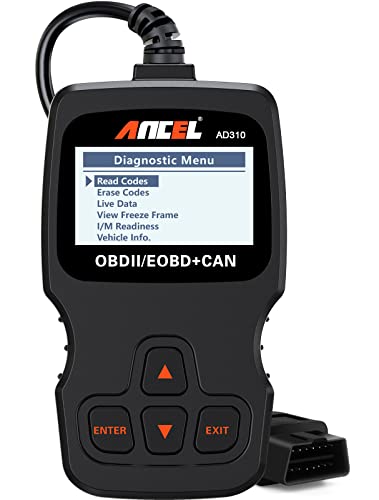
The AD310 is a compact, budget-friendly OBDII scanner designed for quick fault-code identification and clearance. It provides access to diagnostic trouble codes for the emission system, reads live data, freeze frame information, I/M readiness, and vehicle information. Its sturdy build, 2.5-foot cable, and clearly labeled controls make it suitable for home garages and mobile repairs. It powers directly from the vehicle via the OBDII port, so no separate battery is required. Codes are read quickly, and results are presented in an accessible format for users without extensive car knowledge.
VDIAGTOOL VD10 OBD2 Scanner
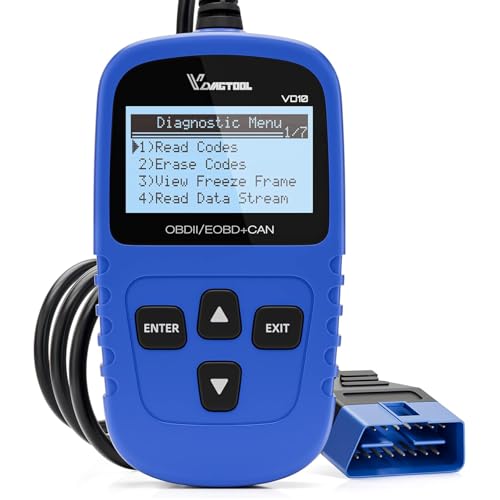
The VD10 is positioned as a user-friendly diagnostic tool for DIYers and beginners. It is designed for quick connection to an OBDII port and rapid code retrieval, with the device providing DTC definitions on screen. It supports reading and clearing codes, viewing freeze frame data, I/M readiness, and vehicle information. The scanner emphasizes simplicity and fast feedback, helping non-experts identify root causes without external research.
ANCEL AD410 Enhanced OBD2 Scanner

The AD410 is a more advanced ANCEL option designed for broader OBDII diagnostic needs. It supports 16-pin vehicles compliant with OBDII, including CAN, and can rapidly read and clear fault codes while offering enhanced diagnostics such as O2 sensor testing and EVAP system checks. It provides code definitions via a large built-in database and supports multiple languages. It is suitable for users seeking deeper emissions-system insights while still operating with no external power source beyond the vehicle.
MOTOPOWER MP69033 OBD2 Scanner

The MP69033 offers multi-function capabilities, including OBDII code reading, live data streaming, and a large LCD display to view sensor values in real time. It supports a broad set of protocols and languages, making it a solid option for owners who want more detailed data when diagnosing engine problems. The device powers via the vehicle’s OBDII port, eliminating the need for an external power source, and emphasizes ease of use with a clear interface and quick diagnostics.
FOXWELL NT301 OBD2 Scanner

The FOXWELL NT301 is a professional-grade yet affordable option for drivers who want to verify emissions readiness and read DTCs across a wide range of vehicles. It can pull VIN information, read and clear codes, and display live data. While it focuses on core OBDII functions, it does not support every advanced feature found in higher-end tools, making it ideal for everyday maintenance and quick checks without additional complexity. It is especially suitable for hobbyists, independent mechanics, and fleet operators needing reliable diagnostics.
Buying Guide
- Vehicle compatibility: Most OBDII scanners support 1996 and newer vehicles, but check your country’s standards and your vehicle’s make/model to ensure compatibility with CAN, ISO9141, KWP2000, and other protocols.
- Code reading vs. clearing: Some tools focus on reading DTC definitions, while others offer clear/erase functions. If you regularly repair vehicles, look for a tool with reliable code clearing and MIL reset capabilities (where supported).
- Live data and freeze frame: For thorough diagnostics, choose a scanner that provides real-time data streams, graphing, and freeze-frame data to identify trends and root causes more efficiently.
- Data library size: A large internal database of DTCs reduces reliance on online lookups. Tools like WEJOWE-type readers claim tens of thousands of codes; verify the size matches your needs.
- Display and usability: A clear display, readable fonts, and straightforward menus reduce confusion, especially for beginners. Consider devices with larger screens or intuitive interfaces.
- Power supply: Most scanners draw power from the vehicle, but some require batteries. If you often work in environments without ready power, check the power design for the model you choose.
- Language support: If you prefer languages other than English, look for scanners offering multilingual interfaces to minimize confusion during use.
- Budget vs. features: For basic code reading, select economical models. For emissions testing, EVAP checks, and more comprehensive diagnostics, invest in a model with broader test capabilities and a robust DTC database.
- Build quality and portability: A small, durable device with a sturdy cable is beneficial for frequent use in tight engine bays or on the go.
- Support and updates: Consider models that offer software updates, customer support, and clear documentation to extend the tool’s usefulness over time.