Best Camshaft Upgrades for 5.3L Gen GM Engines: Performance Gains and Considerations
Discover durable camshaft options for 5.3L GM engines and related V8 LS variants. This guide highlights five well-regarded choices, detailing compatibility, key features, and installation considerations to help you pick a reliable upgrade for improved throttle response, higher horsepower, and better engine vacuum. Each product below is chosen for relevance to 5.3L/LR4 LS builds and AFM/DOD conversion contexts.
| Product | Brand | Key Benefit |
|---|---|---|
| BST BSSP Engine Camshaft (3-Bolt) | BST BSSP | Wide compatibility; improved throttle response |
| Michigan Motorsports Non-DOD 4.8L/5.3L Camshaft | Michigan Motorsports | AFM/DOD conversion-ready stock replacement |
| Michigan Motorsports LM7 3-Bolt Camshaft | Michigan Motorsports | Stock replacement with 3-bolt pattern |
| Zieichy 12625436 AFM Stock Camshaft | Zieichy | OE-like timing with AFM considerations |
| KAISAL Sloppy Stage 2 Camshaft | KAISAL | High-flow performance for LS engines |
Note: Availability and compatibility vary by model year and vehicle configuration. Always verify your engine’s camshaft pattern, AFM/DOD status, and valve train compatibility before purchasing and scheduling installation.
BST BSSP 3-Bolt Camshaft For 5.3L GM Platforms

The BST BSSP camshaft is a 3-bolt design compatible with 2000-2006 Silverado 1500 5.3L, and related GM trucks and SUVs. The package includes a single camshaft with a design intended to improve throttle response and top-end horsepower while maintaining engine vacuum. It supports 4.8L, 5.3L, and 6.0L configurations. Professional installation is highly recommended to ensure correct timing chain alignment and lubrication flow. This cam is a practical option for stock-to-m lightly-upgraded LS family builds seeking a balance of performance and reliability.
Michigan Motorsports Non-DOD 4.8L/5.3L Camshaft
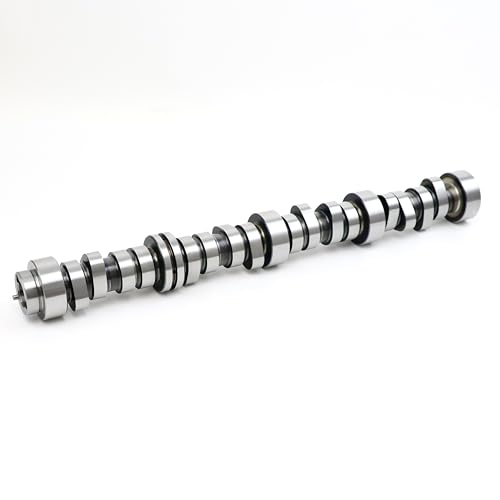
This camshaft is designed as a factory-spec replacement for 2007-2013 GM 5.3L LS engines, with specific suitability for AFM/DOD conversion projects. It focuses on restoring proper idle quality, valve timing, and drivability after changes to active fuel management systems. The cam is a direct-fit option that aligns with OEM measurements to minimize the need for further adjustments, making it a solid choice for reliable performance restoration in LS-family builds.
Michigan Motorsports Stock LM7 3-Bolt Camshaft
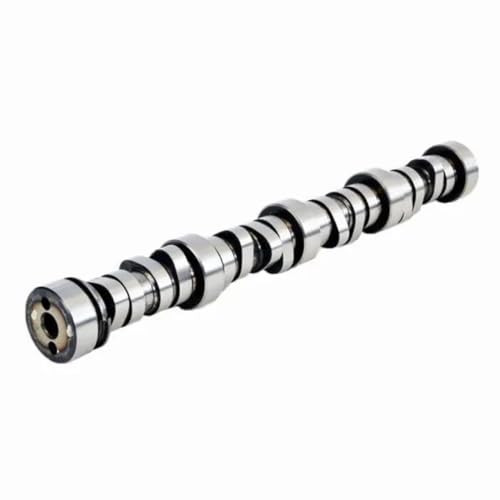
This LM7 camshaft targets 1999-2007 LM7, L59, LR4, and LQ4 engines, replacing 12560967. It features a 3-bolt pattern with a modest duration and lift profile that preserves factory idle and general drivability while improving overall performance. Specs include approximately 192/190 duration with .454″/.464″ lift and a 114 LSA. It’s a straightforward upgrade for stock configurations seeking a balanced performance uplift without aggressive timing changes.
Zieichy 12625436 AFM Stock Camshaft

The Zieichy 12625436 camshaft is tailored for GM 5.3L LS platforms with AFM considerations. It lists OE-compatible part numbers and fits Tahoe, Suburban, Silverado, Yukon, and other 5.3L variants from 2007 to 2014, with a hydraulic roller profile. Specifications show intake and exhaust durations around 196-201 degrees @ .050″ and a lift around .481″. Its 1.7 rocker ratio and LSA of 116 degrees are designed to deliver a strong mid-range response while maintaining tractable idle in AFM-enabled engines. This cam is suitable for LS-based builds needing AFM compatibility without excessive overhead on valve train components.
KAISAL Sloppy Stage 2 Camshaft For GM LS
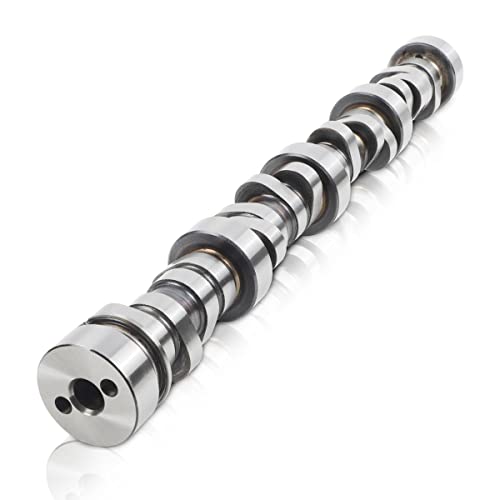
The KAISAL Sloppy Stage 2 camshaft is designed for GM LS engines, including 5.3L variants, and is marketed as a high-flow performance option. It specifies lift values of .585″ for both intake and exhaust at 1.7 rockers, with a 112° LSA and an 108° intake centerline. This cam is intended for enthusiasts seeking a more aggressive power curve and a noticeable sound increase, particularly when paired with compatible springs and pushrods. Note that AFM-equipped engines may require additional components for reliable operation and to avoid interference with stock valve springs.
E1840P Sloppy Mechanics Stage 2 Cam Kit

The E1840P kit includes the Sloppy Mechanics Stage 2 cam with PAC1218 valve springs and 12482063 seals. It targets GM LS engines from 1997-2007 and covers 4.8L, 5.3L, 5.7L, 6.0L, and 6.2L configurations, including LS1/LS6/LS2 variants. Specifications list an intake duration around 228-283 degrees and an exhaust duration around 230-286 degrees at 0.050″ lift, with 0.585″ lift at valve. The kit is designed to provide a robust upgrade path with spring and seal compatibility for reliable, high-performance operation, especially on naturally aspirated or turbocharged builds. As with other aggressive cams, ensure proper tuning and component readiness for best results.
Buying Guide: Key Considerations When Upgrading a 5.3L/LS Engine
- Engine configuration and AFM/DOD status: Some cams are AFM/DOD compatible, while others are not. Verify whether your engine uses displacement on demand and plan for the necessary supporting parts (or deactivation options) if required.
- Camshaft pattern and bolt configuration: Common patterns include 3-bolt and single/4x bolt patterns. Confirm your engine’s camshaft mounting before purchase to ensure a proper fit.
- Duration and lift: Higher durations and lifts increase top-end power but can affect idle quality and low-end torque. Balance with your driving needs (street, daily, or performance-focused).
- LS vs. non-LS design considerations: While many GM 5.3L engines share similarities, certain kits are tailored specifically for LS families, including valve springs and seals to match the intended power band.
- Valve springs and hardware: Aggressive cams often require upgraded springs, pushrods, and guides. Some kits include these components; others require purchasing separately.
- Professional installation: Cam timing, valve lash, and lubrication paths are critical. Erroneous installation can damage engines; professional servicing is recommended unless you have extensive experience.
- Tuning and calibration: After installing a cam, ECU re-tuning or recalibration is typically necessary to optimize fuel, timing, and idle characteristics for the new cam profile.
- Noise, drivability, and warranty: Aggressive cams can increase cylinder head noise and alter low-speed drivability. Check warranty implications with the manufacturer for high-performance parts.
- Return and compatibility policies: Ensure the product comes with clear compatibility notes for your specific year, model, and engine build to avoid mismatches.
When evaluating options, compare camshaft lift, duration, LSA (lobe separation angle), and centerline values to your preferred drivability and power curve. For AFM/DOD-equipped builds, ensure the chosen cam and supporting parts are listed as compatible, and consider whether you’ll retain or remove AFM in the final configuration. Always factor in installation costs, tuning needs, and potential upgrades to the valve springs and pushrods to maintain reliability and performance gains over time.