Best Rust Inhibitor Sprays for Cars: Top Picks to Protect and Extend Your Ride
When protecting a car from rust, selecting the right rust inhibitor spray is essential. The following picks prioritize strong protection, paintable surfaces, and long-lasting performance in varying climates. Read on to compare options that treat, prevent, and rehabilitate rusty metal parts on vehicles.
| Product | Brand | Key Benefit |
|---|---|---|
| WD-40 Specialist Corrosion Inhibitor | WD-40 Specialist | Long-lasting anti-rust spray with precision application |
| Rust-Oleum 224284 Stops Rust Rust Inhibitor Spray | Rust-Oleum | Moisture-protective coating for bare metal items |
| Rust-Oleum 248658 Stops Rust Reformer Spray Paint | Rust-Oleum | Converts rust to a paintable surface, then seals and protects |
| STA-BIL Rust Stopper Anti-Corrosion Spray | STA-BIL | Corrosion inhibitor with battery terminal protection and weather resistance |
| CorrosionX Heavy Duty Anti Rust Spray | CorrosionX | Self-healing, long-lasting barrier for harsh environments |
These selections cover surface preparation, rust conversion, prevention, and protection in harsh conditions. Below are detailed product sections to help you choose the best option for your vehicle’s chassis, underbody, or tools you store in humid climates.
WD-40 Specialist Corrosion Inhibitor

WD-40 Specialist Corrosion Inhibitor coats metal parts to lubricate and protect against rust by blocking out air and moisture. It offers protection for up to two years indoors and up to one year outdoors, making it a solid preventive option for vehicle frames, exhaust brackets, and underbody hardware. The included straw enables precise application to tight spaces, while the notched cap ensures secure storage. Use it as part of a preventative maintenance routine or after rust removal to deter future corrosion.
Rust-Oleum 224284 Stops Rust Inhibitor

This Rust-Oleum formulation is designed to extend the life of bare metal surfaces by forming a protective layer that blocks moisture and other elements. It’s ideal for vehicle tools, rails, and aging metal components exposed to humidity. Apply a light, even coat and allow full drying before reassembly or use, creating a durable barrier that resists ongoing rust formation on non-painted metal parts.
Rust-Oleum 248658 Stops Rust Reformer Spray Paint

This reformer spray chemically converts rust into a flat black, paintable surface that is protected and resistant to future rust. The oil-based formula bonds to the rusted surface and can be painted over once dry. It dries tack-free in 20-40 minutes, with full topcoat compatibility after 24 hours. Use on surface rust on undercarriage components, brackets, and panels to stabilize corrosion before refinishing.
STA-BIL Rust Stopper Anti-Corrosion Spray
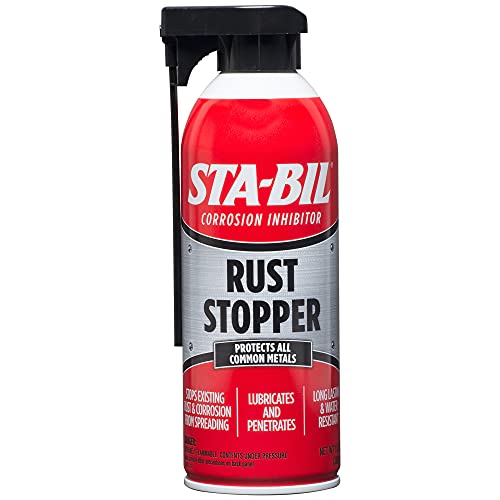
STA-BIL Rust Stopper acts as a corrosion inhibitor that fights rust formation on exposed or painted metal surfaces, leaving a protective layer behind. It’s also designed for battery terminals, guarding electrical connections, and protecting against water-related erosion. The formula helps prevent squeaks and sticking by providing weather-resistant lubrication, making it suitable for hinges, latches, and other moving parts in a car that experiences temperature and moisture changes.
CorrosionX Heavy Duty Anti Rust Spray

CorrosionX provides a self-healing, long-lasting barrier designed for harsh environments, including marine and industrial equipment. It adheres well to metal surfaces and remains effective through rain, seawater exposure, and high humidity. The formula is non-conductive, making it suitable for electrical connections in automotive settings, such as grounding lugs and battery posts. This spray is positioned for heavier-duty rust protection where prolonged outdoor exposure is expected.
Buying Guide: Key Purchase Considerations
- Application scope: For preventive maintenance on painted metal versus active rust treatment, choose inhibitors that match your needs. Rust conversion products are best on surface rust that you want to seal and refinish, while inhibitors are ideal for ongoing prevention on undercarriage and exposed components.
- Surface compatibility: Some formulas are oil-based and paintable, while others are non-conductive or designed for battery terminals. Confirm compatibility with the surfaces you plan to treat (steel, aluminum, painted surfaces, or rubber seals).
- Indoor vs outdoor use: Indoors often requires long-lasting protection, while outdoor exposure demands UV resistance and moisture-blocking properties. Consider climates with heavy rain, snow, or coastal salt spray.
- Drying and recoat times: Short tack-free times speed up projects, but ensure you allow sufficient curing before topcoats or reassembly. Some products recommend 24 hours before final paint layers.
- Longevity and protection period: Some products claim multi-year protection indoors or outdoors. Evaluate whether you need a self-healing barrier, as offered by CorrosionX, for long-term use on highly corrosive environments.
- Ease of application: Precision spray streams, attached straws, or simple aerosol formats affect how you treat hard-to-reach areas like underbody crevices or frame rails.
- Safety and compatibility: Check for flammability and ventilation requirements, especially for oil-based formulations. Ensure compatibility with surrounding car finishes and plastics to avoid damage.
For best results, combine rust prevention with regular undercarriage inspections, prompt rust removal on affected areas, and timely reapplication of inhibitors. Consider a two-step approach: first treat active rust with a reformer or converter, then apply a protective inhibitor to prevent recurrence. Always follow product instructions and surface preparation steps to maximize adhesion and longevity.