Best Conventional Engine Oil for Everyday Vehicles and Performance
Conventional engine oils remain a reliable choice for many vehicles that don’t require advanced synthetic blends. This guide highlights popular 10W-30, 10W-40, 20W-50 and other conventional options, focusing on wear protection, sludge control, and ease of cold starts. The table below compares five representative products to help you choose based on viscosity, brand, and key benefits.
| Product | ||||
|---|---|---|---|---|
| Castrol GTX 10W-30 | 10W-30 | Castrol | 5 Quarts | Protection against sludge and wear |
| Pennzoil 10W-30 | 10W-30 | Pennzoil | 2 x 1-Quart Packs | Engine cleanliness and wear protection |
| Castrol GTX 10W-40 | 10W-40 | Castrol | 5 Quarts | Viscosity stability and deposit protection |
| Castrol GTX 20W-50 | 20W-50 | Castrol | 5 Quarts | High-temperature protection |
| Valvoline Daily Protection 10W-30 | 10W-30 | Valvoline | 1 Quart | Everyday wear protection |
Castrol GTX 10W-30 Conventional Motor Oil, 5 Quarts

Castrol GTX 10W-30 Conventional Motor Oil provides advanced protection against viscosity and thermal breakdown, helping maintain engine performance. It offers superior protection against sludge and uses premium base oils with anti-wear additives designed to extend engine life. This product is suitable for many standard gasoline engines and aims to balance performance with everyday reliability.
Pennzoil 10W-30 Motor Oil, 1-Quart | Conventional | Pack of 2
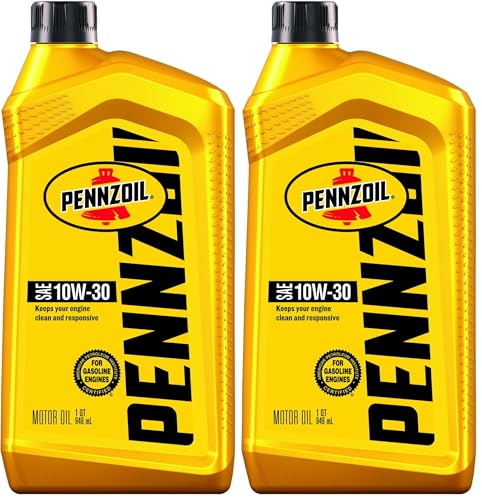
Pennzoil 10W-30 Conventional Motor Oil is formulated to keep engines clean and responsive, with proven wear protection demonstrated in standard wear tests. As a pack of two, it provides convenient coverage for routine oil changes, helping maintain engine cleanliness and consistent performance across typical driving conditions.
Castrol GTX 10W-40 Conventional Motor Oil, 5 Quarts

This Castrol GTX 10W-40 oil emphasizes stability under varying temperatures while preventing sludge and protecting against viscosity changes. The blend is designed to extend engine life through robust anti-wear additives and high-quality base oils, making it a solid choice for drivers seeking reliable protection with a broader operating range.
Castrol GTX 20W-50 Conventional Motor Oil, 5 Quarts

Castrol GTX 20W-50 offers maximum protection against viscosity and thermal breakdown, with TriShield technology for superior deposit control. This grade is well-suited for older or high-mileage engines that experience higher operating temperatures or in hotter climates, helping to maintain oil film strength and reduce engine deposits.
Valvoline Daily Protection 10W-30 Conventional Motor Oil 1 Quart
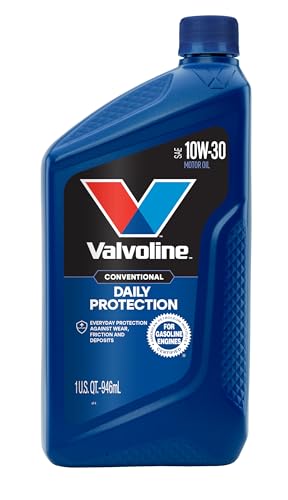
Valvoline Daily Protection 10W-30 Conventional Motor Oil is designed for everyday protection against wear, deposits, and sludge, which are common causes of engine trouble. It delivers reliable high-temperature protection, and its formulation ensures easy flow in cold starts for smoother engine operation and lasting protection.
Castrol GTX High Mileage 5W-30 Synthetic Blend

Castrol GTX High Mileage 5W-30 Synthetic Blend adds phosphorus replacement technology to help extend emission system life, while delivering superior sludge dispersancy and burn-off protection. It also includes seal conditioners aimed at reducing leaks, making it a practical option for higher-mileage engines seeking extended protection.
Castrol GTX Classic 20W-50 Conventional Motor Oil

Castrol GTX Classic 20W-50 is designed for older engines requiring strong wear protection with high zinc and phosphorus content. It maintains a thick oil film under demanding conditions to reduce metal-to-metal contact, with minimized foaming and improved resistance to thermal degradation, helping protect vintage or high-mileage engines.
Buying Guide: Conventional Engine Oil Choices
Viscosity matters. Choose the correct grade (eg, 10W-30, 10W-40, 20W-50) based on your vehicle’s manual, climate, and age. For colder climates or engines with tighter tolerances, lower winter grades can improve cold-start lubrication, while higher grades can offer extra protection in hot or high-stress conditions.
Brand reputation and additive packages influence performance. Conventional oils vary in anti-wear additives, deposit control, and sludge management. Look for products with robust base oils and proven performance in wear tests or industry standards.
High-mileage or older engines may benefit from special formulations. Oils with mileage-specific additives or higher zinc and phosphorus content can help protect older engines and emission systems, though compatibility with your vehicle is essential.
Change intervals and maintenance. Follow the vehicle manufacturer’s recommended oil change intervals and use oils that meet or exceed those specifications. Packaging (quarts vs. single quarts) can affect budgeting and scheduling but does not determine performance alone.
Environmental considerations. While conventional oils are widely used, consider the vehicle’s needs and local regulations. Recycling used oil and choosing properly recycled or packaged products can help reduce environmental impact.