Best Pressure Washers for Cars: Top Models to Keep Your Vehicle Sparkling
Finding the best pressure washer for cars involves balancing cleaning power, portability, and user-friendly features. This guide focuses on electric models that deliver ample PSI and GPM for efficient car care without heavy fumes or maintenance. Each option below is selected for car-focused performance, onboard soap options, and maneuverability around a driveway or garage. Read on to compare features, durability, and overall value from trusted brands.
| Product | Max PSI | Max GPM | Key Benefit |
|---|---|---|---|
| Westinghouse ePX3500 | 2500 | 1.76 | Anti-tipping design with onboard soap |
| Westinghouse ePX3100 | 2300 | 1.76 | Compact, portable with soap tank |
| Westinghouse WPX3000e | 3000 | 1.76 | High cleaning power for tough jobs |
| CRAFTSMAN CMEPW1700 | 1700 | 1.2 | Lightweight and easy to store |
| Westinghouse ePX3100v | 2100 | 1.76 | Detachable foam cannon |
Below are five models that stand out for cleaning cars, delivering ample power without being bulky. Each section provides a concise overview, notable features, and practical considerations to help you decide which unit fits your garage setup and wash routine.
Westinghouse ePX3500: Strong All‑Around Power
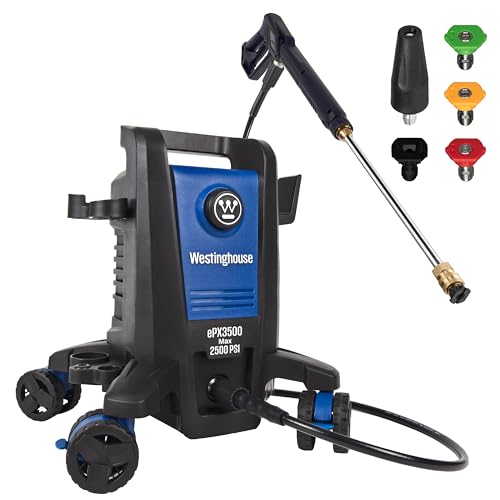
The Westinghouse ePX3500 delivers up to 2500 max PSI with a 1.76 GPM flow, making it capable of handling dirty wheels, road grime, and stubborn road film on a car’s body. Its 17.5-inch pro-style steel wand with quick-connect nozzles (0°, 15°, 25°, turbo, and soap) gives you targeted spray options for delicate finishes and heavy soiling alike. At about 19 pounds, this unit is portable enough for quick garage setups or longer cleaning sessions without sacrificing reach. An onboard 20-ounce soap tank helps apply detergents directly where you need them, saving time during pre-wash treatments. The anti-tipping design, four quick-lock wheels, and a 25-foot hose make it easier to maneuver around a vehicle without tipping or dragging the hose. Overall, a robust choice for car owners who want serious cleaning ability with practical storage features.
Pros: High cleaning potential for stubborn dirt, convenient detergent application, stable during use. Cons: Slightly heavier than ultra-light models; longer setup for first-time users.
Westinghouse ePX3100: Balanced Power for Cars

The ePX3100 offers 2300 max PSI and 1.76 GPM, delivering solid performance for daily car washing without excessive power. Its compact, lightweight design (about 16.5 inches tall and 19 pounds) makes it easy to store and transport from the driveway to the garage. The 25-foot hose and anti-tipping chassis maintain stability while you clean, and the onboard soap tank supports effective pre-wash and cycle detergents on wheels, wheel arches, and lower panels. The wand is the same pro-style standard with quick-connect nozzles, enabling precise targeting for rims or vinyl surfaces while reducing the risk of marring paint with a cautious spray pattern.
Pros: Reliable everyday cleaner, easy storage, good balance of power and control. Cons: Slightly less PSI than top-end models; nozzle range is standard for most users.
Westinghouse WPX3000e: Heavy-Duty Car Cleaning Power
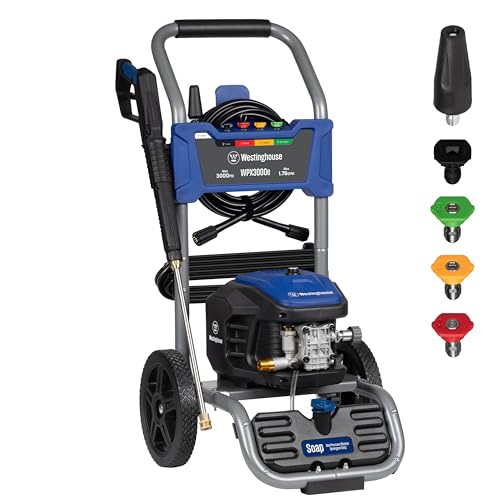
With a high-performance 3000 max PSI and 1.76 GPM, the WPX3000e is well-suited for cars with heavy grime, paint protection, and road salt after winter driving. It includes a .45 gallon soap tank and a 25-foot hose with a durable metal spray gun. The wand uses five quick-connect nozzles (0°, 15°, 25°, soap, turbo), enabling fast adjustments between wheel cleaning, body panels, and undercarriage detailing. This model is designed for more demanding tasks around vehicles and exterior surfaces and remains compatible with common pressure-washer accessories, expanding its versatility for a full-detail wash routine.
Pros: Strong cleaning capability, broad nozzle options, compatible with add-ons. Cons: Heavier than entry-level units; higher power may require extra caution to protect finishes.
CRAFTSMAN CMEPW1700: Lightweight Car Care

The CMEPW1700 offers 1700 max PSI and 1.2 GPM, prioritizing portability and ease of use for car washing enthusiasts who want a straightforward tool. Its lightweight, compact design includes onboard storage for nozzle tips and hoses, with simple assembly and operation. A dedicated soap applicator bottle helps apply detergents directly to the car’s surface for pre-treating dirt and grime. While it delivers less raw power than higher-PSI models, it can be a practical choice for routine maintenance washes of vehicles, especially in smaller driveways or spaces where maneuverability is paramount.
Pros: Very portable and easy to use, adequate for routine washes. Cons: Lower PSI/GPM may require longer cleaning times for heavy soils.
Westinghouse ePX3100v: Detachable Foam Cannon

The ePX3100v features 2100 max PSI with 1.76 GPM, pairing a built-in carry handle for mobility with a detachable foam cannon to apply soap quickly across the car’s surface before rinsing. The unit maintains a compact form factor and an anti-tipping frame with 25-foot hose for capably cleaning wheels, fenders, and body panels without frequent rest breaks. Foam cannons can aid in breaking down road grime in advance of a rinse, helping to maintain paint integrity and reduce the risk of scratching on finishes when used with proper technique.
Pros: Integrated foam cannon, convenient transport. Cons: Slightly lower PSI than some competitors; may require additional rinsing for very dirty vehicles.
Buying Guide: Key Considerations For Choosing A Car-Ready Electric Pressure Washer
- Power versus portability: For everyday car washing, 2000–2300 PSI with 1.6–1.8 GPM typically balances cleaning efficiency with ease of use. Higher PSI is useful for tough grime but can risk paint damage if misused.
- Detergent options: An onboard soap tank or compatibility with foam cannons helps pre-treat wheels, undercarriage, and body panels, saving time and improving results.
- Wand and nozzle variety: Quick-connect nozzles (0°, 15°, 25°, turbo, soap) give control for delicate finishes and more aggressive cleaning where needed. A pro-style wand often offers better reach and leverage.
- Mobility and storage: Look for compact height, lightweight design, anti-tipping features, and wheels for easy navigation around driveways and garages.
- Hose length and durability: A longer, braided hose reduces repositioning needs and resists kinking, while a sturdy spray gun minimizes fatigue during longer washes.
- Compatibility and expandability: Consider models that support accessories such as surface cleaners or undercarriage washers if you plan broader exterior detailing tasks.
- Maintenance and warranty: Electric washers generally require less maintenance than gas units, but confirm pump warranty terms and motor durability to protect your investment.
- Noise and energy use: Electric models tend to be quieter and cleaner, which matters for suburban homes and garages with shared walls.
To maximize car-cleaning results, choose a model with sufficient PSI and GPM to remove road grime without aggressive pressure on paint. Pair it with a foam cannon or detergent bottle, use appropriate nozzles, and maintain a steady, overlapping spray pattern to avoid streaks. For storage, keep the nozzle set organized and store the hose in a manner that prevents kinking or tangling. Finally, always follow the vehicle manufacturer’s guidance on washing to protect clear coats and finishes while achieving a showroom shine.