Best Scratch Removal Kit Options for Restoring Vehicle Finishes
Scratch removal kits offer a practical, do-it-yourself path to restoring your car’s paint. This guide highlights five reliable kits, summarized in a quick-reference table, and explains what makes each one suitable for common blemishes—light scratches, swirls, and paint transfer. Whether you’re a weekend detailer or new to car care, these kits cover drill-assisted solutions, traditional polishing compounds, and user-friendly formulas that work on multiple paint types.
| Product | Brand | Key Benefit |
|---|---|---|
| Meguiar’s Quik Scratch Eraser Kit | Meguiar’s | Drill-assisted precision for light scratches and blemishes |
| Carfidant Scratch Repair and Swirl Remover | Carfidant | All-in-one polish to erase swirls and restore gloss |
| Carfidant Scratch and Swirl Remover | Carfidant | Easy-to-use kit with buffer pad for light scratches |
| Meguiar’S G190200Eu Scratch Removal Kit | Meguiar’s | Drill-activated system for light blemishes |
| 3M Scratch Removal System | 3M | Three-step repair approach with sanding, compounding, and polishing |
Meguiar’s Quik Scratch Eraser Kit
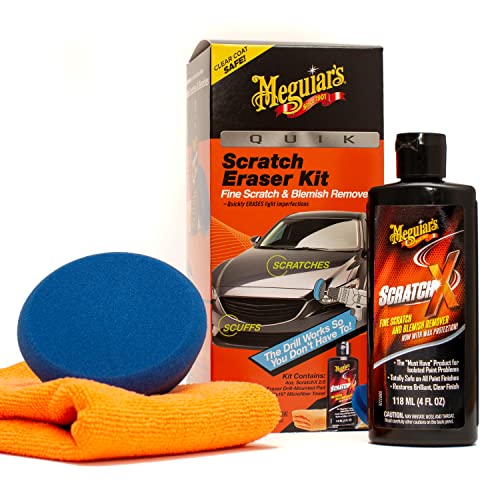
Meguiar’s Quik Scratch Eraser Kit uses ScratchX’s micro-abrasive technology to erase light scratches and paint blemishes. The kit includes a drill-mounted scratch eraser pad, a micro-abrasive compound, and a microfiber towel, designed to deliver fast, professional-looking results at home. The drill-activated approach helps apply consistent pressure and speed, reducing the risk of hazing or uneven finish. Suitable for most common surface blemishes, it targets light scuffs and transfer marks that mar a vehicle’s appearance.
Carfidant Scratch Repair and Swirl Remover

This Carfidant kit focuses on light scratches and swirls, using a buffer pad and a specially formulated compound. The goal is to erase years of wear visible as micro-scratches and water spots, restoring gloss and clarity to the paint. Its chemical formulation emphasizes user-friendliness and professional-grade results without complex steps. The kit is positioned as a versatile option for reducing visible defects while enhancing the vehicle’s overall shine.
Carfidant Scratch and Swirl Remover

This second Carfidant option emphasizes simple, accessible use for light scratches and swirls. It includes a buffer pad and a polishing compound designed to remove blemishes while restoring the vehicle’s gloss. The description notes compatibility with most paint finishes and highlights the product’s emphasis on minimal steps and straightforward maintenance, making it a strong pick for DIY enthusiasts seeking an easier routine.
Meguiar’S G190200Eu Scratch Removal Kit
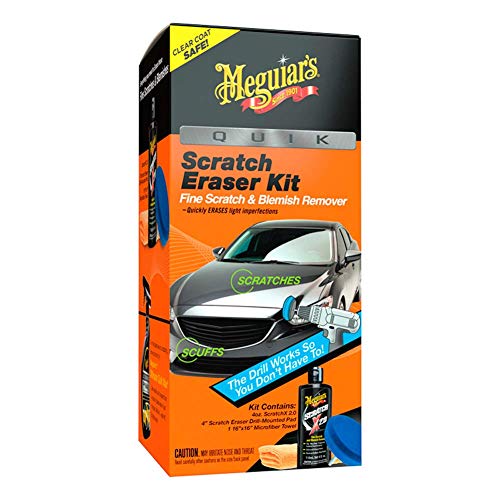
Meguiar’s G190200Eu kit mirrors the brand’s drill-activated approach for light imperfections. The package centers on a scratch eraser pad and a 2.0 scratch compound to address light scratches, scuffs, and paint transfer. It’s designed to be user-friendly for home detailing with a focus on quick, noticeable improvements. The kit emphasizes minimizing effort while achieving a smooth, restored surface that resembles factory finishes.
3M Scratch Removal System

3M’s system offers a three-step repair pathway that sands, compounds, and polishes the repaired area. It’s oriented toward users who want a structured process and who may be dealing with slightly deeper or wider blemishes than startup kits handle. The combination of sanding and polishing steps aims to produce a refined finish with improved clarity and reduced micro-scratches, appealing to those seeking durable, long-lasting results.
Buying Guide: Key Considerations For Choosing A Scratch Removal Kit
- Scratch severity: For minor scratches and swirls, a drill-activated or buffer-based kit often delivers faster results. Deeper scratches may require more intensive methods or professional help.
- Paint type compatibility: Check whether the kit is safe on your vehicle’s clear coat and finish. Most consumer kits support common gloss paints, but always test on a small area first.
- Application method: Drill-assisted kits can speed up the process but require careful handling to avoid additional damage. Hand-applied compounds offer more control but may take longer.
- Finish goals: If you want a showroom gloss, look for kits formulated to restore gloss and reduce dullness. Some products emphasize removing water spots and oxidation as part of the restoration.
- Ease of use: Beginners should favor kits marketed as beginner-friendly with clear steps, included pads, and cloths. More advanced users might prefer systems with multiple stages or sanding options.
- Durability: Water-resistant or long-lasting formulas help prevent quick reappearance of blemishes after washing or rain.
- Brand reliability: Established brands with a history of car care performance can offer more consistent results and clearer instructions.
- Cost and value: Compare the number of tools and accessories included in each kit (pads, towels, compounds) to determine value relative to price.
- Maintenance plan: Consider whether you’ll need touch-up products or follow-up waxing to protect the repaired area.
Additional Considerations: Usage Scenarios And Depth Of Blemishes
Light daily scratches caused by keys, branches, or minor abrasions respond well to drill-activated or buffer-based solutions. For scattered swirls or water spots, products designed to erase not just the blemish but also oxidation tend to yield better long-term results. When scratches feel deep to the touch, these kits may reach the limit of their repair capability, and a professional assessment could be the prudent next step. Always follow the product’s instructions, including test patches and curing times, to preserve the integrity of your paint.
Notes On Safe Practice And Preparation
Before applying any scratch remover, wash the area thoroughly and dry completely to remove dirt and debris. Work in a shaded area to prevent rapid drying, which can cause uneven results. If using a drill-enabled kit, maintain steady pressure and avoid applying excessive heat to the surface. Use the included microfiber towels or pads as directed to minimize the risk of introducing new scratches during the process.