Best Gas Cans for Boats for Extended Onboard Fueling
Finding reliable, portable fuel storage for boats helps ensure longer runs between refuels and safer shore-to-boat transfers. The following five gasoline cans and tanks are designed for marine use, offering built-in gauges, vented caps, and long hoses to ease fueling on dock or at sea. Each option emphasizes durable construction, spill prevention, and compatibility with diesel or gasoline blends where noted.
| Product | Brand | Size | Special Features |
|---|---|---|---|
| Scepter 12 Gallon Portable Marine Gas Can | Scepter | 12 Gallon | 2-Way vented cap, built-in fuel gauge, pickup, EPA/CARB compliant |
| Scepter 6 Gallon Portable Marine Gas Can | Scepter | 6 Gallon | 2-Way vented cap, built-in fuel gauge, under-seat design |
| LEISULIF Marine Portable Boat Fuel Tank, 12 Gallon | LEISULIF | 12 Gallon | 9.8 ft hose, no-spill sealed storage, durable HDPE |
| LEISULIF Marine Portable Boat Fuel Tank, 6 Gallon | LEISULIF | 6 Gallon | 9.8 ft hose, no-spill sealed storage, ergonomic design |
| ActiveTrail 6 Gallon Marine Fuel Tank | ActiveTrail | 6 Gallon | Integrated fuel level indicator, dual venting system |
The listed products combine portability with marine-ready features, making them suitable for a range of boats—from small inflatables to mid-size outboards. The common threads are built-in gauges, vented caps for safer refueling, and long hoses to accommodate multiple fueling scenarios. When choosing, consider tank size, storage space, hose length, and whether you need additional filtration or dual-venting to minimize vapor buildup on hot days.
Scepter 12 Gallon Portable Marine Gas Can

The 12-gallon Scepter model balances ample fuel capacity with a tall yet manageable profile for storage on larger vessels or dockside applications. It features a 2-way vented cap that allows air flow during refueling while automatically releasing excess pressure to limit vapor buildup. The built-in fuel gauge is integrated with a pickup, providing quick visual checks of fuel levels. Compatible with diesel and ethanol-blended fuels, this container supports standard 1/4 NPT marine fittings for the fuel line (sold separately). The EPA and CARB-compliant design emphasizes safety and environmental standards for recreational boats.
Key considerations include its total capacity versus the boat’s fuel needs, and the availability of a compatible fuel line. Users should confirm that the pick-up assembly aligns with their engine’s intake and that the venting mechanism remains compliant in their operating state. For boats needing longer durations between fills, the 12-gallon option offers extended run times without frequent refueling stops.
Scepter 6 Gallon Portable Marine Gas Can

The 6-gallon model provides a slim profile suitable for under-seat storage, while still delivering reliable fuel capacity for shorter trips or smaller vessels. The 2-way vented cap remains a core feature, allowing air intake and controlling vapor pressure to prevent dangerous buildup. A built-in fuel gauge helps with quick checks, and the pickup is compatible with standard marine fittings. This can is also designed to stay off the boat floor thanks to molded-in feet, improving ventilation and stability during storage and use.
Pros include easy under-seat storage and a lower weight for maneuvering. Potential trade-offs involve the reduced total fuel capacity relative to larger cans, which may require more frequent refueling on longer trips. The compact size makes this option appealing for smaller boats, kayaks with trolling motors, or as a secondary reserve can for longer days on the water.
LEISULIF Marine Portable Boat Fuel Tank, 12 Gallon

This 12-gallon LEISULIF tank emphasizes no-spill sealed storage and a flexible 9.8-foot hose, enabling multi-angle fueling for diverse boat layouts. The HDPE construction resists fuel corrosion and environmental exposure, contributing to long-term durability in marine environments. An ergonomic I-shaped handle makes transport easier, and the integrated features aim to simplify fueling routines on deck or dockside.
Considerations include hose length for reach across sterns and consoles, and ensuring proper venting to prevent vapor buildup when temperatures rise. The no-spill design is advantageous for saltwater or humid conditions where spills can be costly to clean. For anglers or charter operators, the built-in gauge and durable construction provide reliable performance across multiple fueling sessions.
LEISULIF Marine Portable Boat Fuel Tank, 6 Gallon
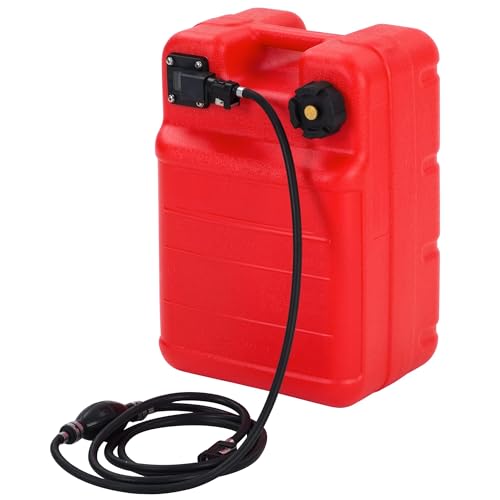
The 6-gallon LEISULIF unit mirrors many benefits of its larger sibling with a high-density polyethylene body and a long 9.8-foot hose. It is designed for compact storage and convenient transport, particularly on boats with limited space. The durable construction resists damage from sunlight, heat, and fuel exposure, helping prevent cracks and leaks over time.
This size is ideal for boats that can accommodate a mid-range fuel reserve without sacrificing cargo or equipment space. It also pairs well with portable watercraft or small fishing boats that require dependable refueling between outings. Evaluate how often you refuel at sea to determine if the 6-gallon option suffices or if the larger 12-gallon tank better suits your cruising plans.
ActiveTrail 6 Gallon Marine Fuel Tank
The ActiveTrail model focuses on a clear fuel level indicator and a dual venting system, offering multiple perspectives on fuel management. The built-in gauge helps operators monitor remaining fuel without opening the tank, reducing spills and evaporation. The dual venting system provides flexibility in various conditions, contributing to safer fueling in hot or humid climates. The rugged HDPE body supports regular marine use and helps withstand the daily rigors of beach, dock, or trailer storage.
As with other portable tanks, assess whether you need the extra gauge capability, the length of the included hose, and how the dual venting system performs under varying pressures. This option can be especially useful for boats that require precise fuel planning to maximize trip duration without frequent stops for refueling.
Buying Guide
- Fuel capacity: Choose a size that matches typical trip durations, engine fuel consumption, and the boat’s storage constraints.
- Vent system: Vented caps reduce vapor buildup during hot days; two-way or dual-vent options offer added safety in fluctuating conditions.
- Built-in gauge: A sight gauge or integrated fuel indicator helps with quick checks, facilitating better fuel management on the water.
- Hose length and fittings: Ensure hoses are long enough for deck-to-tung or stern refueling, and that fittings match standard marine lines (1/4 NPT or as specified).
- Durability and materials: HDPE is common for impact resistance and fuel compatibility; verify UV resistance for sun-heavy environments.
- Storage and portability: Slim profiles, under-seat options, and molded feet can improve stability and ease of transport on small decks.
- Fuel compatibility: Confirm whether the can supports diesel and ethanol blends if you use dual-fuel rigs or diesel engines sometimes.
- Spill prevention: No-spill sealed designs reduce the risk of accidental spills during transport or refueling on open water.
- Regulatory compliance: EPA and CARB compliance indicates adherence to environmental and safety standards for marine use.
When selecting among these options, consider your boat size, typical voyage duration, docking environments, and how often you refuel away from shore. For larger boats and extended trips, the 12-gallon models offer more range, while 6-gallon tanks provide a balance between capacity and space. Always follow local regulations for fuel handling and ensure venting and gauge features align with your safety and operational needs.