Best Block Sealer Options for Leaks and Cooling System Repairs
Finding a reliable block sealer is essential for diagnosing and addressing coolant leaks in engines. This article highlights five top-performing options, detailing their strength, compatibility, and the types of leaks they’re designed to fix. Each product section provides a quick overview and practical considerations to help you choose the right sealant for your vehicle’s cooling system.
Quick Overview
- Hapco Heavy Duty Block Sealer (Pack of 2) – Hapco
- K&W 401016 Block Seal Permanent Metallic – CRC
- BlueDevil Radiator & Block Sealer – BlueDevil Products
- Bar’s Leaks 1109 Liquid Copper Block Seal – Bar’s Leaks
- K-Seal ST3501 Pour and Go Head Gasket Sealer – K-Seal
Summary of chosen products: a mix of permanent sealers designed for radiators, blocks, heads and gaskets, with options suitable for plastic, aluminum, and metal cooling systems. All are compatible with typical antifreeze formulations and require no extensive engine disassembly for application in many cases. Consider your vehicle type, engine material, and leak location when selecting a product.
Hapco Heavy Duty Block Sealer (Pack of 2)

Hapco’s block sealer is designed to mix seamlessly with all antifreezes and is formulated to prevent heater core plugging. This dual-pack provides redundancy for persistent leak concerns and is safe for both plastic and aluminum cooling units. The product aims to deliver a durable, permanent repair by creating a molecular bond with leaks, while avoiding common clogging issues associated with some formulations. Consider using in vehicles with stubborn or multiple leak sites.
K&W 401016 Block Seal Permanent Metallic
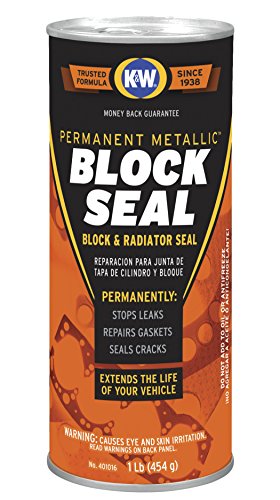
K&W 401016 provides a permanent molecular seal that’s designed to be as strong as steel. It targets cracks and holes in cast iron and aluminum engine blocks, head gaskets, freeze plugs, and compatible radiators and heater cores. This product is suitable for both diesel and gasoline engines with water-cooling systems and aims to offer a robust, long-lasting fix without extensive engine work.
BlueDevil Radiator & Block Sealer

BlueDevil’s 16-ounce formula provides a permanent repair for radiator and block leaks. It works effectively on plastic, aluminum, and metal radiators and contains no solids or fibrous materials that could cause clogs. This option is marketed as a non-solids sealant, potentially reducing the risk of particulate debris in the cooling system. It’s suitable for a variety of cooling system configurations across different vehicle types.
Bar’s Leaks 1109 Liquid Copper Block Seal

This one-step formula is designed to permanently fix coolant leaks in engines and cooling systems. It’s antifreeze-compatible and requires no draining, making it convenient for quick repairs. The product uses sodium silicate technology to seal leaks in plastic, aluminum, and cast iron components, including heads, blocks, manifolds, and radiators. It’s positioned for wide-ranging use in cars, trucks, and other vehicles with cooling-system leaks.
K-Seal ST3501 Pour and Go Head Gasket Sealer
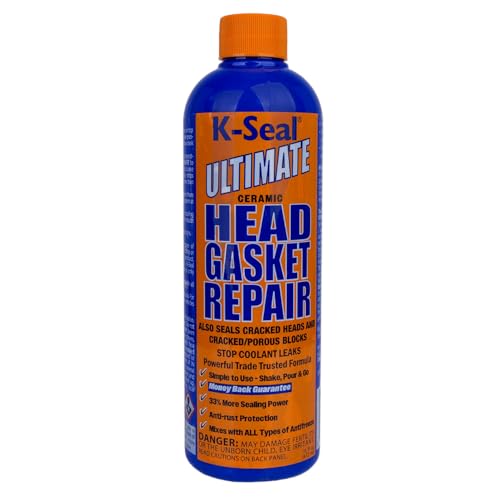
K-Seal ST3501 offers a permanent repair solution for blown head gaskets, cracked heads, and porous engine blocks. The formula provides enhanced sealing power and works without draining or flushing; just shake, pour, and run the engine as normal. It’s described to seal leaks up to 0.64 mm in size and is suitable for various vehicle sizes. Larger engines may require multiple bottles for an effective repair.
Buying Guide
- Leak location and material: Determine whether leaks are in the head gasket, block, radiator, or heater core, and consider whether the engine is aluminum or cast iron, and the radiator material (plastic, aluminum, or metal).
- Seal permanence vs. temporary fix: Some products claim permanent sealing, while others aim for a reliable seal that may require later maintenance. Assess the severity and expected longevity of the leak.
- Vehicle type and antifreeze compatibility: Ensure the product is compatible with your vehicle’s antifreeze formulation and cooling system configuration. Diesel and gasoline engines may have different requirements.
- Ease of use: Look for one-step Pour & Go solutions versus products that demand more steps or engine idle time. Consider driving patterns and maintenance schedules when selecting.
- System safety and risk: Review potential side effects, such as clogging risk or residues. Choose products that are explicitly safe for your cooling system materials and heater cores.
- Seal Strength and particle composition: Some sealers use fibrous materials or solids; others are solid-free. If the goal is to minimize debris in the cooling system, non-solid formulations may be preferred.
- Application guidance: Follow product instructions for engine temperature, pouring location, and any flushing requirements to maximize the seal’s effectiveness and minimize complications.
When evaluating block sealers, consider the trade-offs between immediate ease of use and long-term system health. Some products are designed for quick relief of leaks with minimal downtime, while others emphasize a robust, permanent seal that may involve higher initial complexity. Consulting a professional mechanic can help verify the leak’s cause and confirm that a sealer is the appropriate next step for your vehicle.