Best RV Chassis Battery Solutions for Reliable Power
Home on the road requires dependable power for chassis and auxiliary systems. This guide covers five top Amazon picks that deliver durability, safety, and easy integration for recreational vehicles. From deep-cycle batteries to rugged battery boxes, these options help maintain electrical performance whether you’re boondocking or parked at a campground.
| Product | Brand | Type | Key Benefit |
|---|---|---|---|
| Deka 9A34R AGM Intimidator Battery | Deka | AGM Deep-Cycle Battery | Reliable RV chassis power with maintenance-free design |
| NOCO Snap-Top BG31 Battery Box | NOCO | Battery Box for Group 24-31 | Rigid enclosure, easy mounting, versatile for RV batteries |
| 48V 100Ah LiFePO4 EconomiPower | EconomiPower | LiFePO4 Battery with BMS | High energy density with Bluetooth monitoring |
| Camco Double Battery Box | Camco | Dual Battery Box | Safe housing for two batteries with corrosion-resistant build |
| POWO Carlife Battery Box | POWO Carlife | 12V Battery Box | Waterproof, dual QC3.0 charging, compact for RV use |
The following sections highlight each product, focusing on how it supports RV chassis power, ease of installation, safety features, and compatibility with common RV electrical setups. Each entry stays within a concise 250-word limit while presenting objective specifications and practical use cases.
Deka 9A34R AGM Intimidator Battery
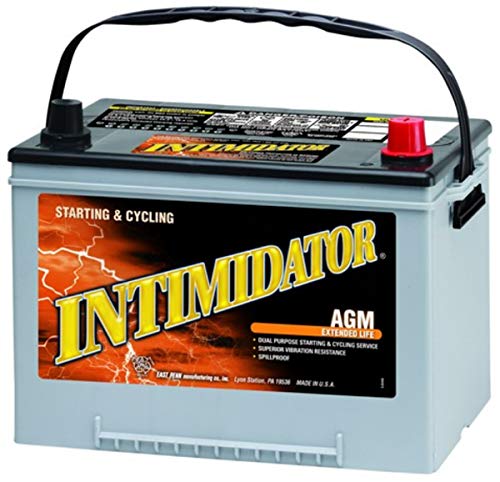
The Deka 9A34R AGM Intimidator Battery is a deep-cycle AGM option designed for demanding RV chassis power needs. The 9A34R designation indicates robust plate construction and a sealed design that minimizes maintenance. AGM chemistry typically offers low self-discharge and improved resistance to vibration—beneficial when traveling on rough roads. This battery is commonly chosen for RV house systems as a reliable power source for in-cabin electronics, lighting, and low-demand devices. When used as part of a dual-battery setup, it can improve engine starting reliability and extend overall runtime for essential RV functions. Compatibility with standard 12-volt systems makes it a straightforward upgrade for many users seeking a long-lasting, maintenance-free solution.
NOCO Snap-Top BG31 Battery Box

The NOCO Snap-Top BG31 Battery Box is a rugged enclosure designed for Group 24–31 batteries, including automotive, marine, and RV applications. Its snap-top design emphasizes quick, tool-free access and simplified installation. This box is described as structurally rigid with pre-drilled internal pilot holes for direct mounting and a strap-mount option for tougher installations. The design accommodates various battery chemistries and sizes, making it versatile for RV setups where space and mounting flexibility matter. For users prioritizing a safe, durable housing to protect a main chassis battery or auxiliary pack, the BG31 offers an accessible, plug-and-play solution that minimizes exposure to the elements and accidental short circuits.
48V 100Ah LiFePO4 EconomiPower Battery
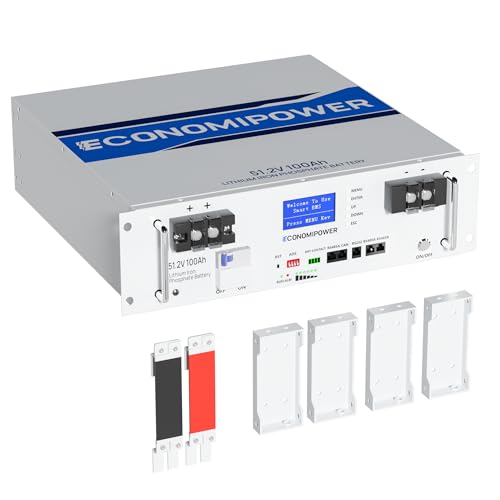
This EconomiPower 48V 100Ah LiFePO4 battery is designed for home energy storage, RVs, and solar off-grid configurations. It features CAN and RS-485 communication, enabling integration with compatible inverters and monitoring systems. Real-time monitoring is facilitated by an onboard LCD screen and Bluetooth, showing state of charge (SOC), voltage, temperature, and current for each cell. A 100A BMS provides protections against overcharge, over-discharge, over-current, and short circuits—enhancing safety for RV electrical setups. The one-touch ON/OFF switch doubles as a circuit breaker, and the double-terminal design supports robust positive/negative connections with reduced heat buildup. Suitable for RV use where higher capacity and smart monitoring are valuable for energy management on longer trips.
Camco Double Battery Box
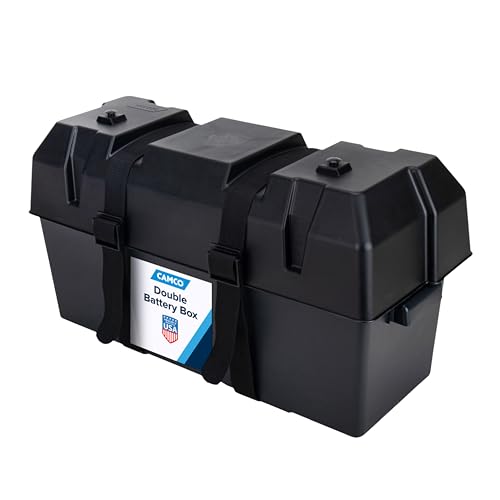
The Camco Double Battery Box is a heavy-duty enclosure designed to house two batteries for RVs, cars, or marine applications. Its corrosion-resistant polymer construction helps protect batteries in rugged environments. Internal dimensions and stacking options accommodate two 6V GC2 batteries or two 12V Group 24/24M batteries, aligning with common RV configurations. This box emphasizes safe battery storage, cable routing, and protection from the elements while maintaining accessible battery access for maintenance. It’s a practical choice for owners who operate dual-battery systems to power essentials such as lights, fans, and refrigeration during extended trips.
POWO Carlife Battery Box

The POWO Carlife Battery Box is a compact 12V enclosure designed for RVs, boats, and camping gear. It supports batteries around 30Ah–10Ah, with a Dual QC3.0 charging capability and an Anderson plug for quick power connections. The box is described as waterproof and dustproof, suitable for outdoor use and harsh environments. The combination of a protected housing, fast charging compatibility, and dual terminal options makes it a practical choice for travelers who need a compact, weather-resistant power box with flexible charging and easy integration into a chassis power system.
Buying Guide: Key Purchase Considerations for RV Chassis Power
When selecting components for RV chassis power, consider how each piece aligns with your electrical needs, space, and travel style. The following factors help balance performance, safety, and long-term value.
- Battery chemistry and capacity: AGM and LiFePO4 offer different advantages. AGM is maintenance-free and robust for bounce, while LiFePO4 provides higher energy density, better cycle life, and smart monitoring capabilities. Determine your daily power use and desired runtime between charges.
- Voltage and compatibility: Verify volts (12V vs 24V or higher) and ensure compatibility with your RV’s charging system, inverter, and solar input. A higher capacity system may require upgraded wiring and fusing.
- Monitoring and safety features: Integrated monitors (SOC, voltage, temperature) and a capable BMS help prevent unsafe conditions. Look for protections against overcharge, over-discharge, and short circuits.
- Physical installation: Consider enclosure type, mounting options, and ruggedness. For exposed or outdoor installations, weatherproof boxes with secure latching and pre-drilled mounting holes simplify installation.
- Connectivity and scalability: If you plan to expand, choose systems with flexible connectors (Anderson, CAN/RS-485, Bluetooth) that enable future integration with solar, inverters, and smart meters.
- Weight and space: Heavier batteries require sturdy supports. Slice your layout to fit chassis compartments, under-bunk storage, or dedicated battery bays without obstructing access to other systems.
- Maintenance and warranties: Long warranties and proven track records are valuable for RV gear that endures travel wear. Ensure replacement parts and service channels are accessible in the regions you travel.
For most RV users, a balanced setup includes a deep-cycle battery or LiFePO4 module paired with a reliable enclosure and, when needed, a dual-battery arrangement to separate chassis starting power from living area loads. Pairing monitoring capabilities with robust fusing and appropriate wire sizing improves safety and reliability on the road.