Best Car Polisher Tool: Top Picks for Detailing, Buffing, and Finishing
Car polishing tools help restore shine, remove oxidation, and create a smooth, professional-level finish. This guide highlights five top-rated car polisher tools, spanning corded and cordless options, variable speeds, and ergonomic designs. Each entry includes performance highlights, battery compatibility where applicable, and user-friendly features to suit beginners and seasoned detailers alike.
Summary of Selected Products
| Product | Brand | Key Benefit | Notes |
|---|---|---|---|
| Buffer Polisher 1600W | LDHTHOPI | High power with 7 speeds for tough jobs | Detachable handles for comfort |
| Buffer Polisher 1600W | GEVEELIFE | Low noise with constant-power control | 4.5 lb, ergonomic, detachable handles |
| Cordless Buffer Polisher Kit | VERVEWAVE | Cordless flexibility with DeWalt battery compatibility | No battery included |
| Cordless Car Buffer Polisher Kit | Niusken | LED display and 6 speeds for precision | 2x 21V batteries included |
| Protmex Cordless Car Buffer Polisher | Protmex | Newly upgraded eccentric polisher with dual batteries | 6 speeds; 2x batteries included |
LDHTHOPI Buffer Polisher: 1600W, 7 Inch/6 Inch, 7 Speeds

The LDHTHOPI buffer polisher is built around a robust 1600W motor designed for demanding tasks such as removing oxidation, scratches, and stains from automotive finishes. With seven adjustable speeds ranging from 1000 to 3500 RPM, this model provides the versatility needed for varying coatings and conditions. It includes three use modes—direct use, D-handle, or side handle—so operators can tailor grip and control for extended polishing sessions. The detachable handles support comfortable operation in different hand sizes and heights, making it suitable for both beginners and pros working on cars, boats, or other surfaces requiring a high-gloss finish.
GEVEELIFE Buffer Polisher: 6 Inch/7 Inch, 1600W, 7 Speeds

The GEVEELIFE car buffer polisher employs a 1600W motor paired with a built-in constant-power control board, enabling extended operation with reduced overheating risk. It offers seven speed settings (1000–3500 RPM) to accommodate delicate polishing or aggressive decontamination. The device weighs around 4.5 pounds and features detachable D-handle and side handle options for versatile grip. A safety switch lock aids in reducing fatigue during long detailing sessions, while the compact build supports effortless maneuverability around curves and panels.
VERVEWAVE Cordless Buffer Polisher Kit: 6-Inch, 1800—5500 RPM
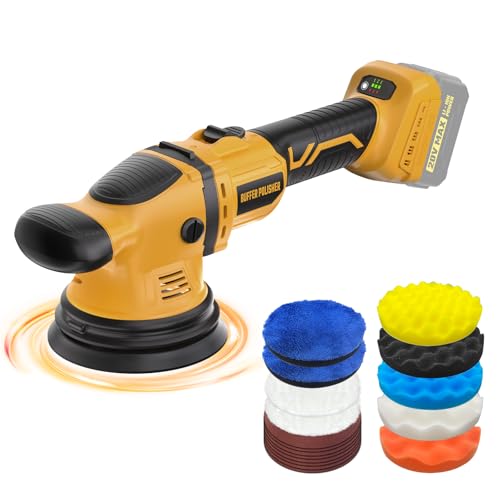
The VERVEWAVE cordless polisher is designed for Dewalt 20V batteries (battery and charger not included). Its upgraded brushless motor aims to deliver higher power with quieter operation and extended motor life. The tool covers a wide speed range and is compatible with existing Dewalt battery ecosystems, allowing users to leverage existing packs and chargers. This model suits users who need mobility for spot polishing on vehicles, boats, or other surfaces without the constraints of a power cord.
Niusken Cordless Car Buffer Polisher: 6-Speed, LED Display

The Niusken cordless polisher emphasizes ease of use for beginners with its LED display showing current speed and battery level. It includes two 21V 2000mAh batteries, a full set of attachments, and a 8mm dual-action orbit that supports swirl-free finishes. The device features an overheating protection system, automatically cooling if used at high speeds for extended periods. This kit is well-suited for waxing, polishing, and light scratch removal on a range of vehicles.
Protmex Cordless Car Buffer Polisher: 6 Inch, 2x2000mAh

The Protmex car polisher kit features a newly upgraded copper motor with safe temperature control protection. It offers six speeds (2800–5500 RPM) and ships with two 21V, 2000mAh batteries to support continuous operation. The dual-battery setup helps maintain performance during longer detailing sessions, and the included attachments expand its versatility for waxing, polishing, and scratch removal without frequent interruptions for recharging.
Buying Guide: Key Purchase Considerations and Comparisons
- Power and performance: For heavy-duty oxidation removal and defect correction, prioritize machines with high wattage motors (around 1600W) and broad speed ranges. Brushless motors can offer longer life and quieter operation in cordless options.
- Speed range and control: Look for models with multiple speeds (at least 6–7 settings). Delicate tasks require lower RPMs, while heavy correction benefits from higher speeds. A constant-power or soft-start feature helps prevent swirls and heat buildup.
- Corded vs cordless: Corded polishers deliver consistent power and are typically lighter on battery management. Cordless kits offer mobility for tight spaces but require battery capacity planning and may have shorter continuous run times.
- Ergonomics and handling: Detachable D-handles, side handles, and overall weight influence comfort during extended sessions. A safety lock and low-vibration design can reduce fatigue and improve control.
- Attachments and compatibility: Check included pads (foam, wool), backing plates, and whether the kit supports common polishing compounds. For cordless tools, verify battery compatibility with existing systems if you own other tools.
- Maintenance and cooling: Models with built-in cooling or overheat protection help sustain performance during longer polishing sessions. Constant-power boards can maintain consistent output without overheating.
- Ease of learning: Beginner-friendly options include LED displays for speed and battery status, clearly labeled speed ranges, and comprehensive accessory kits to cover waxing, polishing, and scratch removal tasks.
- Safety considerations: Always wear eye protection and a mask when polishing; choose a polisher with a watchdog safety switch and keep polishing discs clean to avoid introducing new defects.
When selecting a car polisher tool, align your choice with your typical detailing workload, vehicle types, and preferred power source. Corded models excel in long sessions with steady output, while cordless versions provide flexibility for hard-to-reach panels or outdoor detailing. By balancing motor power, speed control, ergonomics, and accessory availability, you can choose a tool that delivers consistent, professional-looking results across a range of finishes.