Best LS Intake Manifold Upgrades for Cathedral Port Heads in 102mm and 92mm Sizes
If you’re upgrading an LS-powered vehicle with cathedral port heads, selecting the right intake manifold can boost throttle response, peak horsepower, and overall drivability. This guide highlights five top options compatible with 4.8L, 5.3L, 5.7L, and 6.0L LS engines, focusing on cathedral port configurations and cable-driven throttle bodies. Each product listing includes key features to help you compare fitment, material, and performance benefits for street and performance builds alike.
Summary of chosen products:
| Product | Brand | Size/Inlet | Material | |
|---|---|---|---|---|
| Htostar Racing 102mm Intake Manifold | Htostar Racing | 102mm | Aluminum | Cable drive compatible; cathedral port heads |
| FAST LSXr 102mm Intake Manifold | FAST | 102mm | Aluminum | Modular runner design; LS1/LS2/LS6 compatible |
| YESHMA 92mm Intake Manifold | YESHMA | 92mm | Aluminum | LS cathedral port; broad model compatibility |
| 28095 LS1 EFI Cathedral Port Manifold | JGhyperX | Unknown (in product listing) | Aluminum | Single plane; LS Gen III/LS1/LS2 |
| Htostar Racing 92mm Intake Manifold | Htostar Racing | 92mm | Aluminum | Cable drive; cathedral port |
Htostar Racing 102mm Intake Manifold For LS

The Htostar Racing 102mm manifold is designed for LS-based engines with cathedral port heads, suitable for 4.8L, 5.3L LS1, LS2, and LS6 configurations driven by a cable throttle body. The 210mm tall height and 102mm inlet provide a larger air path for increased flow over stock manifolds. Made from 1/8″ thick T6061 aluminum, it includes vacuum ports and a rear MAP port for sensor integration. This model is compatible with several Chevrolet and Cadillac performance lines listed in the product features, making it a practical upgrade for mid- to high-performance street builds.
Key considerations: ensure your throttle body is cable-driven, verify cathedral port compatibility for your head design, and account for the manifold height when fitting in a crowded engine bay. The included ports support standard MAP sensing configurations, simplifying install.
FAST LSXr 102mm Intake Manifold
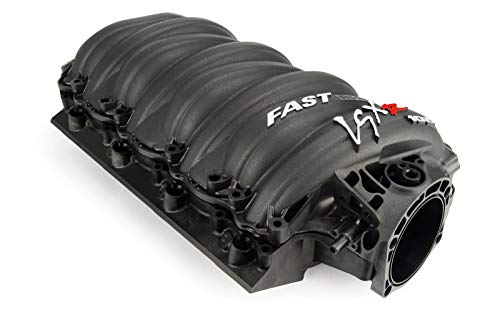
The FAST LSXr 102mm manifold emphasizes performance with longer runners and a larger air inlet than stock, designed to boost peak horsepower while preserving low-RPM torque. Finished in black for aesthetic appeal, it features a modular, removable runner design that facilitates porting and maintenance. This makes it a strong option for enthusiasts planning future cylinder head work or port matching, as it supports customization without sacrificing base functionality.
Important considerations: ensure compatibility with your engine family (LS1/LS2/LS6), confirm drive-by-cable throttle body compatibility if relevant, and plan for potential porting work if your goal is significant airflow improvements at high RPM.
YESHMA 92mm Cathedral Port Intake Manifold

YESHMA’s 92mm LS intake manifold is built for cathedral port engines and fits a wide range of LS family configurations, including 4.8L, 5.3L, 5.7L, and 6.0L applications. The unit uses 3mm thick T6062 aluminum that is TIG-welded, providing rigidity and resistance to bending under boost or vacuum conditions. The product outlines compatibility with major models such as Corvette, Firebird/Trans Am, Z06, SSR, TrailBlazer SS, Cadillac CTS-V, Pontiac GTO, and Saab 9-7X Aero, making it a versatile choice for mixed-model builds.
Considerations: check that cathedral port heads match your engine’s port geometry and confirm the exact intake model fits your year and trim. TIG-welded aluminum offers strength, but you should inspect port alignment if you plan to port or rotate to a different calibration.
28095 LS1 EFI Cathedral Port Manifold

The 28095 manifold for LS Gen III/LS1/LS2 engines features a single-plane intake design intended for multi-port fuel injection. It supports a broad horsepower band with a focus on LS1/LS2 compatibility along with 4.8L, 5.3L, 5.7L, and 6.0L small-block configurations. The listing emphasizes standard deck height and comprehensive installation, making it suitable for enthusiasts who want a straightforward upgrade that complements existing EFI systems.
Considerations: verify the manifold’s compatibility with your specific LS variant, and be aware of the single-plane design if you are targeting strong mid- to high-RPM performance. Port matching and TB sizing should align with your fuel system and intake tubing.
Htostar Racing 92mm Intake Manifold For LS

This Htostar Racing 92mm manifold targets LS-based engines with cathedral port heads and features a 92mm inlet, 210mm tall height, and 1/8″ thick aluminum construction. It includes vacuum ports (1/4NPT and 1/8NPT) with plugs and a rear MAP port for 10 MAP. The model mirrors the 102mm variant in fitment scope, making it a practical alternative for those seeking a slightly smaller inlet for throttle response and packaging flexibility in tighter engine bays.
Key considerations: ensure cable-driven throttle compatibility, confirm cathedral port head geometry, and plan for potential space constraints given the manifold height and port positions in your engine bay.
POSENG LS Cathedral Port Intake Manifold

POSENG offers an LS cathedral port intake designed for broad LS family compatibility, including 6.0L, 5.7L, 5.3L, and 4.8L variants with 4.8L LR4, L33, L59, LM4, LM7, LS1, LS6, LQ4, LQ9, LS2. The 3mm T6061 aluminum construction is TIG-welded for rigidity, and the design emphasizes a robust mounting configuration capable of withstanding boost and vacuum stress. The product highlights a model that covers Corvette, Firebird, Trans Am, Z06, SSR, TrailBlazer SS, CTS-V, GTO, and Saab 9-7X Aero installs, giving broad cross-model applicability.
Considerations: verify the exact fitment for your vehicle year and LS variant, and confirm the manifold’s port configuration aligns with your heads. TIG welding ensures durability, but inspect for any blemishes that could affect seal or port alignment after install.
Buying Guide: Key Purchase Considerations And Comparisons
- Engine compatibility: Confirm cathedral port head compatibility with your LS family and the exact displacement (4.8L, 5.3L, 5.7L, 6.0L). Some manifolds are tuned for specific models or years; double-check against your vehicle’s build.
- Inlet size and airflow: Larger inlets (e.g., 102mm) generally enable more airflow and power at higher RPMs, but may require additional intake and throttle body sizing. Smaller 92mm options can improve throttle response in certain setups or tighter engine bays.
- Material and construction: Aluminum manifolds are common and durable; look for lip welds and overall finish quality. TIG welding tends to yield robust joints useful for boost conditions.
- Throttle body compatibility: Identify whether the manifold is designed for drive-by-cable or drive-by-wire systems. Cable-driven setups are common on older LS builds and must match your throttle linkage configuration.
- Port matching and height: Consider the manifold height relative to hood clearance and the potential need for port matching to your cylinder heads. Taller manifolds may require engine bay modifications.
- Maintenance and serviceability: Modular runner designs (as seen in some FAST models) can ease porting and future performance work. Check for ease of disassembly if you plan to port or reseal.
- Vehicle scope: If your goal is a street car vs. a track-focused machine, choose a manifold that aligns with your power band target (low-end torque vs. high-RPM horsepower).
- OEM vs. aftermarket: OEM-style manifolds (GM Genuine Parts) emphasize reliability and compatibility with stock systems, while aftermarket options often prioritize maximum airflow and customization potential.
- Warranty and support: Consider brands that offer clear warranty terms and technical support for LS applications, especially if you plan boost or forced induction later.
This selection emphasizes cathedral port compatibility and LS-based engines with drive-by-cable throttle bodies. When choosing, balance the inlet size, overall height, and your engine bay constraints with your intended use, whether daily driving, weekend cruising, or competitive racing. For best results, confirm fitment via the vehicle’s year and model and consult with a qualified technician if you plan porting or complex fuel-system changes.