Best Stop Leak Solutions for Cracked Head Gaskets
Engine cooling problems from a cracked head or blown head gasket can cause overheating and costly repairs. This guide highlights reliable stop-leak products designed to seal head gasket leaks, cracks, and related cooling-system vulnerabilities. Each product below is evaluated for ease of use, compatibility with antifreeze, and potential long‑term effectiveness. Read on to compare options and identify suitable solutions for typical cooling-system failures.
Summary of Selected Products
| Product | Brand | Key Benefit | Our Pick Suitability |
|---|---|---|---|
| HG-1 Head Seal | Bar’s Leaks | Seals blown head gasket leaks and warped/cracked heads | Best for quick, all-in-one head-seal restoration |
| 1109 Liquid Copper Block Seal | Bar’s Leaks | Permanently fixes leaks across cooling system | Great for broad sealing and copper-based performance |
| 1100 Head Gasket Repair | Bar’s Leaks | Stops leaks and seals blown gaskets | Direct head gasket repair emphasis |
| Block Seal Head Gasket Fix | Bar’s Leaks | Seals gaskets and severe leaks with one-step formula | Strong head/block sealing in one go |
| Ceramic Motor Seal | IRONTITE | Permanent ceramic seal for head gaskets and radiators | Long-lasting protection and anti-corrosion |
Bar’s Leaks HG-1 Head Seal Blown Head Gasket Repair

HG-1 Head Seal is marketed as a quick remedy for blown head and intake gasket leaks. It claims compatibility with all antifreeze types and requires no coolant flush or thermostat removal. The product suits vehicles that can idle for a short period without overheating, offering a one-step repair approach. The formulation relies on sealing compounds designed to travel through the cooling system to seal gaps in the head, block, and gaskets. This option emphasizes minimal downtime and straightforward use.
Key features include antifreeze compatibility for 50-50 coolant blends and simple application without draining coolant. It targets head gasket leakage and related seal failures while aiming to stop ongoing coolant loss. While promising, effectiveness may vary by vehicle condition, the severity of the leak, and driving patterns. Prospective users should verify compatibility with their engine materials and consult vehicle service information before use.
Bar’s Leaks 1109 Liquid Copper Block Seal

This one-step repair claims to permanently fix coolant leaks across cooling-system components, including heads, blocks, gaskets, and radiators. The liquid copper sealant is designed to penetrate small and large leaks via a silicate-based carrier that bonds within the cooling pathways. It’s marketed as antifreeze-compatible, with no draining required, making it convenient for quick remediation. The product is positioned as suitable for engines with damaged head gaskets and other cooling-system breaches, provided the vehicle can reach and sustain proper operating temperatures during application.
Users should consider the system’s material compatibility (copper-friendly sealants are common in many engines) and the potential for altering cooling-system chemistry. Regular monitoring after application is advised to ensure seals remain stable and no new leaks emerge. This option blends ease of use with a strong emphasis on long-term sealing across multiple components.
Bar’s Leaks 1100 Head Gasket Repair
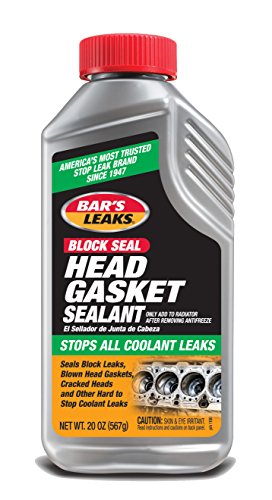
Bar’s Leaks 1100 Head Gasket Repair focuses on stopping leaks and sealing cracked cylinder heads and blocks, with explicit aims at head gasket failure scenarios. The product is designed to work in engines with minimal disassembly, promoting a straightforward pour-and-seal process. It emphasizes sealing capability across gaskets and the head/block interface, potentially reducing the need for more invasive repairs if the engine can reach normal operating temperatures and avoid overheating during the treatment window.
As with any gasket sealant, performance depends on leak severity, engine design, and proper dosing. Prospective buyers should check compatibility with their engine type and ensure the vehicle can idle safely for the recommended duration after application. This option is positioned as a practical, head-gasket-targeted repair for owners seeking a non-invasive fix with sealing power.
Bar’s Leaks Block Seal Head Gasket Fix
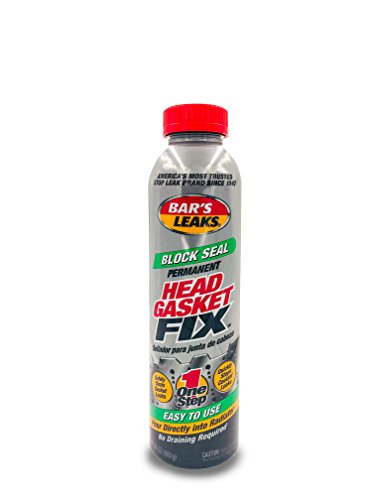
Block Seal Head Gasket Fix presents a one-step approach that combines antifreeze-compatible sealing liquid with particulate gasket-sealing material. The formula is marketed to penetrate gaps and cracks in aluminum and cast iron heads and blocks, then harden to form a permanent seal. It targets head gaskets, cylinder heads, intake gaskets, cracked blocks, and freeze plugs. The product emphasizes rapid sealing under high heat, a catalyst effect described as enabling a durable bond even under engine stresses. No cooling-system draining is required if the engine can idle for about 20 minutes without overheating.
This option is positioned for engines with multiple potential leak points, offering a single-treatment solution that may address several weak spots simultaneously. As with similar products, results depend on leak size, engine type, and correct usage. Review vehicle manufacturer guidance when applying to performance or aluminum-heavy engines.
Bar’s Leaks 1334 One Seal Stop Leak

One Seal Stop Leak is a multipurpose remover designed to seal leaks across oil, transmission, and power steering systems. While not exclusively a head-gasket product, it can address minor leaks that could accompany a cracked head scenario, particularly where seals deteriorate and coolant exposure intersects with other fluids. The formulation emphasizes versatility and ease of use, with a claim of sealing leaks in multiple systems using a three-times-seal design. Compatibility with engine oils and other fluids should be verified for optimal results.
Bar’s Leaks Radiator Stop Leak (11 oz)

This radiator stop-leak product is designed to seal internal and external leaks, including those in radiators, heater cores, and gaskets. It claims to work on plastic, aluminum, and metal radiators and to lubricate water pump seals while inhibiting rust and scale buildup. Its broad scope makes it a potential companion product for a cracked head scenario where multiple leak paths exist within the cooling system. As with all stop-leak products, the emphasis is on compatibility, not replacement for major mechanical repairs.
Bar’s Leaks Radiator Stop Leak Tablets

Radiator Stop Leak Tablets offer a professional-strength formula that treats leaks and protects against rust, corrosion, and pH imbalance. The packaging notes OEM usage and worldwide adoption, highlighting reliability and ease of use. Tablets providing ongoing protection help maintain a sealed cooling system after addressing a cracked head or gasket issue. For best results, follow dosing instructions and schedule rechecks at recommended mileage intervals to maintain leak prevention and cooling efficiency.
Irontite Ceramic Motor Seal

Irontite Ceramic Motor Seal forms a durable ceramic coating that seals leaks in head gaskets, radiators, and various engine components. The coating is designed to withstand high temperatures and corrosion, potentially improving cooling performance by reducing coolant loss. The product emphasizes long-lasting protection and rust inhibition, making it a solid option for engines prone to overheating and repeated leaks. It is presented as a preventive and corrective measure, with attention to compatibility with standard cooling-system operating conditions.
Buying Guide: Key Purchase Considerations And Comparisons
- Leak location and severity: For visible head-gasket leaks or cracked blocks, products marketed specifically for head gaskets (like HG-1 Head Seal or 1100 Head Gasket Repair) tend to be more targeted than general sealants.
- Material compatibility: Antifreeze compatibility is common, but confirm if your coolant type (OAT/HOAT, silicate, phosphates) is supported. Some formulas are better with aluminum engines; others suit cast iron blocks.
- Vehicle operating conditions: If the engine can idle safely for the recommended duration, one-step sealants can work well. Extremely high-leak scenarios or overheated engines may require more extensive service.
- Long-term vs. temporary fix: Some products emphasize permanent sealing, while others offer temporary containment. Consider your willingness to monitor performance and plan for a future professional repair.
- Multiple-use vs. single-use: Some options seal multiple components (heads, blocks, radiators, and gaskets). If multiple leaks exist, a broader-sealing formula may be advantageous.
- Manufacturer guidance and warranties: OEM and professional-use signals may reflect real-world performance. Verify product claims with vehicle make/model and consult a mechanic if uncertain.
- Safety and maintenance: After application, monitor coolant color, pressure, and temperature. Avoid driving long distances until you confirm the seal remains intact and overheating does not recur.
- Application instructions: Follow dosing and idle-time recommendations precisely. Improper use can lead to clogged passages or reduced cooling efficiency.