Best Intake Valve Cleaners for Superior Engine Performance
Maintaining a clean intake valve is essential for optimal engine performance and fuel efficiency. Carbon buildup on intake valves can cause rough idling, hesitation, and reduced power, especially in modern engines with gasoline direct injection (GDI) and turbochargers. This article reviews the top intake valve cleaners available on Amazon that help dissolve carbon deposits and enhance engine health. Below is a summary table featuring the best products selected for their effectiveness, compatibility, and user convenience.
| Product | Brand | Key Feature |
|---|---|---|
| CRC GDI IVD Intake Valve & Turbo Cleaner | CRC | Highest concentration PEA detergent for GDI engines |
| Gumout Foaming Intake Valve & Turbo Cleaner | Gumout | Powerful foaming spray for deep cleaning turbo and intake valves |
| LIQUI MOLY Valve Clean Petrol Additive | Liqui Moly | Reduces fuel consumption and emissions universally |
| Berryman Intake Valve and Combustion Chamber Cleaner | Berryman | Contains PEA to dissolve carbon in all fuel-injected gasoline engines |
| CRC Throttle Body and Air-Intake Cleaner | CRC | Effective for throttle body cleaning and smoother idle |
CRC GDI IVD Intake Valve & Turbo Cleaner

The CRC GDI IVD Intake Valve & Turbo Cleaner is specialized for gasoline direct injection and turbocharged engines. It features the highest concentration of Polyether Amine (PEA), a detergent proven effective in breaking down stubborn carbon deposits. This cleaner is designed to be easily installed through the air intake system for thorough valve and turbo cleaning without engine disassembly. Its targeted formula restores engine performance by cleaning intake valves and turbo components, preventing rough idling and power loss. The ease of application combined with the powerful chemistry makes this unit ideal for modern engines needing advanced maintenance.
Gumout Foaming Intake Valve & Turbo Cleaner

Gumout’s Foaming Intake Valve & Turbo Cleaner uses a powerful foaming spray that adheres to surfaces inside intake manifolds, valves, and combustion chambers. This formula penetrates hard-to-reach carbon deposits, improving engine throttle response and overall efficiency. It is safe for use in sensitive engine types such as turbocharged and GDI engines, making it versatile for modern vehicles. The cleaner effectively enhances horsepower, smooths idling, and supports fuel economy by removing carbon buildup that impairs combustion quality and airflow.
LIQUI MOLY Valve Clean Petrol Additive

The Liqui Moly Valve Clean is a petrol additive designed to improve engine performance universally. It helps reduce fuel consumption and lower pollutant emissions by cleaning the intake valves and helping maintain cleaner combustion chambers. Its universal fit makes it compatible across various gasoline engines without requiring specialized application tools. This cleaner contributes to improved throttle response and extended engine life by mitigating carbon buildup that can damage engine efficiency and longevity.
Berryman Intake Valve and Combustion Chamber Cleaner
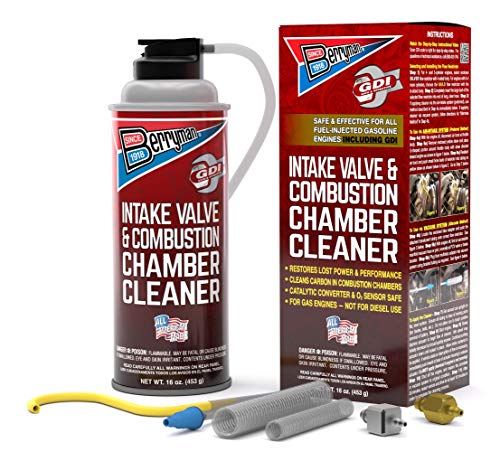
Berryman’s Intake Valve and Combustion Chamber Cleaner works in all fuel-injected gasoline engines including GDI, TBI, and PFI types. It uses Polyetheramine (PEA) to break down carbon buildup inside the intake valves and combustion chambers. The aerosol format offers ease of use and thorough cleaning without disassembly. This product helps restore engine smoothness, reduces emissions, and promotes better fuel economy. It is notable for its versatility across different engine injection configurations.
CRC Throttle Body and Air-Intake Cleaner

The CRC Throttle Body and Air-Intake Cleaner is an effective choice for eliminating carbon, varnish, and gum buildup in throttle bodies and intake systems. It improves engine startup, reduces hesitation, and smooths rough idling conditions. Designed for use in all fuel-injected engines, it helps maintain efficient air-fuel mixture flow by cleaning critical throttle plate components. This product contributes to better engine responsiveness and smoother operation, particularly in vehicles showing signs of throttle body contamination.
Buying Guide for Intake Valve Cleaners
Engine Compatibility
Ensure the intake valve cleaner is suitable for your engine type. Modern engines with Gasoline Direct Injection (GDI) and turbochargers require cleaners formulated with Polyether Amine (PEA), which is effective at dissolving stubborn carbon deposits common in these systems. Some products specify compatibility with TBI (Throttle Body Injection) or PFI (Port Fuel Injection) engines, so confirm before purchase.
Cleaning Method and Application
Different products offer various application methods such as spray aerosols, foaming formulas, or additives to be poured into the fuel system. Aerosols and foaming sprays are often inserted through the air intake for direct cleaning, while additives work continuously to prevent buildup. Consider ease of use and whether you prefer a one-time intensive clean or ongoing maintenance.
Effectiveness of Active Ingredients
PEA (Polyether Amine) is the gold standard chemical for breaking down carbon deposits without harming engine components. Cleaners with high concentrations of PEA tend to yield better results, especially for GDI engines. Some formulas may also include lubricants to protect throttle plates and valves after cleaning.
Engine Performance Benefits
Good intake valve cleaners help restore lost horsepower, improve throttle response, reduce rough idle, and enhance fuel economy. Additionally, they lower harmful emissions and support longer engine life by preventing carbon buildup-related damage.
Safety and Compatibility
Choose cleaners that explicitly state safety for turbocharged and sensitive modern engines. Some harsh chemicals can damage gaskets or sensors, so opting for well-reviewed, vehicle-specific formulations reduces risks.
Frequency of Use and Maintenance
Carbon buildup varies depending on fuel type, driving style, and engine design. Some users opt for quarterly treatments, while others prefer use every 15,000 to 30,000 miles for preventive care. Verify recommended intervals to maintain clean intake valves efficiently.