Best RV Tow Dolly Options for Effortless Trailer Maneuvering
Finding the right tow dolly for RV and trailer mobility can make a big difference in how easily you move boats, campers, and utility trailers around your property or campsite. This guide highlights five reliable models that cater to a range of weights, terrains, and towing needs. Each option is evaluated on capacity, maneuverability, and build quality to help American buyers choose confidently for RV and trailer tasks.
Summary of chosen products
| Product | Brand | Max Tongue Weight | Key Benefit | Image |
|---|---|---|---|---|
| MaxxHaul 70225 Trailer Dolly | MAXXHAUL | 600 lb | Balanced for small-to-mid trailers; pneumatic tires for rough surfaces |  |
| Tow Tuff Trailer Dolly w/ 12″ Flat-Free Tires | Tow Tuff | 800 lb | Solid 12″ tires, adjustable height for versatile trailers |  |
| VEVOR Electric Trailer Dolly | VEVOR | 600 lb | Electric power with strong motor, anti-tip stability |  |
| Trailer Tug | Trailer-Tug | 3,500 lb | High-load maneuverability in tight spaces | 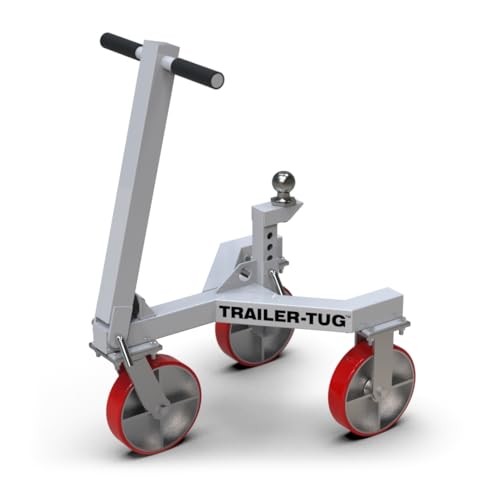 |
| Goodyear Electric Trailer Dolly | Goodyear | 600 lb | Quiet DC motor, heavy-duty build for frequent use |  |
MaxxHaul 70225 Trailer Dolly With 12″ Pneumatic Tires
The MaxxHaul 70225 is designed for effortless trailer maneuvering with a tongue weight limit of up to 600 pounds. Its 12-inch pneumatic tires help roll across varied surfaces, from gravel to pavement, reducing resistance during pushes or pulls. The steel construction emphasizes durability for long-term maintenance-free use, making it suitable for small to mid-size trailers, boats, or jet-ski setups. This model balances portability with steadiness, offering a practical option for homeowners and RV enthusiasts who frequently reposition trailers around a yard or campground.
Tow Tuff Trailer Dolly With 12″ Flat-Free Tires
Ideal for a broad range of trailers, the Tow Tuff model supports up to 800 pounds and uses 12-inch flat-free tires for reliable rolling without the need to refill or patch tires on site. Its 1 7/8-inch hitch ball compatibility makes it a versatile option for many couplers, while the 40-inch handle provides leverage and control. The height adjusts from 15.36 to 24.36 inches, enabling compatibility with different trailer heights and improving maneuverability on uneven driveways or campgrounds. This dolly suits RVs, campers, and utility trailers that require steady, all-weather handling.
VEVOR Electric Trailer Dolly, 3600 lbs Max
The VEVOR electric dolly is built for heavier duty tasks with a 3600-pound towing capacity, though it handles trailers with up to 600 pounds tongue weight. Powered by an 800W motor and a robust Q235A steel frame, it offers smooth, dependable towing for RVs, boats, and mid-size campers. An anti-tip design and a removable rear swivel wheel improve stability, especially in turns or on uneven ground. The combination of all-terrain pneumatic tires and solid rear casters ensures reliable steering and predictable handling across different surfaces.
Trailer Tug
Trailer Tug emphasizes maneuverability in tight spaces with substantial tongue weight capacity up to 3,500 pounds. This makes it a strong option for heavier trailers, including larger campers or flatbeds, where precise steering and control are critical. Its portable design supports travel and storage convenience, ensuring you can take the same equipment to different sites without heavy lifting. For RV owners who frequently switch between campgrounds or home storage, Trailer Tug offers a compelling balance of power and portability.
Goodyear Electric Trailer Dolly
The Goodyear electric dolly combines a 3600-pound trailer weight capacity with a 600-pound tongue weight limit, delivering robust performance for heavier RV trailers and utility setups. Its DC 24V system drives a powerful 800W motor, designed for repeated use in demanding environments. Features include a patented adjustable ball attachment mechanism and an efficient drive system that minimizes maintenance. The tool is designed for straightforward installations and collapsible assembly, making it suitable for frequent trailer movers who prioritize reliability and ease of use.
Buying Guide: Key Considerations For Selecting An RV Tow Dolly
- Weight Capacity: Match the dolly’s tongue weight and trailer weight ratings to your typical loads. Overestimating weight capacity adds safety and longevity, while underestimating can limit use cases.
- Wheel Type And Terrain: Pneumatic tires offer better shock absorption and traction on uneven surfaces, but flat-free tires reduce maintenance. Consider the terrain where you’ll operate most often—pavement, gravel, grass, or mud.
- Height Adjustment And Reach: An adjustable hitch height helps accommodate trailers with different coupler heights. Ensure the handle length provides comfortable leverage for a single person or two-person operation.
- Power Versus Manual: Electric dollies simplify heavy loads but require charging and potential maintenance; manual models are simpler and more rugged in some environments. Choose based on how often you tow and the distance involved.
- Stability Features: Anti-tip designs, rear swivel wheels, and solid frames improve stability during turns and on slopes. These features are particularly valuable for RVs and larger trailers.
- Maintenance And Build Quality: Look for corrosion-resistant finishes and durable steel frames for long-term use. Powder coating and stainless components extend the life in outdoor storage or coastal settings.
- Ease Of Storage: Folding or collapsible designs save space in garages or storage sheds. Consider the weight of the unit if you frequently move it by yourself.
- Warranty And Support: Check manufacturer warranties and available customer support. A solid warranty can offset higher upfront costs if you plan to use the dolly regularly.
When evaluating options for RV and trailer maneuvering, consider your typical trailer weight, the surfaces you encounter, and how often you’ll rely on electric versus manual operation. The models listed above provide a spectrum of capacities and features designed to support safe, efficient movement of boats, campers, and utility trailers across American driveways and campsites alike.