Best Deep Cycle Marine Batteries for Reliable Power on the Water
Finding the right deep cycle marine battery means balancing capacity, weight, safety, and durability. The batteries below are widely used for RVs, trolling motors, sailing and fishing boats, and off‑grid marine setups. This guide compares five top options, highlighting what makes each suitable for ongoing on‑water power needs.
Summary of Selected Products
| Product | Brand | Capacity | Key Feature | Type |
|---|---|---|---|---|
| Renogy Deep Cycle AGM 12V 100Ah | Renogy | 100Ah | High safety, up to 4P parallel | AGM |
| Interstate Batteries Marine Deep Cycle 12V 100Ah | Interstate Batteries | 100Ah | Extreme deep-cycle power, thick plates | AGM |
| Weize Deep Cycle AGM 12V 100Ah | WEIZE | 100Ah | Low self-discharge, maintenance-free | AGM |
| Optima D34M BlueTop 12V 750 CCA | OPTIMA | 55 Ah (C20), 750 CCA | Spiralcell technology, high starting power | AGM |
| Newport 12V 50Ah Deep Cycle AGM | Newport Vessels | 50Ah | Lightweight, trolling motor compatible | AGM |
Renogy Deep Cycle AGM 12V 100Ah Battery

Renogy AGM batteries are known for safety and stability. The 12V 100Ah model supports series connections without limits and can be paralleled up to four P configurations, enabling expanded capacity for larger boats or remote cabins. The chemistry provides minimal maintenance and robust performance in typical marine operating temperatures. Its sealed design helps prevent leaks, and the integrated safety features reduce troubleshooting needs compared with non-sealed options.
Interstate Batteries Marine Deep Cycle 12V 100Ah
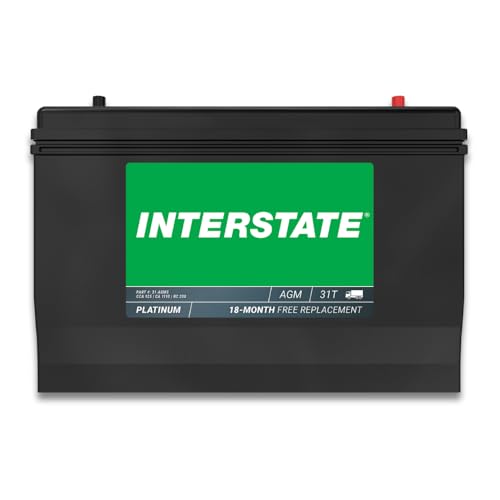
This 100Ah AGM battery is designed for serious marine duty with thick plates that support extended power delivery. It emphasizes reliability for trolling motors, boat accessories, and other peripherals. The 2x-3x longer service life claim reflects a focus on durability in ongoing deep-cycle use, reducing the frequency of replacements in demanding boating cycles. It’s not intended as an automotive battery, but rather a marine-oriented solution with robust discharge characteristics.
Weize Deep Cycle AGM 12V 100Ah Battery
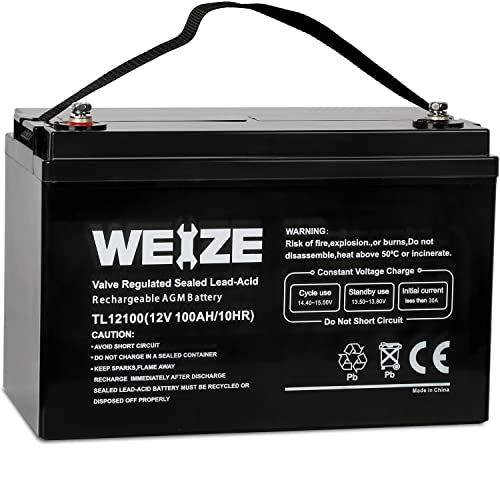
WEIZE emphasizes maintenance-free operation with a compact AGM design. The 100Ah capacity, low self-discharge (1–3% per month), and wide operating temperature range support long storage and reliable performance on the water. The battery is designed for various uses, including RVs, trolling motors, solar setups, and off-grid marine installations. It provides a practical balance of weight, cost, and longevity for day trips and extended voyages alike.
OPTIMA Batteries D34M BlueTop Deep Cycle Battery

OPTIMA’s SpiralCell technology delivers consistent power with high starting capabilities and deep-cycle performance. The D34M is a dual-purpose AGM battery designed for boats and RVs, offering a respectable reserve capacity and reliable performance under challenging weather. Its maintenance-free design and robust vibration resistance suit saltwater and freshwater boating alike, though it has a smaller capacity compared to larger 100Ah models.
Weize Dual Purpose AGM Battery BCI Group 27M

The Group 27M model from WEIZE focuses on dual-purpose use with a 92Ah rating and a quick-charge capability. It emphasizes a low internal resistance for higher output and longer cycle life compared with traditional flooded batteries. The design supports simultaneous starting and deep cycling, which can be advantageous for boats needing reliable engine starts and steady power for accessories and trolling motors. Proper charging voltage and current recommendations are noted to optimize charging time and lifespan.
Buying Guide: Key Considerations for Marine Deep Cycle Batteries
- Chemistry and type: AGM batteries are common for marine use due to sealed construction, low maintenance, and good vibration resistance. Consider whether you need a pure deep-cycle battery or a dual-purpose model capable of starting engines as well as providing deep-cycle power.
- Capacity and rating: Look at Amp-hours (Ah) and reserve capacity (RC). Higher Ah means more available energy, but will add weight. For trolling motors and cabins, 100Ah models are common; for compact setups, 50–60Ah may suffice.
- Discharge and charging: Deep-cycle batteries tolerate repeated cycling, but self-discharge rate matters for stored vessels. AGM models typically feature low self-discharge and support charging at standard marine voltages (often 14.4–14.6V for charging).
- Size, weight, and fit: Ensure dimensions fit the battery tray and that weight distribution does not affect boat handling. Lighter models ease installation but may offer less rugged construction.
- Temperature range: Marine environments vary in temperature. Batteries with broader operating ranges perform better in extreme heat or cold, maintaining capacity and safety.
- Maintenance and safety: Sealed AGM designs minimize acid leaks and require less upkeep. Consider venting needs in enclosed spaces and ensure compatibility with your solar, trolling motor, and inverter systems.
- Durability and warranty: A robust construction with solid warranty coverage reduces long-term risk. Look for brands with proven service records in marine settings.
- Charging compatibility: Verify recommended charging voltages and currents. Some models require specific charging protocols or BMS guidance to maximize lifespan.
- Paralleling and series connections: If you need more capacity, confirm whether the battery supports parallel (and/or series) configurations as needed for larger power systems.