Best Generators for Travel Trailers: Compact Power on the Go for RV Life
Travel trailers demand reliable, portable power for camping, cooking, climate control, and device charging. This guide highlights five standout generators and power stations that balance weight, runtime, and user-friendliness for RV adventures. Below you’ll find concise product profiles, practical use cases, and key considerations to help you choose the right solution for your trailer setup.
Summary Table
Product | Brand | Type | Key Power Output | Notable Benefit
– EF ECOFLOW TRAIL 300 DC | EF ECOFLOW | Portable Power Station | 300W DC output, 288Wh | Ultra-compact with multiple ports; ideal for groups
– Jackery Portable Power Station Explorer 300 | Jackery | Portable Power Station | 300W output, 293Wh | Fast recharge and lightweight
– BailiBatt Portable Power Station | bailibatt | Portable Power Station | 300W total, 257Wh | Lightweight, versatile for multi-device charging
– EF ECOFLOW TRAIL 200 DC | EF ECOFLOW | Portable Power Station | 220W DC output, 192Wh | Very portable; good for light-use trips
– MaXpeedingrods 3500W Portable Inverter Generator | maXpeedingrods | Gas-powered Generator | 3500W peak / 3000W running | Strong for heavy load, RV-ready outlets
EF ECOFLOW TRAIL 300 DC Portable Power Station

The EF ECOFLOW TRAIL 300 DC combines a substantial 288Wh LiFePO4 battery with a 300W DC output allowance, delivering reliable energy for camping, travel, and emergency use. Its compact form fits easily in a backpack or trailer storage space. With a diverse port selection—two USB-A, two USB-C PD3.1, and a 12V car port—it supports multiple devices simultaneously, including phones, tablets, cameras, drones, and small appliances. The LiFePO4 chemistry offers improved cycle life and safety, making it suitable for extended outdoor trips.
In practice, the TRAIL 300 DC shines when you need dependable power without carrying a heavy generator. It’s well-suited for charging laptops, powering a small cooler, running a portable fridge, or keeping essential electronics charged during off-grid moments. Its light weight and compact dimensions make it a practical companion for road trips, camping weekends, and as a compact emergency backup. If you frequently travel with a group or family, the ability to share power across several ports adds real value.
Key considerations: battery type (LiFePO4), total capacity, DC output distribution, multiple ports for shared charging, and portability. For trailer use, pairing this unit with solar panels can provide a renewable charging loop during daylight, extending camping opportunities without relying on a generator. The TRAIL 300 DC is a balanced choice for RVers seeking portable power with modern USB-C fast charging and robust safety features.
Jackery Portable Power Station Explorer 300
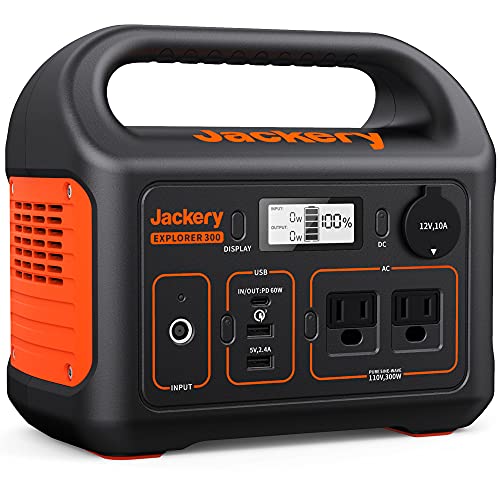
The Jackery Explorer 300 offers a compact, lightweight solution for off-grid camping and trailer life. With a 293Wh lithium-ion battery and a total 300W continuous power capability, it supports essential devices through two AC outlets and multiple DC/USB ports. Notably, its fast recharge options include wall outlets and car charging, and it can be recharged from compatible solar panels for quiet, emission-free energy on the go.
Usage scenarios include powering a compact refrigerator, charging laptops, running small kitchen appliances, or supporting a smartphone-heavy campsite. The unit’s 7.1-pound weight makes it easy to haul, stash in a trailer cabinet, or take on short hikes while keeping a base camp powered. The Explorer 300’s safety features and built-in battery management help protect connected gear during outings and blackouts alike.
Important considerations: recharge speed, weight, and the number of outlets. For trailers, consider how many devices you typically run at once and whether you’ll need a solar panel add-on for longer stays. Jackery’s ecosystem also offers compatible panels and accessories to optimize trailer camping power, although prices and options vary by season and supply.
BailiBatt Portable Power Station

The BailiBatt unit focuses on versatility for both home use and outdoor adventures. With a 257Wh battery and a total 300W capacity, it provides two 120V pure sine wave AC outlets, plus multiple DC outputs to support laptops, smartphones, cameras, and other electronics. Its light 4.6-pound frame is convenient for trailers, tailgating, and off-grid camping, while the built-in safety features aim to protect sensitive devices during charging cycles.
For trailer applications, this power station supports multiple concurrent loads, such as a laptop plus small fridge, lighting, and small kitchen appliances, without exceeding the rated total. The compact design helps keep the unit accessible in storage compartments, and the safety features contribute to reliable operation in various environments. The BailiBatt model is suitable for campers who prioritize portability and multi-device charging in a single, manageable package.
Considerations: capacity versus weight, the mix of AC and DC ports, and the expected run time at typical loads. If you routinely run several devices at once, verify that the total draw remains within the 300W rating. Also, check for battery cycle life and the availability of replacement packs or accessories compatible with your trailer setup.
EF ECOFLOW TRAIL 200 DC Portable Power Station

The Trail 200 DC provides a lighter option in the EF ECOFLOW line with a 192Wh capacity and a 220W total DC output. This model emphasizes portability for travelers who want reliable power without added weight. The compact design is particularly well-suited for short camping trips, off-grid meals, and essential electronics charging during travel days.
Its multiple port arrangement supports shared charging, with efficient USB-C connections and PD compatibility. The smaller footprint makes it easy to pack in a trailer’s storage area, use at a campsite table, or bring along for day trips. For trailer use, this unit serves as a supplemental power source or a primary small-load option when you want to minimize weight and bulk.
Buyers should consider whether the 192Wh capacity aligns with their expected loads and how often they may need to recharge daily. If heavy device use is anticipated, pairing with solar panels or a larger unit may be advisable to keep the trailer powered through longer camping sessions.
EF ECOFLOW TRAIL 300 DC With Camping Lamp

This variation adds a camping lamp with stepless dimming, four brightness modes plus SOS, and a magnetic base for flexible lighting around the campsite or inside the RV. The 288Wh battery and 300W DC output mirror the standard Trail 300 DC, ensuring you don’t have to trade power for lighting. The lamp’s adjustable glow is helpful for late-night cooking, reading, or adding ambient light to a small trailer interior during a blackout.
For trailer use, the integrated light reduces the need for separate lanterns and keeps your payload lighter. The ability to illuminate a table, tent zone, or entryway without plugging in other devices makes this option attractive for solo travelers and small groups. When planning, ensure that the lamp’s energy draw and the battery’s remaining capacity align with your evening activities and charging needs.
Buying Guide: Key Purchase Considerations For Travel Trailers
- Power needs and runtime: Estimate daily energy use for essential devices (refrigerator, lights, charge ports, and small appliances). Bigger rigs and more devices demand higher-capacity units or a mix of power sources.
- Portability vs. capacity: Portable power stations excel for light-to-moderate loads and quick setups; gas-powered generators deliver higher running watts for larger appliances or air conditioning but add noise and fuel considerations.
- Battery chemistry and lifecycle: LiFePO4 cells offer longer cycle life and stability in varying temperatures—beneficial for frequent campers. Consider thermal management and expected charge cycles when choosing a model.
- Charging options: Look for multiple input methods (AC wall, car, solar). Solar compatibility can extend stays without fuel or external power access, especially on extended trips.
- Ports and device compatibility: Ensure the unit has enough USB-C PD, USB-A, and AC outlets to support laptops, cameras, and a portable fridge. A diverse port mix reduces the need for adapters and hubs.
- Safety features: Overload protection, short-circuit protection, battery management systems, and temperature control protect both the power source and sensitive trailer electronics.
- Noise and emissions: For travelers who value quiet camping, consider inverter generators or silent/pure-sine-wave power stations. Gas generators can be louder and require fuel management.
- Expansion options: Check compatibility with solar panels or additional battery packs to scale capacity in the future without replacing the entire system.
- Maintenance and warranties: Look for reliable brands with clear warranty terms and accessible customer support to ensure long-term peace of mind on the road.