Best Glue for Automotive Plastic Repairs: Top Picks for Strong, Durable Bonds
If you’re tackling automotive plastic repairs, choosing the right adhesive is crucial. This guide highlights top glues and epoxies that bond plastic components in cars—emphasizing strength, dry time, and resistance to heat and weather. Each product below is well-suited for dashboards, trim, emblems, and interior panels, helping you achieve lasting, professional-looking results.
| Product | Brand | Type | Key Benefit |
|---|---|---|---|
| J-B Weld Plastic Bonder | J-B Weld | Urethane Adhesive | High tensile strength; 1:1 mix; 15-minute set |
| J-B Weld SuperWeld Glue | J-B Weld | Cyanoacrylate Adhesive | Instant bond; versatile on difficult surfaces |
| 3M Plastic and Emblem Adhesive 08061 | 3M | Plastic Adhesive | Strong, quick-setting bond; 15-minute set |
| 3M Plastic Emblem & Trim Adhesive 03601 | 3M | Clear Adhesive | Fast-setting; weather-resistant hold |
| Gorilla 2 Part Epoxy | Gorilla | Epoxy Resin | Clears when cured; gap filling; 5-minute set |
Note: The selections focus on glues and epoxies proven effective for automotive plastics, including dashboards, panels, emblems, and trim components. Durability, cure time, and weather resistance are balanced to cover common repair scenarios on cars and trucks.
J-B Weld Plastic Bonder Body Panel Adhesive

Product overview: A quick-set, 2-part urethane adhesive designed to bond thermosets, carbon fiber composites, thermoplastics, coated metals, concrete, and more. It features a 1:1 mixing ratio, sets in about 15 minutes, and can be sanded after 30 minutes. With a tensile strength around 3770 psi, it forms a hard, permanent bond ideal for automotive panels and repair surfaces that demand strength and longevity.
Key considerations: This adhesive excels where you need a durable, semi-permanent bond that tolerates vibrations and temperature fluctuations common in vehicles. It is suitable for body panels, trim, and composite components, but requires careful mixing and surface prep for the best result.
J-B Weld SuperWeld Glue

Product overview: A cyanoacrylate super glue designed for fast, strong bonds on multiple surfaces, including hard-to-bond plastics. It’s prized for quick spot repairs and precise application with its applicator, enabling fast fixes on automotive plastics, interior panels, and trims. Bonds in seconds and dries clear, reducing visibility on cosmetic components.
Key considerations: Ideal for on-the-spot repairs where speed matters. It may not provide long-term structural bond for all high-stress automotive areas, but it’s excellent for small parts, fasteners, and edge repairs where a quick cure is preferred.
WoldoClean Car Glue: Extra Strong Formula

Product overview: An automotive-grade super glue formulated for car parts, interiors, and exterior fixes. The adhesive offers quick curing within seconds, with weatherproof and heat-resistant properties, enabling reliable bonds on plastic components like interior panels, trim, mirrors, and more. It is designed for both indoor and outdoor automotive repairs.
Key considerations: Useful for quick, clear bonds on visible areas, particularly where neatness matters. It may be best used as a supplementary adhesive for stabilization or for small components alongside a primary structural adhesive.
Loctite Super Glue Gel Control

Product overview: A gel-formula cyanoacrylate glue designed for controlled application, particularly on vertical surfaces and areas where dripping is a concern. It provides strong bonds for plastic, wood, metal, and crafts, with a no-mess design that helps apply precisely to automotive trim, emblems, or interior plastic pieces.
Key considerations: Gel control helps reduce runny adhesive messes on upright or slanted automotive surfaces. It’s excellent for precise bonding in trim work and small plastic components but may require longer cure times for full strength in high-stress areas.
3M Plastic and Emblem Adhesive 08061
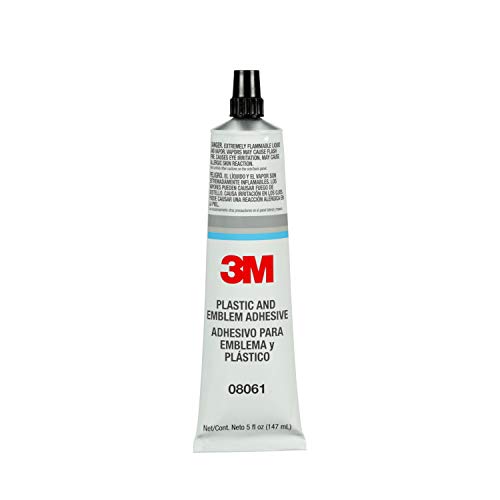
Product overview: A strong, fast-setting adhesive designed for automotive plastics and interior/exterior applications. It bonds fully cured automotive paints and plastics, resisting environmental exposure such as water and heat. It sets in about 15 minutes and fully cures in 24 hours, offering a reliable solution for panels, emblems, and trim pieces.
Key considerations: A solid choice for longer-term bonding where appearance matters, since it builds a strong, clean bond with good resistance to weather and automotive fluids. Proper surface preparation enhances adhesion and cure.
3M Plastic Emblem & Trim Adhesive 03601

Product overview: An industrial-strength adhesive for plastic and metal emblems, trim, and other exterior components. It delivers a secure hold that remains through car washes, heat, vibrations, and fluids. The formula dries clear and sets in about 15 minutes, with full cure in 24 hours.
Key considerations: Particularly useful for cosmetic parts where a discrete, transparent bond is preferred. Weather resistance makes it suitable for exterior trim and emblem repairs that endure daily driving conditions.
Gorilla 2 Part Epoxy: Clear 5 Minute Set

Product overview: A two-part epoxy that dries clear and offers a strong, durable bond for automotive repairs. It provides gap filling for uneven surfaces and bonds across various materials, including plastics and metals. The 5-minute set time allows quick repositioning and efficient work on panels and trim.
Key considerations: Best for structural repairs where a clean, invisible bond is important. It performs well on interior and some exterior components, provided surfaces are properly prepared and clamped during curing.
Buying Guide: Key Purchase Considerations For Automotive Plastic Adhesives
- Material compatibility: Check whether the adhesive is designed for plastic types common in cars, such as ABS, polycarbonate, and polyolefins. Some formulas specify thermoplastics or thermosets.
- Bond strength and cure time: For body panels and trim, prioritize higher tensile strength and a practical set time. Epoxies often offer strong, longer-lasting bonds, while cyanoacrylates excel in quick fixes.
- Weather and heat resistance: Automotive parts face heat, UV exposure, moisture, and temperature cycles. Look for adhesives rated for automotive use with durable outdoor performance.
- Clarity and aesthetics: For visible areas like emblems and trim, choose clear or color-matching formulas to minimize visual impact after curing.
- Application and tooling: Consider whether a syringe, gel, or precision applicator best fits the repair scenario. A no-drip gel helps on vertical surfaces, while a syringe allows clean, controlled dosing for precise joints.
- Surface preparation: Most strong bonds require clean, roughened surfaces. Degrease, roughen with a suitable abrasive, and dry thoroughly before applying adhesive.
- Cure and post-care: Some adhesives require clamping or temperature control during curing. Plan for cure time and avoid stressing bonds during this period.
- Versatility vs. specialization: A multi-surface adhesive can cover many parts, but for high-stress joints (like structural panels), a dedicated automotive adhesive or epoxy may provide longer-lasting performance.
- Safety and handling: Follow manufacturer guidelines for ventilation, skin contact, and drying times. Some solvents and fumes require good airflow during use.
Across automotive plastic repairs, a combination approach often yields the best results: a primary structural adhesive (such as a urethane or epoxy designed for plastics) paired with a fast-setting spot glue for alignment and stabilization. Surface preparation and correct curing are consistently the most influential factors in achieving a durable, professional finish.