Best Synthetic Oil for Motorcycles: Top 5 Picks for 2026
Choosing the right synthetic oil for a motorcycle can impact engine protection, clutch performance, and overall acceleration. The following top picks are formulated for modern motorcycle engines and wet clutches, offering robust wear protection, stable viscosity under heat, and compatibility with multiple OEM specifications. Below, you’ll find concise product profiles, practical guidance, and buying considerations to help you compare options quickly.
| Product | Brand | Viscosity | Application |
|---|---|---|---|
| Valvoline 4-Stroke Motorcycle Full Synthetic 10W-40 | Valvoline | 10W-40 | 4-stroke motorcycles |
| TRIAX XTerra 4T 10W-40 | Triax | 10W-40 | Motorcycles, ATVs, snowmobiles |
| Lucas Oil 10702 Synthetic 20W-50 | Lucas Oil | 20W-50 | Motorcycles, all weather |
| Castrol Power1 V-Twin 20W-50 | Castrol | 20W-50 | V-twin motorcycles |
| Castrol Power1 4T 10W-40 | Castrol | 10W-40 | 4-stroke motorcycles |
Note: This guide emphasizes synthetic formulations designed for modern motorcycle engines with wet clutches, ensuring smooth gear engagement and reliable protection across temperatures. Spec sheets and OEM recommendations should be consulted for your specific model.
Valvoline 4-Stroke Motorcycle Full Synthetic 10W-40

Valvoline’s premium full synthetic for 4-stroke motorcycles emphasizes optimized friction protection and wear resistance. Its formulation targets horsepower, acceleration, and fuel efficiency while extending oil life. Wet clutch performance is a notable focus, helping to prevent slippage and maintain smooth shifting. This oil is designed for engines seeking robust high-temperature stability and reliable protection under demanding riding conditions.
TRIAX XTerra 4T 10W-40

TRIAX XTerra 4T 10W-40 uses a synthetic ester core with built-in friction modifiers to support clutch engagement and shift stability at high RPMs. Its formulation emphasizes viscosity stability under heat and extreme wear protection, making it suitable for performance-oriented motorcycles and ATVs. The oil meets JASO MA-2 and API SL/SN specifications, ensuring broad compatibility with major OEMs and wet clutch systems.
Lucas Oil 10702 Synthetic 20W-50
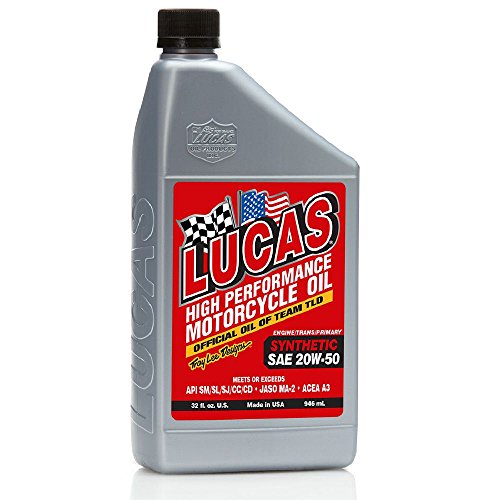
Lucas Oil 20W-50 synthetic motorcycle oil focuses on longer oil life and effective temperature management. It is formulated to meet multiple API and JASO specifications, including MA and MA-2, which helps ensure clutch compatibility across various scooter and motorcycle platforms. The thicker viscosity in 20W-50 can be advantageous in hot climates or engines requiring higher oil film strength, though it may not be ideal for all modern lightweight sport bikes in cooler environments.
Castrol Power1 V-Twin 20W-50

Castrol Power1 V-Twin 20W-50 is engineered for V-twin engines, combining Trizone technology with race-derived performance characteristics. It aims to protect engine, clutch, and gearbox under demanding conditions, such as hot weather or aggressive riding. The oil provides strong protection against wear while supporting strong acceleration and high-temperature resilience, making it a solid choice for larger displacement motorcycles and air-cooled V-twins.
Castrol Power1 4T 10W-40

Castrol Power1 4T 10W-40 is designed for four-stroke motorcycles with a focus on engine, clutch, and gearbox protection. It leverages Trizone technology to balance performance across multiple system components and is suitable for riders seeking strong acceleration and reliable performance across varied temperatures. The synthetic formulation supports consistent oil film strength under high RPMs and hot climates.
Buying Guide
Key purchase considerations when selecting a synthetic oil for motorcycles include:
- Engine type and displacement: V-twin, parallel-twin, or single-cylinder bikes may benefit from different viscosity profiles and additive packages. Always check OEM recommendations in your owner’s manual.
- Viscosity and climate: Thicker oils (like 20W-50) offer high film strength for hot climates or older, high-mileage engines, while 10W-40 oils are versatile for street riding and moderate climates. Some performance bikes prefer 5W-40 or other synthetics for cold starts.
- Clutch compatibility: Wet clutches require oils with anti-wear and friction modifiers that prevent clutch slippage. Look for MA or MA-2 ratings when applicable.
- OEM approvals and standards: API SL/SN, JASO MA/MA-2, and OEM-specific standards vary. Confirm that the oil meets or exceeds your bike’s requirements.
- Oil life and stability: Synthetic formulations typically offer longer life and better oxidation resistance, reducing the frequency of oil changes in demanding riding conditions.
- Maintenance philosophy: Choose oils aligned with your riding style—commuting, touring, racing, or off-road can all warrant different additive packages and viscosity choices.
Practical notes for selection:
- For daily riders in moderate climates, 10W-40 fully synthetic options offer a good balance of protection and fuel efficiency.
- Performance or high-stress engines may benefit from 20W-50 formulations in hot weather or older engines with larger tolerances.
- Always replace the oil filter when switching to a new oil brand or viscosity to ensure optimal filtration and oil flow.
Examples of how these oils compare across scenarios:
- Urban commuting in moderate heat: 10W-40 full synthetic oils deliver good protection, smooth shifting, and efficient combustion.
- Racing or high-rev riding: A robust synthetic with strong wear protection and clutch compatibility reduces wear under high RPMs.
- Hot climates: Thicker 20W-50 formulations can maintain oil film strength and engine protection when temperatures rise.