Best Tire for Gas Mileage: Efficient Tires and Practical Logbooks for Fuel Savings
Gas mileage depends on many factors, including tire choice and maintenance. This guide combines practical tire-related insights with a curated set of mileage log books that help you track fuel use, maintenance, and related costs. Explore five relevant products to help you monitor trips, expenses, and tire-related data for smarter driving and fuel efficiency.
Product Snapshot
| Product | Brand | Type | Key Benefit |
|---|---|---|---|
| Clever Fox Auto Mileage Log Book – Forest Green | Clever Fox | Mileage Log Book | 1,674 entries for comprehensive fuel and maintenance tracking |
| Skyline Auto Mileage Log Book – Red | Skyline | Mileage Log Book | Compact, 1,674 trips capacity, ideal for personal and professional use |
| Lankaiva Mileage Log Book – Navy Blue | Lankaiva | Mileage Log Book | 1768 entries, detailed fuel and maintenance logging |
| Clever Fox Auto Mileage Log Book – Gray | Clever Fox | Mileage Log Book | Undated pages with long-term durability for records |
| Skyline Auto Mileage Log Book – Black | Skyline | Mileage Log Book | Compact A5 design with extensive trip logging |
Note: The listed products focus on mileage and maintenance tracking, which supports better fuel management and tire care, complementing practical decisions about tires that improve gas mileage.
Clever Fox Auto Mileage Log Book – Forest Green
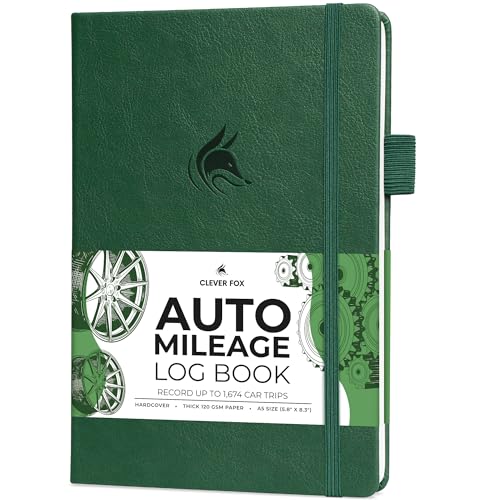
Product overview: This undated mileage log book helps you record trip mileage, expenses, gas consumption, lubrication, repairs, and tire mileage in a single, durable format. It accommodates 1,674 entries across 129 pages, giving you flexibility to log as many trips as you need. A dedicated section for emergency contacts, vehicle and insurance information, and annual totals supports comprehensive vehicle records that can aid in tax documentation and budgeting.
Why it matters for gas mileage: Detailed fuel consumption tracking paired with maintenance entries supports insights into how tire pressure, wear, and routes influence fuel efficiency. Keeping neat, accessible logs can help identify patterns that affect miles per gallon and guide tire-related decisions.
Skyline Auto Mileage Log Book – Red

Product overview: The Skyline mileage log book tracks mileage, expenses, gas consumption, lubrication, tire mileage, and repairs. It’s designed to fit in a glove compartment and holds up to 1,674 trips across 129 pages. The log format captures date, start/end locations, odometer readings, business/personal miles, and expenses, making it versatile for personal and professional use.
Why it matters for gas mileage: Having a compact, easy-to-use log encourages consistent documentation of fuel use and tire-related costs. Regular entries can reveal fuel-efficient routes or maintenance gaps, supporting smarter tire management and driving choices.
Lankaiva Mileage Log Book – Navy Blue

Product overview: This log book offers 1,768 mileage entries to record trips, expenses, gas consumption, lubrication, repairs, and maintenance. It emphasizes a user-friendly layout for quick entry and retrieval, making it practical for individuals or small businesses seeking tax-ready records and detailed fuel tracking.
Why it matters for gas mileage: A robust tracking system helps separate fuel costs from maintenance investments, enabling better assessment of tire-related expenses, tire pressure effects, and fuel efficiency strategies over time.
Lankaiva Mileage Log Book – Navy Blue (Alternate Color)

Product overview: This is a 1768-entry mileage and maintenance tracker with an emphasis on easy navigation for swift data entry. It supports categorizing expenses, logging maintenance and upgrades, and simplifying budgeting for vehicle operation.
Why it matters for gas mileage: Documenting tire-related expenses and maintenance in a single place helps reveal how tire life and upkeep influence overall vehicle efficiency and operating costs.
Skyline Auto Mileage Log Book – Black

Product overview: Skyline’s black edition mirrors its red counterpart, offering a compact A5 size with room for 1,674 trips across 129 pages. It records date, location, odometer readings, miles, and expenses, delivering a complete auto-tracking system in a portable format.
Why it matters for gas mileage: Consistent fuel and maintenance logs support an awareness of how tire health and driving behavior affect mileage, enabling data-driven tire care decisions over time.
Buying Guide: Key Considerations For Efficient Tire And Fuel Use
- Tire selection and type: All-season vs. summer vs. winter tires affect rolling resistance and fuel economy. Look for low rolling resistance tires, which can improve miles per gallon but consider climate and safety requirements for your region.
- Tire pressure management: Maintain recommended tire pressures. Underinflated tires increase rolling resistance, reduce fuel efficiency, and wear tires unevenly. Regular checks are essential.
- Maintenance routine: Regular tire rotations, balancing, and alignment help maximize tire life and fuel efficiency. Maintenance logs help schedule these services at optimal intervals.
- Fuel tracking integration: Use a mileage log to correlate fuel purchases with trips, routes, and maintenance events. This helps identify inefficiencies and lens for tire-related improvements.
- Storage and portability: Choose a log book size that fits your vehicle and lifestyle. A5 or compact formats are convenient for glove compartments and quick entries on the go.
- Security and privacy: Undated pages can be filled as needed, offering flexibility while maintaining comprehensive records. Keep logs in a secure spot to protect personal data.
- Holistic approach: Combine tire maintenance with driving habits—e.g., smoother acceleration, reduced idling, and route optimization—to maximize gas mileage alongside tire care.
This article aligns practical tire considerations with a selection of mileage log books designed to help American drivers monitor fuel use and tire-related expenses. By tracking trips, fuel consumption, and maintenance in one place, you can gain clearer insights into how tires influence overall efficiency and drive smarter, more economical choices.