Best Deep Cycle Battery for Camping: Reliable Power on Every Outdoor Adventure
Choosing the right deep cycle battery for camping ensures you can run lights, small appliances, and essential gear without interruption. This guide reviews five top options, highlighting their chemistry, capacity, and practical use cases for RVs, off-grid cabins, trolling motors, and sail-free camping setups. Each pick balances longevity, safety, and portability to help you power your adventures with confidence.
Summary of featured products:
| Product | Chemistry | Capacity | Max Discharge | Use Case |
|---|---|---|---|---|
| Weize Deep Cycle AGM 12V 100Ah | AGM Lead-Acid | 100Ah | 1150A | RV, Solar, Camping |
| Renogy Deep Cycle AGM 12V 100Ah | AGM Lead-Acid | 100Ah | 1100A | RV, Cabin, Marine |
| CHITOLI 12V 100Ah LiFePO4 | LiFePO4 | 100Ah | Unknown (BMS protected) | Upgrading Lead-Acid, Off-Grid |
| Renogy Deep Cycle AGM 12V 200Ah | AGM Lead-Acid | 200Ah | 2000A | Higher-demand Camp setups |
| WEIZE 12V 100Ah Deep Cycle (Group 31) | AGM Lead-Acid | 100Ah | 1150A | RV, Marine, Off-Grid |
Weize 12V 100Ah AGM Deep Cycle Battery
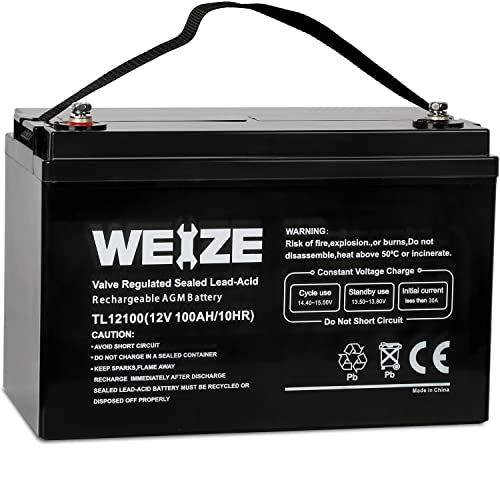
Weize’s 12V 100Ah sealed AGM battery uses absorbent glass mat technology to minimize maintenance and leakage risk. A compact 12.99 x 6.73 x 8.43 inch footprint fits tight camping setups, with a low self-discharge rate that helps retain charge during storage. It lists a high max discharge current of 1150A for short bursts and is suitable for RV, solar charging, trolling motors, and off-grid systems. Temperature tolerance supports charging around room temperatures, but care should be taken in extreme cold or heat to optimize lifespan.
The battery’s maintenance-free design makes it convenient for campers who want reliable power with minimal upkeep. The left-right terminal layout (Positive Red / Negative Black) is standard for quick hook-ups in small power systems. For extended camping trips, pairing with a solar controller can maximize recharge cycles and keep the 100Ah capacity ready for daily use.
Renogy 12V 100Ah AGM Deep Cycle Battery

Renogy’s 100Ah AGM battery is a trusted option for off-grid campers and RV enthusiasts. It’s designed for safe charging and can be connected in series or parallel to scale capacity. The manufacturer notes wide compatibility and strong performance, with a focus on safety and stability thanks to sealed design. The 100Ah rating supports moderate to high power needs when paired with solar or alternator charging, while maintaining a compact footprint for transport in camping setups. Minimal maintenance makes it appealing for long trips away from repair shops.
Renogy emphasizes safety and reliability, offering a robust option for campers who require dependable power for lighting, small electronics, and water pumps. The sealed construction helps reduce concerns about leaks during travel, and the ability to connect multiple units can scale up for larger camps or cabins. Consider your recharge frequency and climate to optimize cycle life.
CHITOLI 12V 100Ah LiFePO4 Battery (Group 24)

This CHITOLI LiFePO4 battery uses 100Ah capacity with a built-in smart BMS for protection against overcharge, over-discharge, and short circuits. It weighs about 22.57 pounds and is notably smaller and lighter than traditional lead-acid alternatives, offering 3,000–15,000+ deep cycles depending on depth of discharge. The 100Ah LiFePO4 chemistry delivers higher energy density and a longer lifespan, making it a strong option for campers who want reliable, lightweight power with flexible packing and multiple series/parallel configurations.
The built-in BMS adds a safeguard in diverse camping environments, including cold and hot conditions. While Lithium Iron Phosphate costs may be higher upfront, the longer cycle life and reduced maintenance can translate to longer-term value for frequent campers. It is best suited for energy storage rather than engine-starting needs, as typical start currents exceed smaller, everyday camping loads.
Renogy 12V 200Ah AGM Deep Cycle Battery

Renogy’s 200Ah AGM option doubles the storage capacity for campers with higher power needs or extended trips off-grid. The battery is designed for low self-discharge and robust discharge performance, capable of delivering sustained power to appliances, pumps, and lighting during longer camping seasons. It remains maintenance-free with a sealed, spill-proof design and is compatible with series and parallel configurations to tailor voltage and capacity to your system.
For campers expanding their solar arrays or running more energy-hungry gear, the 200Ah model offers a practical balance of size, weight, and endurance. If budget or vehicle space is a constraint, pairing multiple 100Ah units might be more flexible for modular setups and easier transport.
WEIZE 12V 100Ah AGM Deep Cycle (Group 31)

WEIZE’s Group 31 100Ah AGM battery is designed for versatility across RVs, boats, cabins, and off-grid systems. It features a compact yet rugged build with a 1150A max discharge current for short, high-demand bursts. The maintenance-free design reduces the typical upkeep associated with lead-acid batteries, while the 12.99 x 6.73 x 8.43 inch dimensions enable installation in smaller compartments. Its reliability in trolling motors and camping setups makes it a staple for dependable power on the move.
In camping scenarios, ensure proper ventilation and temperature-controlled charging to maximize lifespan. The battery’s standard terminal layout assists with straightforward wiring in standard power systems, and pairing with solar or a backup alternator can help maintain 100Ah of usable energy across a weekend or longer trips.
ECO-WORTHY Portable 12V Lithium Battery 20Ah

This ECO-WORTHY 20Ah portable lithium battery provides a compact power solution for campers who need lightweight storage and easy handling. With a built-in BMS and 4,000+ cycles, it suits small devices, USB charging, and compact electronics during camping, fishing, or emergency kits. The compact 8.7 x 4.45 x 4.61 inch form factor makes it ideal for tight spaces on boats, kayaks, or backpacks, and it includes a DC output option for versatile use in outdoor scenarios.
Buying Guide: Key Considerations For Camping Batteries
- Chemistry and longevity: AGM lead-acid batteries provide solid performance and lower upfront cost, while LiFePO4 (lithium) offers longer cycle life, lighter weight, and higher energy density. For frequent campers or long trips, LiFePO4 can justify its higher initial price with long-term savings.
- Capacity and depth of discharge: Higher Ah ratings extend runtime, but real usable capacity depends on how deeply you discharge. LiFePO4 typically tolerates deeper cycles without shortening lifespan compared to AGM.
- Weight and form factor: Lithium options are substantially lighter, which matters for portable setups or vehicle storage limits. AGM units are heavier but often cheaper and robust for rugged use.
- Charge requirements and charging sources: Consider solar compatibility, charger type, and maximum charge currents. AGM accepts faster charging in some setups, while LiFePO4 requires appropriate BMS and charging profiles.
- Protection and safety features: BMS (for LiFePO4) protects against overcharge, overdischarge, and short circuits. AGM batteries benefit from sealed, maintenance-free designs to prevent leaks.
- Temperature range: Extreme temperatures affect performance and lifespan. Look for batteries rated for your camping climate, and use a suitable charging environment to maximize cycles.
- Durability and maintenance: Decide between spill-proof, sealed AGM and more maintenance-intensive flooded options. Sealed designs are typically preferable for portable camping gear.
- System integration: Ensure compatibility with your existing solar panels, inverters, and loads. Series/parallel configurations should match your voltage and overall power goals.
- Cost of ownership: Initial price versus expected cycle life can vary widely between AGM and LiFePO4. Factor in replacement frequency and maintenance costs when budgeting.
In summary, the best choice depends on how often you camp, how much weight you’re willing to carry, and whether you prioritize long lifespan or upfront affordability. For many campers, a 100Ah AGM option provides reliable, maintenance-free power for standard weekend trips, while a LiFePO4 setup can serve extended adventures with lighter weight and thousands of cycles. For larger needs, a 200Ah AGM battery offers ample reserve for multiple devices and longer stays off-grid.