Best Buffers for Boats: Top Rotary Buffers for Marine Detailing
Choosing the right buffer for boats helps keep paintwork, gel coat, and finishes looking their best. The following hand-picked options provide solid power, multiple speed settings, and ergonomic handling to tackle oxidation, scratches, and swirls on marine surfaces. The list focuses on versatility for boat detailing, while also offering features that work well on cars and furniture alike. Use the buying guide below to compare options and select the buffer that best fits your boat maintenance routine.
| Product | Brand | Power | Speeds | Notes |
|---|---|---|---|---|
| LDHTHOPI Buffer Polisher, 1600W | LDHTHOPI | 1600W | 7 | 6″/7″ options, detachable handles |
| GEVEELIFE Buffer Polisher, 1600W | GEVEELIFE | 1600W | 7 | Detachable handle, compact design |
| Avhrit Cordless Car Buffer Polisher Kit | Avhrit | Battery-powered | Variable (up to 4500 RPM) | Cordless convenience, multiple attachments |
| WorkBless Buffer Polisher, 1600W | WorkBless | 1600W | 7 | Three handle modes, versatile kit |
| ENEACRO Polisher, 1600W | ENEACRO | 1600W | 6-7 levels (1500-3500 RPM) | Wide application, includes discs |
Note: The table highlights power, speed options, and key variations to help you weigh corded versus cordless designs and handle configurations for boat detailing tasks.
LDHTHOPI Buffer Polisher, 1600W

LDHTHOPI offers a high-performance 1600W motor designed for durable operation across marine and automotive surfaces. With seven adjustable speeds from 1000 to 3500 RPM, users can tailor the aggressiveness of polishing versus finishing. The unit supports three grip options—direct hold, D-handle, or side handle—making it adaptable to different staging positions on a boat deck or workshop bench. For boat detailing, the power and speed range help remove oxidation from gel coat while providing fine finishing without overheating. The detachable handle configuration supports comfort during extended sessions, essential when working on larger hull surfaces or decks.
GEVEELIFE Buffer Polisher, 1600W

GEVEELIFE’s 1600W buffer polisher emphasizes a smooth, quiet operation with a built-in constant-power control board to prevent overheating during extended sessions. Its seven variable speeds cover delicate waxing to robust defect removal, which is valuable when restoring sun-damaged gel coats or painted surfaces on boats. The compact, ergonomic design weighs around 4.5 pounds and includes detachable D-handle and side handle options, enabling stability in tight cockpit areas or along railings. A safety switch lock helps reduce fatigue during long polishing sessions at sea or in a maintenance shop.
Avhrit Cordless Buffer Polisher Kit

The Avhrit cordless buffer polisher kit focuses on portability and ease of use, removing the constraint of cords on deck or in tight bilge areas. It delivers up to 4500 RPM, providing substantial cutting power for removing swirls and oxidation on boat finishes. The kit includes multiple attachments and two 2000mAh 21V batteries, supporting extended work sessions away from power outlets. Weighing only a few pounds, this option is ideal for quick boat touch-ups, offshore maintenance, or when you need agility in hard-to-reach spots such as cabin trim and curved hull sections.
WorkBless Buffer Polisher, 1600W
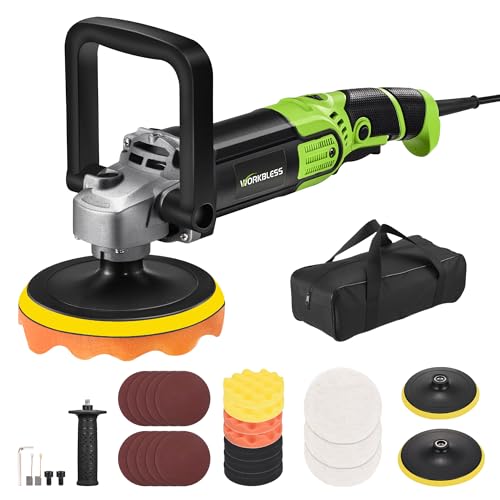
WorkBless combines a 1600W motor with seven-speed control, spanning 1300 to 3500 RPM. This broad range supports delicate waxing at low speeds and aggressive paint defect removal at higher speeds. The polisher offers three handle configurations—side handles on both sides or a U-shaped grip—facilitating comfort and precision for long sessions aboard a vessel. The overall balance and heat management make it suitable for prolonged polishing on larger deck panels or hull sections where consistent feedback is important to avoid heat buildup and swirl marks on marine finishes.
ENEACRO Polisher, Rotary Car Buffer Polisher
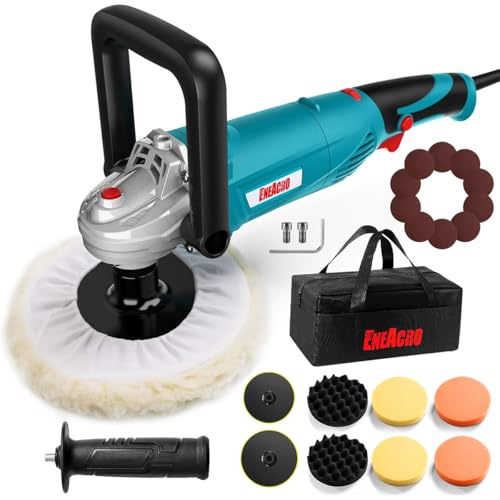
ENEACRO’s 1600W rotary polisher offers a six- to seven-speed range from 1500 to 3500 RPM, designed for professional-level car and boat detailing. The unit emphasizes the ability to remove swirls, scratches, and defects across painted surfaces, with compatibility for boat polishing tasks. The 5-pound weight and variable speed control simplify handling on a boat deck, giving operators the ability to adapt to different materials and curvature on hulls and decks. A copper-wired motor supports heat management during longer polishing cycles, which is beneficial for marine-grade finishes that demand careful attention to avoid over-polishing.
Buying Guide: Key Purchase Considerations
- Corded vs. cordless: Corded models deliver continuous power for long sessions, while cordless units offer portability on a boat or dock. Consider a kit with extra batteries if choosing cordless.
- Power and speed range: Look for at least 1500-1600W or an equivalent motor class with 7-speed settings to cover waxing, polishing, and defect removal on gel coats and paints.
- Handles and ergonomics: Detachable or adjustable handles improve comfort on uneven surfaces and when working overhead. Triple-handle options provide versatility for varied grips and fatigue reduction.
- Backing plates and discs: Ensure compatibility with common 6″ and 7″ discs. Include a mix of wool, foam, and microfiber pads suitable for marine finishes to minimize swirl marks and heat buildup.
- Heat management: Marine finishes can be sensitive to heat. Choose units with good ventilation, carbon brushes, and heat dissipation features to avoid warping or accelerated wear.
- Safety features: Lock switches, soft-start, and overload protection help prevent accidental burns or damage to boat surfaces during long sessions.
- Maintenance and accessories: A kit with extra pads, sanding discs, and attachments reduces downtime. Proper storage and cleaning after use preserve performance in marine environments.
- Surface suitability: While designed for cars, many buffers handle gel coats and painted boat surfaces. Check user reviews for marine-specific results and pad compatibility.
- Portability and storage: For on-boat use, consider compact designs, lighter weights, and integrated handles that make transitioning between the cockpit and the bow easier.