Best RV Vent Fans for 2026: Top Airflow and Weatherproof Options
Choosing the right RV vent fan is essential for comfortable travel, especially in hot climates or when spending extended time on the road. The following picks represent a mix of all-in-one solutions and high-performance units with features like remote control, rain protection, temperature sensors, and quiet operation. This guide compares key capabilities such as airflow, noise levels, installation ease, and weatherproofing to help American RV owners select a model that fits their roof opening and power setup.
Summary of chosen products:
- RVLOVENT RV Vent Fan Roof 12V Remote Control 14 x 14 inches 10-Speed
- MAXXAIR Maxxfan Deluxe Vent, Fan and Vent Cover All in One – 10-Speed
- Kohree 14″ RV Vent Fan 10 Speed Reversible with Remote Control
- hurrventer Build-in Rain Shield RV Roof Fan Vent
- Leisure Coachworks 14″ RV trailer Roof vent complete 12 volt FAN
RVLOVENT RV Vent Fan Roof 12V: 10-Speed With Remote

The RVLOVENT roof vent is designed for RV trailers, campers, or vans that require robust airflow with efficient power use. Its 10-speed intake and exhaust function provides flexible control for varying interior conditions, and the motor design prioritizes air movement while keeping energy consumption low. This model supports both lid-open and lid-closed operation, making it suitable for driving and stationary use.
Key features include remote control operation for convenience and a powered-lift lid that opens and closes automatically. The unit can reverse airflow, allowing it to bring in fresh air or expel hot air depending on user needs. Forward and reverse directions are available across a 1–10 scale, giving precise control in different scenarios. Installation is straightforward for standard 14″ x 14″ roof openings, and the design emphasizes reliable performance in varying weather conditions.
MAXXAIR Maxxfan Deluxe: All-in-One Ventilation Solution

The MaxxAir Maxxfan Deluxe unifies vent, fan, and rain cover into a single unit, offering an integrated approach to RV ventilation. The turbo-like 10-speed reversible fan, coupled with a built-in thermostat, helps maintain a comfortable interior temperature across a wide range of conditions. The built-in rain cover ensures continuous operation during rain, a key advantage for those who travel through varying weather.
With multiple features, this unit supports both intake and exhaust functions and maintains airflow even as exterior conditions shift. The rain protection adds durability and keeps the interior dry while allowing operation during adverse weather. The control system is designed for ease of use, including coordination between fan speed, airflow direction, and thermostat settings. The product is tailored for frequent full-time or long-road use where dependable ventilation is critical.
Kohree 14″ RV Vent Fan 10 Speed Reversible with Remote

Kohree’s 14″ vent fan is engineered for strong airflow (up to 934 CFM) to cool RV interiors rapidly. It includes a built-in temperature sensor that autonomously activates the exhaust fan when interior temperatures rise and turns it off when cooler. The unit is designed to fit standard 14″ x 14″ openings and includes sealing tape and screws to ease installation. A removable screen helps keep insects out while the unit is operational.
Quiet operation is a hallmark of this model, with 10 adjustable speeds and an ultra-silent motor. The design emphasizes efficiency, drawing relatively little power while delivering effective ventilation. It supports reversible airflow for flexible control over whether you bring air in or push air out, and the remote control adds convenient operation from any part of the RV.
MAXXAIR Maxxfan Deluxe: Exhaust-Only Version

This variant from MaxxAir provides essential functionality with a four-speed exhaust-only fan option and built-in rain cover. It’s designed for easy manual operation with a ceiling-mounted knob for opening and closing. The system maintains a compact footprint fits standard 14″ x 14″ openings, and its rain cover allows usage in light rain or while driving, helping to reduce interior humidity and improve ventilation consistency in adverse weather.
Because of the exhaust-only design, this model emphasizes directional airflow and straightforward control. It’s suitable where only exhaust is needed or where space constraints favor a simpler setup without compromising performance. The included rain cover remains a standout feature for year-round RV comfort.
hurrventer Rain Shield RV Roof Fan
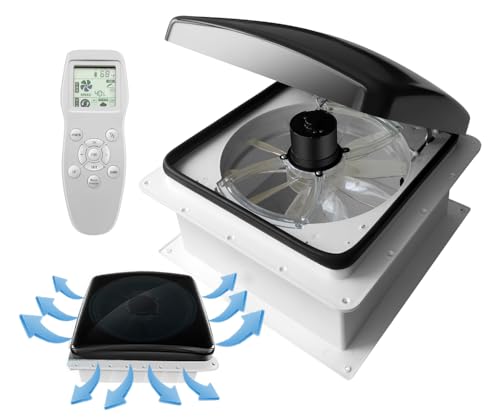
The hurrventer model focuses on reliability in rain and driving conditions, claiming a waterproof design that maintains airflow with the lid closed. It emphasizes quiet operation through a designed motor system and maintains good ventilation by exhausting hot air while drawing in fresh air. It’s positioned as a practical option for RV owners who frequently encounter varying weather while on the road.
Key advantages include portability within roof openings and a focus on consistent performance even during adverse weather. The unit supports 10 speeds and reversible airflow, enabling flexible control to balance interior feel and humidity. The design intent centers on long-term durability for continuous use across trips and seasons.
Leisure Coachworks 14″ Roof Vent Complete Kit

Leisure Coachworks offers a complete 14″ roof vent solution with a built-in motor and screen. The unit includes a removable screen for easy cleaning and a manual crank-style handle, delivering a straightforward installation for campers and RVs relying on a simple, robust roof vent. The design emphasizes durability and compatibility with standard 12-volt systems while avoiding installation complications with non-compatible voltages.
Its aerodynamic dome and on/off switch grant intuitive use. The model’s emphasis on simple maintenance and strong, quiet performance makes it a practical choice for ongoing RV use, particularly for owners who prefer a traditional, reliable venting approach without advanced electronics or remote controls.
Buying Guide: Key Purchase Considerations
- Airflow capacity (CFM) and speed: Higher CFM models move more air, which helps with hot days or humid climates. Look for adjustable speeds to tailor airflow to room size.
- Noise level: A quieter fan reduces cabin noise, especially in bedrooms or living areas. Check decibel ratings and motor type when possible.
- Power requirements: Most RV vent fans run on 12V DC; confirm compatibility with your RV battery and solar setup to avoid overloading circuits.
- Weather protection: Built-in rain covers and rain-sensor features allow operation in wet conditions without leaks. This is crucial for travel in unpredictable weather.
- Remote control and ease of use: Remotes and automatic lid mechanisms simplify operation, particularly while driving or cooking inside the RV.
- Installation scope: Ensure the unit fits your roof opening (commonly 14″ x 14″) and matches mounting thickness. Some kits include sealant tape and screws for easier installs.
- Durability and materials: Look for corrosion-resistant housings and motor components designed for outdoor exposure and long battery life.
- Smart features: Temperature sensors and auto-reverse functions can enhance comfort by adjusting airflow based on interior conditions.
- Maintenance and cleaning: Removable screens and accessible blades simplify cleaning and help prevent insects from entering the living space.
When evaluating options, consider how often you travel in rain, heat, or cold and whether you prioritize all-in-one functionality (vent, fan, and cover) or a lighter, more affordable unit. Compare remote features, installation ease, and noise levels to determine the best fit for your RV layout and power setup. This balanced approach helps ensure reliable ventilation across seasons while keeping energy use reasonable.