Best 12 Volt Golf Cart Batteries for Reliable, Long-Lasting Power
Finding the right 12-volt battery for a golf cart depends on performance, weight, cycle life, and maintenance needs. This guide highlights five top 12V batteries that consistently deliver reliable power for golf carts, RVs, trolling motors, and off-grid setups. Options include high‑cycle LiFePO4 models for lighter weight and longer life, as well as proven lead‑acid choices for affordability and broad compatibility. Each pick is evaluated for capacity, BMS features, and suitability across typical golf cart use cases.
| Product | Brand | Type | Capacity | Voltage |
|---|---|---|---|---|
| DJLBERMPW 4 Pack 12V 100Ah LiFePO4 | DJLBERMPW | LiFePO4 with built-in 100A BMS | 100Ah per battery, up to 400Ah parallel | 12V |
| GRNOE 12V 100Ah LiFePO4 (4-Pack) | GRNOE | LiFePO4 with built-in 100A BMS | 100Ah per battery, up to 400Ah parallel | 12V |
| Crown T-1275 12V 150Ah Lead Acid | Banshee | Flooded lead-acid | 150Ah | 12V |
| Trojan T1275 12V 150Ah Deep Cycle | Banshee | Flooded lead-acid | 150Ah | 12V |
| OGRPHY 4 Pack 12V 100Ah LiFePO4 | OGRPHY | LiFePO4 with 100A BMS | 100Ah per battery, up to 400Ah parallel | 12V |
DJLBERMPW 12V 100Ah LiFePO4 Battery Pack

The DJLBERMPW 12V 100Ah LiFePO4 system features a built-in 100A BMS and Grade-A LiFePO4 cells designed for long life. With an expected 4000+ deep cycles and a weight of about 24.2 lbs per battery, this setup can significantly reduce vehicle weight compared with traditional lead-acid packs. The BMS protects against overcharge, over-discharge, and short circuits, while the modular design supports parallel and series configurations to reach higher voltages and capacities as needed.
GRNOE 12V 100Ah LiFePO4 Battery (4-Pack)

GRNOE’s 12V 100Ah LiFePO4 battery features a built-in 100A BMS, compact dimensions, and a lightweight design—roughly 33% of a traditional lead-acid battery’s weight. It offers low-temperature protection down to -4°F, making it well-suited for cold-weather use in RVs and off-grid installations. The BMS provides protection against overheating and short circuits, and the manufacturer notes a practical lifetime well beyond lead-acid alternatives when properly paired with the recommended charging profile.
Crown T-1275 12V 150Ah Lead Acid Golf Cart Battery

This Crown T-1275 delivers 12V at 150Ah, designed for deep-cycle use in golf carts and other demanding environments. It weighs about 81 lbs and uses a sealed or vented lead-acid design depending on configuration. It’s compatible with standard 12V golf cart electronics and generally lower upfront cost than LiFePO4 options, though it requires regular maintenance and has a shorter cycle life compared to modern lithium chemistries.
Trojan T1275 12V 150Ah Deep Cycle Battery

The Trojan T1275 is a widely used 12V 150Ah deep-cycle lead-acid battery, popular in golf carts, RVs, and off-grid setups. It emphasizes durable construction and robust performance under cyclic load. As with other lead-acid options, expect regular maintenance needs and a shorter lifespan relative to LiFePO4 packs, but it remains a reliable, cost-effective choice for many applications.
OGRPHY 4 Pack 12V 100Ah LiFePO4 Battery
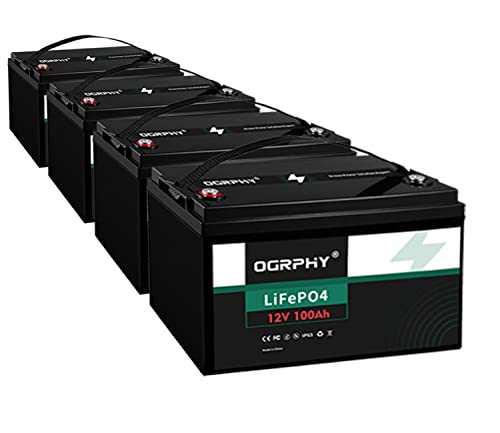
OGRPHY’s 12V 100Ah LiFePO4 packs come in a four-pack configuration with a built-in 100A BMS and Grade A cells. The set promises 5000+ deep cycles and a lightweight package relative to lead-acid equivalents. It emphasizes versatile configurations, including four in series or four in parallel to achieve higher voltage or capacity. The manufacturer highlights strong thermals and protection against common fault conditions, suitable for RVs, trolling motors, and golf carts alike.
Buying Guide: Key Considerations For 12V Golf Cart Batteries
- Battery chemistry and life cycle: LiFePO4 batteries offer longer cycle life (often 2000–5000+ deep cycles) and substantially lower weight than lead-acid options, with stable performance across a wide temperature range. Lead-acid remains a budget-friendly option but typically provides shorter lifespans and more maintenance.
- Weight and installation: LiFePO4 packs are significantly lighter, improving handling and reducing stress on cart frames. Ensure the mounting space and wiring can accommodate the chosen pack and any parallel/series configurations.
- BMS and safety features: A robust Battery Management System (BMS) protects against overcharge, over-discharge, short circuits, and overheating. Look for BMS specifications that match the charging profile of your charger and cart electronics.
- Temperature considerations: Some LiFePO4 models include low-temperature protection and require a charger with compatible voltage settings. Lead-acid batteries may tolerate colder environments but can experience reduced capacity at low temperatures.
- Charging compatibility: Verify compatibility with your existing charger or plan to purchase a matching LiFePO4 or AGM charger. A mismatched charger can affect performance and longevity.
- Maintenance and installation: AGM and flooded lead-acid batteries often require regular maintenance, including water top-offs and venting considerations. Sealed LiFePO4 batteries are lower maintenance but may have different mounting requirements.
- Cost of ownership: Upfront costs for LiFePO4 are higher, but longer lifespan and weight savings can reduce total cost of ownership over time. Lead-acid options are cheaper upfront but require more frequent replacement.
- Scalability: If planning higher capacity or voltage, consider modular LiFePO4 options that allow parallel or series connections to reach 24V, 36V, or 48V systems as needed.
In selecting a 12V golf cart battery, consider your typical usage patterns, climate, and how often you plan to upgrade. For riders prioritizing weight reduction, longer life, and lower maintenance, LiFePO4 options like the DJLBERMPW, GRNOE, or OGRPHY packs provide compelling advantages. For those seeking classic affordability and compatibility with existing fleets, lead-acid choices such as Crown or Trojan remain solid picks, especially where budget constraints are paramount.