Best 12v Lifepo4 Battery Options for Marine, RV, and Off‑Grid Power
Finding a reliable 12V LiFePO4 battery can boost your trolling motor, RV, boat, or off‑grid solar setup. This guide highlights five top options with strong safety features, built‑in BMS, and long cycle life. Each pick pairs performance with practical considerations like size, weight, and monitoring. Use the buying guide below to compare essentials such as capacity, protection, and installation fit.
| Product | Brand | Capacity | Key Feature | Best For |
|---|---|---|---|---|
| ECO-WORTHY 12V 100Ah | ECO-WORTHY | 100Ah / 1280Wh | Bluetooth monitoring, built‑in 100A BMS | Boats, trolling motors, off‑grid solar |
| 12V 100Ah LiFePO4 Group 31 | VEMDIA | 100Ah / 1280Wh | Built‑in 100A BMS, low temp protection | RVs, campers, marine use |
| ZapLitho 12V 22Ah | ZapLitho | 22Ah / ~300Wh | LCD display, 30A BMS, portable | Fishfinders, camping, emergency power |
| ECO-WORTHY 3584Wh 12V 280Ah | ECO-WORTHY | 280Ah / 3584Wh | Bluetooth real‑time monitoring, low temp cutoff | Camper vans, off‑grid solar systems |
| 12V 200Ah LiFePO4 | yeagulch | 200Ah / 2560Wh | 200A BMS, high cycle life | RV power, home energy storage |
Note: All products above use LiFePO4 chemistry for long life, safety, and stable performance in varied weather and conditions. The entries below detail each option’s strengths, supported by their listed features.
ECO-WORTHY 12V 100Ah With Bluetooth

The ECO-WORTHY 12V 100Ah LiFePO4 battery combines compact form with practical capacity. Weighing about 23.15 lbs and sized roughly to fit Group 24 configurations, it’s designed to replace lead‑acid or AGM units without wiring changes. A built‑in 100A BMS protects against overcharge, over discharge, and short circuits, while automotive‑grade cells support more stable energy delivery. Bluetooth 5.0 lets you monitor voltage, current, capacity, and predicted life from a mobile app, enabling proactive power management during trips or off‑grid projects. The unit is UL/IEC tested and CE/RoHS certified for additional safety assurance.
Key considerations:
- Wireless monitoring helps prevent unexpected power loss on boats and RVs.
- Group 24 fit simplifies swapping into existing setups.
- Reality check on weight and dimensions to ensure proper mounting space.
12V 100Ah LiFePO4 Group 31 By VEMDIA

VEMDIA’s 12V 100Ah LiFePO4 battery is designed for compact yet capable energy storage. With an included 100A BMS, it guards against overcharging, over‑discharging, and excessive current. Its 1280Wh output supports moderate RV comforts, cooler environmental work, and reliable trolling motor power. The unit is sized to fit common Group 31 battery trays, making it a practical upgrade for many mobile and off‑grid applications. The pack emphasizes safe charging in a wide temperature range, including a low‑temperature cutoff to protect cells during cold starts.
Key considerations:
- Check fit within Group 31 enclosures before purchase.
- Ensure compatible charging sources (lithium charger or solar controller).
- Avoid exceeding recommended discharge for maximum cycle life.
ZapLitho 12V 22Ah LiFePO4 Battery
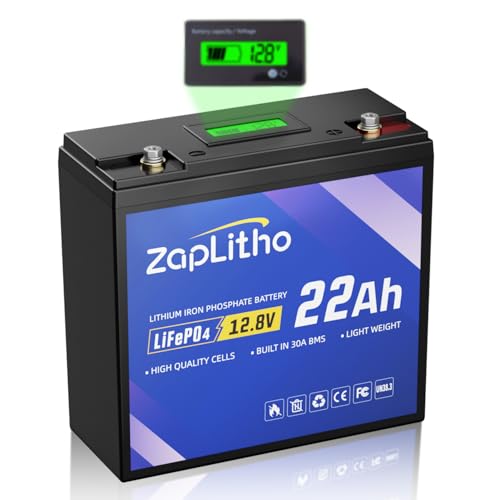
ZapLitho’s compact 22Ah LiFePO4 battery offers portability with essential safety features. Weighing around 5.5 pounds, it suits mobile setups where space and weight matter, such as small fishfinders, portable ham radio setups, or emergency power kits. The included LCD voltage display provides real‑time status, while the 30A BMS guards against typical faults. Deep cycle capability means hundreds to thousands of charge cycles, depending on usage patterns. Ideal when a lightweight, space‑saving option is required without sacrificing LiFePO4 reliability.
Key considerations:
- Limited capacity means pairing with higher‑demand devices should be planned carefully.
- Best for portable devices and supplementary power rather than primary RV power.
- Lithium charging practices influence longevity; use appropriate chargers.
ECO-WORTHY 3584Wh 12V 280Ah Battery

This high‑capacity ECO‑WORTHY system targets robust off‑grid needs, including campers, trailers, and solar networks. The Bluetooth real‑time monitoring app helps track voltage, current, and remaining capacity, while a low‑temperature cutoff protects the battery under cold charging conditions. The 200A BMS supports aggressive discharges and a broad temperature range, and the large 3584Wh usable energy makes it well suited for longer boondocking or remote cabins. The metal frame design adds durability for transport and rugged environments.
Key considerations:
- Higher upfront cost but lower total cost of ownership over many cycles.
- Size and weight considerations; ensure proper mounting space and weight distribution.
- Bluetooth range and connectivity may require near‑battery placement for best results.
12V 200Ah LiFePO4 By Yeagulch

Yeagulch’s 200Ah LiFePO4 pack emphasizes compact design for its capacity, with dimensions that fit many Group 31 trays. A robust 200A BMS protects against overcharge, deep discharge, and short circuits while tolerating elevated temperatures through automatic cutoffs. With substantial usable energy (up to 2560Wh), this option is suitable for RV enthusiasts, solar storage, and larger off‑grid installations. Its protective features and scalable design (potentially in series or parallel configurations) make it a flexible choice for expanding power needs.
Key considerations:
- Confirm that your charging system supports 200Ah inputs and LiFePO4 chemistry.
- Plan for mounting and ventilation in enclosed spaces.
- Evaluate future expansion needs when selecting series/parallel configurations.
Rvpozwer 12V 300Ah LiFePO4 Battery

Rvpozwer offers a 12.8V 300Ah LiFePO4 battery with a built‑in 200A BMS, designed for high‑demand RV, marine, and off‑grid systems. With up to 15,000 deep cycles at 60% DOD, it targets long‑term reliability and durability, far surpassing traditional lead‑acid options. The unit supports expandability: up to four in series for higher voltages or parallel for more capacity. Its 10× cycle advantage over lead‑acid translates into meaningful lifecycle savings in daily use or heavy duty camping and remote power setups. The long lifespan suits continuous power needs well.
Key considerations:
- Ensure compatibility with your load and inverter specs for 12V operation.
- Check enclosure and mounting dimensions for safe integration.
- Factor in weight and installation space in RVs or boats with tight compartments.
Buying Guide: Key Purchase Considerations
When selecting a 12V LiFePO4 battery, consider these essential factors to match your use case and budget:
- Capacity and energy needs: Higher Ah and Wh provide longer runtime but add weight and cost. Match capacity to peak draw and daily usage.
- BMS protections: A robust BMS should cover overcharge, over‑discharge, over‑current, short circuit, and low‑temperature protection. A higher amperage rating supports heavier loads and faster charging.
- Temperature handling: Low‑temperature protection helps maintain performance in cold climates. Ensure charging is allowed within your climate range.
- Monitoring and diagnostics: Bluetooth or app monitoring gives real‑time status and end‑of‑life estimates, aiding preventive maintenance.
- Physical fit: Confirm group size (e.g., Group 24 or Group 31), dimensions, and weight align with mounting trays and supports.
- Charging compatibility: Verify that your charger, solar controller, and alternator can safely charge LiFePO4 chemistry and meet voltage/current requirements.
- Durability and build: Look for protective frames, waterproofing, and vibration tolerance if used in boats or off‑grid vehicles.
- Lifecycle and warranty: LiFePO4 typically offers thousands of cycles; compare warranties and expected cycle life to project total cost of ownership.
In practice, users should map out a primary power requirement (e.g., RV 12V appliances, trolling motor, and essential electronics) and then select a battery that can comfortably meet or exceed that demand with headroom for peak loads, charging efficiency, and potential expansion in the near future.