Best 20w-50 Engine Oil for Cars and Racing Engines
Choosing the right 20W-50 engine oil can protect engine parts under high temperatures and stress, whether you’re on the track or driving daily. This guide highlights five top options and explains how each suits different needs—from classic engines to high-performance racing tweaks. Explore product details, performance features, and a practical buying guide to help you decide.
| Product | Brand | Key Benefit |
|---|---|---|
| Valvoline VR1 Racing SAE 20W-50 Motor Oil 5 QT | Valvoline | High anti-wear protection with extra zinc for pistons and bearings |
| Castrol GTX 20W-50 Conventional Motor Oil, 5 Quarts | Castrol | Excellent protection against viscosity and thermal breakdown |
| Castrol GTX High Mileage 20W-50 Synthetic Blend Motor Oil, 5 Quarts | Castrol | Phosphorus replacement for emission life and sludge control |
| Valvoline 4-Stroke Motorcycle 20W-50 Motor Oil 1 Quart | Valvoline | Durability and wet-clutch protection for motorcycles |
| Castrol GTX Classic 20W-50 Conventional Motor Oil, 5 Quarts | Castrol | High zinc/phosphorus protection with thick oil film |
The following sections provide individual product insights, helping you compare formulations, suitable engines, and maintenance implications.
Valvoline VR1 Racing SAE 20W-50 Motor Oil 5 QT

Valvoline VR1 Racing 20W-50 is designed for high-stress engines, emphasizing film strength with elevated zinc levels (zinc dialkyldithiophosphate). The formulation helps resist thermal breakdown, aiding protection for pistons, cams, and bearings in track and street use. Compatibility with gasoline and partial alcohol fuels makes it versatile for mixed-use racing environments. Enhanced anti-foaming agents support consistent lubrication under demanding conditions, reducing the risk of engine failure during peak loads.
Castrol GTX 20W-50 Conventional Motor Oil, 5 Quarts

This Castrol GTX 20W-50 provides reliable protection against viscosity and thermal breakdown, helping maintain performance in hotter climates or vehicles with higher operating temperatures. The TriShield technology adds a barrier against deposits, supporting cleaner engines and steadier oil film strength across a broad operating range. It’s a practical choice for everyday cars and older engines needing a robust, conventional oil option.
Castrol GTX High Mileage 20W-50 Synthetic Blend Motor Oil, 5 Quarts

Castrol GTX High Mileage blends synthetic oil with additives designed to extend emission system life and resist sludge buildup. It features superior dispersancy and burn-off protection, helping engines with higher mileage stay cleaner over time. Seal conditioners can aid in reducing leaks, making it a practical choice for aging engines or vehicles with longer service intervals.
Valvoline 4-Stroke Motorcycle 20W-50 Motor Oil 1 Quart

This motorcycle-specific oil delivers durability beyond standard requirements and provides robust wet clutch protection for smoother shifting and power delivery. Formulated to minimize harmful deposits and maintain consistent oil flow, it supports high-performance riding scenarios where clutch friction and heat are critical concerns.
Castrol GTX Classic 20W-50 Conventional Motor Oil, 5 Quarts
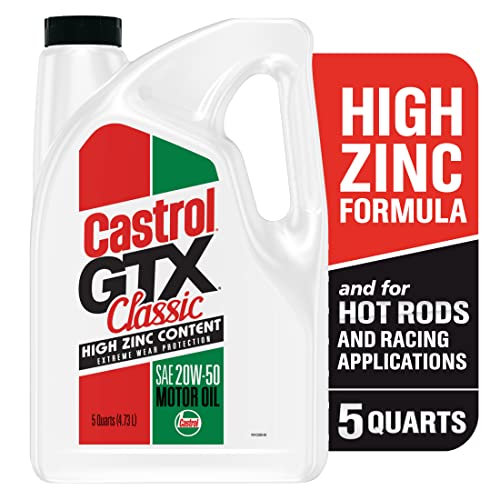
Castrol GTX Classic focuses on high zinc and phosphorus to provide extreme wear protection, supporting tough oil films under severe conditions. It’s designed to resist foaming and maintain stability under heat, making it a solid choice for classic or performance-oriented engines that require steady protection with conventional formulations.
Buying Guide: Key Purchase Considerations And Comparisons
- Engine type and age: Older engines or classic vehicles may respond well to conventional 20W-50 or high-mileage blends, while high-performance cars benefit from racing formulations with superior anti-wear additives.
- Operating conditions: Racing or hot climates demand strong film strength and heat resistance; daily drivers benefit from consistent viscosity and deposit control.
- Viscosity and oil life: 20W-50 provides a thicker oil film in higher temperatures but may reduce fuel efficiency slightly compared to lighter grades. Choose based on manual recommendations and climate.
- Antiwear and deposit control: High zinc/phosphorus formulations protect wear surfaces; polymer dispersants help prevent sludge and deposits, extending engine life.
- Fuel compatibility: Some racing and high-performance formulations tolerate ethanol or alcohol blends; verify compatibility for your fuel type and vehicle.
- Maintenance implications: Synthetic blends can offer better oxidation resistance and longer intervals in some engines, while conventional oils may be easier to filter and replace in older designs.
- Clutch and transmission considerations: Motorcycle-specific 20W-50 oils optimize clutch performance and heat resistance; ensure the oil meets manufacturer specs for wet clutches.
- Always follow the vehicle or engine manufacturer’s oil specification and viscosity recommendations.
- Consider the driving profile: track use, frequent high-loads, or long highway runs influence oil choice more than a single performance feature.
- Check for certifications and service requirements, including API, JASO, and ACEA specs when relevant to your engine family.
- Assess price-to-performance: premium racing oils may offer advantages in extreme conditions but may be unnecessary for everyday use.
- Plan a maintenance schedule that aligns with oil type, including filter changes and oil analysis if operating under strenuous conditions.