Best 220V Outlet for Car Chargers: Top Inverters for Vehicle Power
The right 220V car inverter turns a vehicle into a capable mobile power station, letting you run laptops, CPAP machines, video gear, and other 110V devices on the road. This guide highlights five high-performing models, explaining how each one supports different charging needs, from USB-C fast charging to multiple AC outlets. Read on to compare features, protection, and portability to find the best 220V outlet for your car charger setup.
Summary of chosen products
- FOVAL 200W Car Power Inverter B074KWP2HJ — 2 AC outlets, 4 USB ports, solid protection, portable design
- PiSFAU 200W Car Power Inverter B0CFB6T2QN — 2 AC outlets, 4 USB ports, USB-C fast charging, compact
- FOVAL 200W Car Power Inverter with PD USB-C B098Q1B7K3 — 27W PD USB-C, dual USB, 2 outlets
- BESTEK 300W Power Inverter B004MDXS0U — 2 AC outlets, USB-C and USB-A ports, compact
- YSOLX 300W Car Power Inverter B0D8YFR7LB — 2 AC outlets, 4 USB ports, robust cooling
FOVAL 200W Car Power Inverter (B074KWP2HJ)
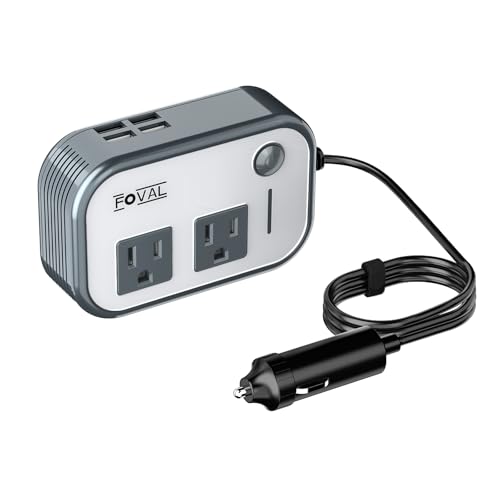
This inverter converts 12V DC to 110V AC with a 200W continuous rating and dual AC outlets supported by four USB ports. It is designed for charging laptops, tablets, phones, and other small to mid-size electronics. The compact, credit-card-like footprint makes it easy to stash in a glove compartment or center console while traveling. It includes a multi-protection system against short circuits, low and high voltage, over-charge, and temperature, plus a built-in cooling fan that remains relatively quiet during operation.
Key considerations: Users should check device wattage before plugging in high-draw appliances like hair dryers or CPAP machines. The included protection features help avoid harming connected devices during voltage fluctuations common in vehicles. The unit’s 180W practical output suggests it’s best for lighter loads or short-duration usage.
PiSFAU 200W Car Inverter (B0CFB6T2QN)

This model provides two 110V outlets and four USB ports. It emphasizes quiet operation and high efficiency through an advanced heat-dissipation approach, which can help reduce energy waste and heat buildup on long drives. Its compact, lightweight form (roughly the size of a cellphone) supports easy storage and quick deployment, making it suitable for family trips, commuting, and mobile work setups.
Practical takeaways: The device is well-suited for travelers who want to keep multiple gadgets charged without creating clutter. When using laptops or tablets, ensure the combined wattage of all devices remains within the inverter’s safe operating range to prevent overload.
FOVAL 200W With PD USB-C (B098Q1B7K3)
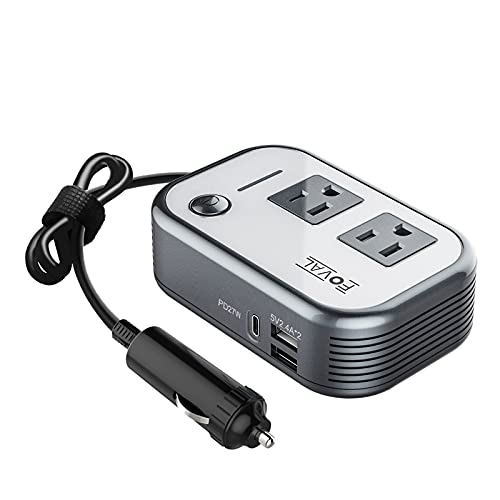
This FOVAL inverter adds a PD USB-C port for faster charging of devices that support USB-C PD, alongside two USB-A ports and two standard outlets. Its compact passport-sized chassis and a 28.3-inch cable extension give versatility for backseat or trunk placement, which is convenient for families or anyone who wants rear-seat access to power. The unit also includes multi-protection and an active cooling fan for safer operation during longer sessions.
Key considerations: USB-C PD enables faster charging for laptops, tablets, and some phones, but the PD port’s output is only beneficial if your device supports PD. For standard USB devices, the USB-A ports remain reliable options. The included 27W PD/USB-C capability is a strong match for ultrabooks and newer devices.
BESTEK 300W Power Inverter (B004MDXS0U)
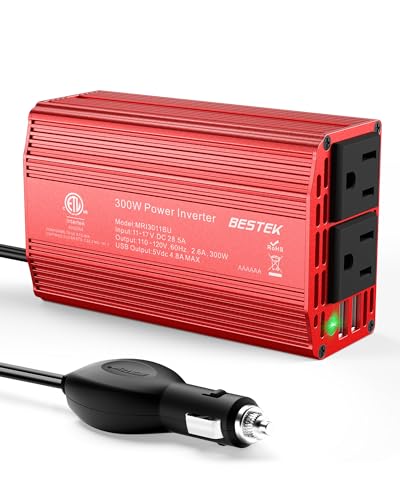
This BESTEK inverter offers 300 watts of continuous power with 700 watts peak, two AC outlets, and two USB ports (including QC/fast charging). The higher wattage makes it more suitable for larger devices, such as laptops or multiple smaller devices simultaneously. It features a robust aluminum housing and a 32-inch cigarette lighter plug, enabling flexible placement within most vehicles. The device emphasizes 5-in-1 versatility and is aimed at road trips, camping, and mobile work or leisure setups.
Performance note: With 300W continuous rating, this inverter can handle more demanding loads. However, always calculate the total wattage of connected devices to avoid overloading the unit. The USB ports support fast charging, which is helpful for modern gadgets, but larger laptops may require careful connection management to stay under limits.
YSOLX 300W Car Power Inverter (B0D8YFR7LB)

The YSOLX 300W inverter features two 110V AC outlets and four USB ports, including USB-C and USB-A fast charging options. It emphasizes a modern cooling system and efficient operation, aiming to deliver stable power for devices like laptops, gaming devices, cameras, and more during road trips or camping. The design prioritizes quiet performance, which improves comfort during longer use in the cabin or backseat.
Operational guidance: The higher 300W rating supports heavier loads than the 200W units. However, always verify device wattage and total USB draw before plugging in multiple devices to prevent overheating or tripping the inverter’s protections. The built-in cooling system can help extend modular life during extended trips.
Buying Guide: Key Purchase Considerations
When choosing a 220V inverter for car charging, consider these core factors to ensure safe, reliable operation and compatibility with your devices.
- Power rating vs. needs: If you regularly run laptops, CPAP machines, or small appliances, seek 200–300W continuous power with appropriate peak allowances. Higher wattage supports more devices but may increase size and weight.
- Number and type of outlets: A mix of 110V AC outlets and USB ports (including USB-C PD) covers most use cases. Verify USB-C PD specs if you rely on fast-charging laptops or newer devices.
- Protection features: Look for short-circuit, over-voltage, over-temperature, and over-load protections. A built-in fuse and smart cooling fan help extend inverter life and protect connected gear.
- Portability and footprint: For frequent travelers, a compact, lightweight unit with a small footprint is advantageous. Consider a design that fits under seats or in a center console without obstructing driver controls.
- Cooling and noise: A quiet cooling fan is beneficial for long drives or overnight use. Fans should balance cooling with low operational noise for cabin comfort.
- Cable length and flexibility: A longer extension helps in placing the inverter where it won’t overheat, especially if the car’s outlet is behind seats or in the trunk.
- Device compatibility: Ensure your critical devices’ wattage falls within the inverter’s continuous rating. For high-demand devices, stagger usage or use a dedicated inverter with more headroom.
- Build and durability: Look for rugged construction, especially aluminum housings, to withstand vehicle vibrations and temperature changes.
Overall, the best choice depends on your typical load, vehicle setup, and whether USB-C PD charging is a priority. For family road trips with multiple gadgets, a 200–300W inverter with multiple USB ports provides balanced versatility. For frequent power users or laptop-centric trips, models with PD USB-C and higher continuous power may be more suitable.