Best 410 Bass Cab: Top 5 4×10 Cabinets for Bassists
The 4×10 bass cabinet remains a staple for players seeking strong, punchy low end and clear mids on stage. This article reviews five prominent 410 bass cabs, highlighting their build, power handling, and tonal characteristics to help you choose the right model for your rig. Each entry includes key features drawn from product listings to aid side-by-side comparisons for American players.
| Product | Brand | Key Features |
|---|---|---|
| Peavey Headliner 410 Bass Enclosure | Peavey | 4×10″ ceramic woofers, 8 ohm, 18mm plywood, internal bracing, steel corners, 16-gauge perforated grille, black carpet |
| Seismic Audio 410 Bass Cabinet | Seismic Audio | Full metal grill, dual 1/4″ inputs, 26″ tall, 8 ohm wiring, 400W RMS / 800W peak, 45 Hz–5 kHz |
| Ampeg VB-410 Bass Cabinet | Ampeg | Ultra-lightweight, carbon fiber-style Tolex, Lavoce neo woofers, high-frequency driver |
| Fender Bassman 410 Neo | Fender | 4×10″ Eminence neodymium woofers, compression driver horn, 1000W program / 500W continuous, under 55 lbs |
| Aguilar SL 410x | Aguilar | 4×10″ Neo woofers, phenolic tweeter, removable casters, 4 ohms, speakON inputs |
Note: This summary focuses on widely available, top-rated 4×10 bass cabinets commonly used in live and studio settings. Specifications and features reflect listed product details and may vary by seller or production run.
Peavey Headliner 410 Bass Enclosure

The Peavey Headliner 410 offers four 10″ ceramic-magnet woofers in an 18mm plywood cabinet, designed for robust bass response. An 8-ohm impedance supports flexible amp matching, while the internal bracing and steel corners provide durability for frequent stage use. The 16-gauge perforated metal grille protects drivers, and the durable black carpet covering helps the cab withstand road wear. This enclosure is built to deliver deep low end with clear midrange presence, making it a practical choice for rock, metal, and funk bassists seeking reliable on-stage volume.
Seismic Audio 410 Bass Cabinet
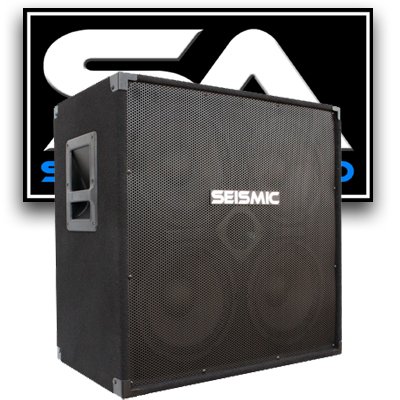
Seismic Audio’s 410 cabinet emphasizes durability and versatility, featuring a full metal grill and a terminal cup with two 1/4″ inputs for easy signal compatibility. Its dimensions center it as a compact yet column-worthy 26″ tall, optimized for stage setups where space is a consideration. The four 10″ woofers include a 50-ounce magnet and a 2″ Kapton voice coil, wired at 8 ohms to handle sizable wattage (400W RMS / 800W peak) with a sensitivity of 96 dB. A solid option for gigging musicians who value stage presence and reliable power handling.
Ampeg VB-410 Bass Cabinet

Ampeg’s VB-410 is designed with a focus on portability and performance. The cabinet touts ultra-lightweight construction and a carbon fiber-style Tolex cover, enhancing durability for road use. It employs custom Lavoce neodymium woofers paired with a high-frequency driver to deliver a modern, tight low end with crisp highs. The combination aims for a balanced tonal footprint suited for diverse styles, from tight funk to aggressive rock tones. This model emphasizes efficiency and reduced weight without sacrificing wattage handling and projection.
Fender Bassman 410 Neo

The Fender Bassman 410 Neo uses four Eminence neodymium 10” woofers plus a compression driver horn, combining light weight with high-output capability. With a program rating of 1000 watts and continuous rating of 500 watts, this cabinet aims to deliver substantial headroom for loud stage volumes. The horn tweeter contributes brightness and articulation at high SPLs, while the overall design keeps weight under 55 pounds. It is a versatile choice for players seeking a modern, powerful 4×10 with classic Fender tonal DNA.
Aguilar SL 410x

The Aguilar SL 410x features four 10″ neo woofers and a phenolic tweeter, with casters available for easy transport. The cabinet is engineered for a strong low end with clear highs, backed by a 4-ohm load that encourages robust amp pairing. Its build focuses on portability and flexibility for live settings, with speakON inputs that streamline on-stage connections and reduce cable clutter. This model suits players who prioritize warmth, headroom, and a modern, punchy stage tone.
Buying Guide
- Power handling and impedance: Match the cabinet’s ohms with your amplifier’s output to achieve the desired wattage without overloading the speakers. Common configurations include 4-ohm and 8-ohm setups with varying RMS ratings.
- Speaker type and cabinet construction: Neodymium woofers offer lighter weight and quick response, while ceramic magnets can deliver more aggressive low-end. Cabinet materials (plywood vs. composite) affect durability and resonance.
- Weight and portability: For frequent gigs, consider weight, casters, and handles. Lightweight neo-based units reduce load-in time but may differ in feel from heavier cabinets.
- Tone shaping and coverage: Cabinets with horn or tweeter options provide higher-end articulation at loud volumes, useful in large rooms. A balanced 4×10 setup often yields a focused midrange and strong projection.
- Build quality and durability: Look for metal grilles, reinforced corners, and protective coverings. Stage abuse, transport, and climate exposure are common considerations for touring players.
- Stage size and audience: In smaller venues, a high-sensitivity cabinet can deliver ample output with moderate power. In larger rooms, pairing with a capable head or additional cabinets may be necessary for fullness.
- Portability versus tone: Some players trade off a bit of weight for deeper bass or brighter highs. Evaluate whether a lighter cabinet achieves your preferred balance for your genre and bass style.
- Brand ecosystem and compatibility: Consider how a cab integrates with your current amp and effects chain. Compatibility with speakON inputs and cab-splitting options can influence setup flexibility.
- Maintenance and upcoming needs: Regular inspection of drivers, grills, and connectors extends cabinet life. Dust covers or road cases help protect the investment between shows.
When evaluating these 410 cabinets, consider your typical venue size, the genre you play, and how much headroom you need for clear audience projection. The listed models cover a range of tonal preferences—from the aggressive, rock-oriented voicings to the more balanced, studio-leaning designs—allowing players to select a 410 cabinet that aligns with their live rig and recording goals.