Best Affordable Floor Jack for DIY Car Care
Finding a reliable floor jack without breaking the bank is essential for home garages and weekend projects. The following affordable options blend solid lifting power with practical features, making them suitable for sedans, SUVs, and light trucks. This guide outlines five cost-effective floor jacks, highlighting capacities, lift ranges, and design strengths to help you choose the right tool for everyday automotive maintenance.
| Product | Capacity | Lift Range |
|---|---|---|
| VEVOR 3 Ton Low Profile Floor Jack | 3 tons (6600 lbs) | 3.35″ to 19.69″ |
| VEVOR 2.5 Ton Low Profile Floor Jack | 2.5 tons (5500 lbs) | 3.35″ to 14.96″ |
| Jack Boss 3 Ton Low Profile Floor Jack | 3 tons (6600 lbs) | 3-15/16″ to 18-5/16″ |
| LARBANKE 3 Ton Floor Jack | 3 tons (6600 lbs) | 5.31″ to 18.11″ |
| AV Steel Floor Jack 2.5 Ton | 2.5 tons (5500 lbs) | 3.4″ to 14.6″ |
Note: Each product above offers a blend of high-capacity lifting with a low-profile design to fit under most modern vehicles. All five provide dual pistons or efficient hydraulic mechanisms to speed lifting, along with sturdy steel construction for durability in home garages and shops.
VEVOR 3 Ton Low Profile Floor Jack
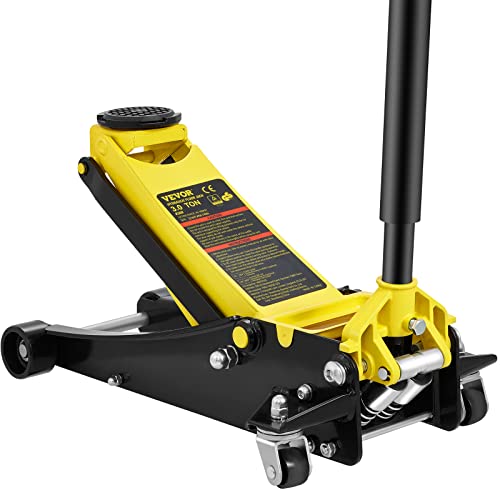
The VEVOR 3 Ton Low Profile Floor Jack is built with heavy-duty steel and a dual parallel pump system, enabling faster lifting. Its minimum height is 3.35 inches and maximum height reaches 19.69 inches, designed to handle family cars, trucks, and SUVs. The dual piston setup accelerates the lifting process, while two universal rear wheels improve maneuverability. A magnetic tray on top provides convenient tool storage during maintenance tasks.
Key features include:
– 3-ton capacity for common vehicles
– Low-profile 3.35″ height for easier access under sedans
– Maximum lift height of 19.69″ for higher clearance
– Dual pump design for speed and efficiency
– Steel construction with movable rear wheels for maneuverability
VEVOR 2.5 Ton Low Profile Floor Jack
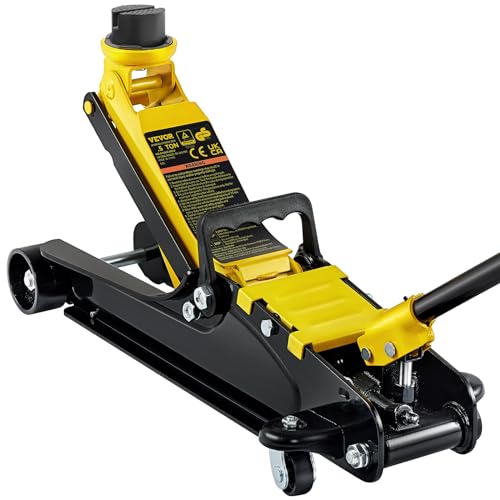
Designed for lighter-duty applications, the VEVOR 2.5 Ton Floor Jack combines a compact profile with a single-piston hydraulic pump for straightforward operation. The lift range from 3.35″ to 14.96″ makes it suitable for standard sedans and smaller SUVs. It features steel construction and universal rear wheels for smooth movement and positioning, with a top handle for easy lifting and transport.
Key features include:
– 2.5-ton lifting capacity
– 3.35″ minimum height; 14.96″ maximum height
– Single-piston pump for simple operation
– Durable steel build and maneuverable wheels
Jack Boss 3 Ton Low Profile
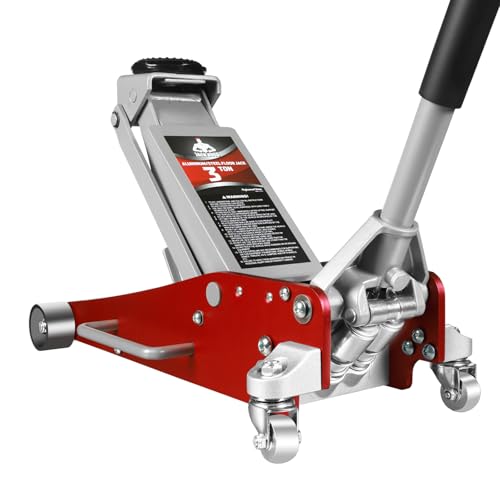
The Jack Boss 3 Ton Low Profile Floor Jack uses aluminum and steel construction for a balance of strength and weight, with a dual-piston quick lift pump. Its lifting range spans from 3-15/16″ minimum to 18-5/16″ maximum, supporting a variety of vehicles from sedans to light SUVs. The jack weighs about 58.5 pounds, and the included rubber saddle and two-piece handle help protect your vehicle while providing convenient operation and storage.
Key features include:
– 3-ton lifting capacity
– Low-profile design with a 3-15/16″ minimum height
– Dual piston system for rapid lifting
– 58.5 lb weight with included saddle and handle
LARBANKE 3 Ton Floor Jack

The LARBANKE 3 Ton Floor Jack emphasizes a robust carbon steel build with a wide lifting range from 5.31″ to 18.11″. This flexibility supports a variety of vehicles and clearance scenarios, making it suitable for home garages and repair shops. The setup focuses on durability and reliable lifting performance, with sturdy materials designed for long-term use in frequent maintenance tasks.
Key features include:
– 3-ton capacity
– Lifting range 5.31″ to 18.11″
– Carbon steel construction for durability
– Suitable for home and shop settings
VEVOR House Floor Jack (Heavy Duty)

The VEVOR House Floor Jack is a robust option designed for heavier lifting tasks around the home. It supports up to 18,000 lbs total capacity with an adjustable height feature from 53″ to 93″ to accommodate various structural leveling needs. The unit is built from sturdy Q235 steel and includes two lock pins for added safety during height adjustments. This model is intended for basement or level adjustments rather than typical vehicle lifts.
Key features include:
– Up to 18,000 lbs load capacity
– Adjustable height from 53″ to 93″
– Q235 steel construction
– Built-in safety locking with pins
Buying Guide: Key Purchase Considerations
- Vehicle compatibility: Match capacity to your most common vehicle weight. A 3-ton jack covers many sedans and light trucks, while 2.5-ton models are suitable for smaller cars and compact SUVs.
- Lift height and profile: Low-profile jacks (around 3.35″ min height) fit under cars with low ground clearance, while higher max heights (over 18″) accommodate vehicles with higher clearance or undercar repair needs.
- Construction and durability: Steel or carbon steel frames provide durability for frequent use. Dual-piston pumps often offer faster lifting with less effort compared to single-piston designs.
- Wheels and mobility: Rear wheels and ergonomic handles improve maneuverability in tight garages. Magnetic tool trays and rubber saddles help protect vehicles during lifting.
- Safety features: Look for overload protection, reinforced saddles, and load-limit protection mechanisms to minimize risk during lifts.
- Storage and space: Removable handles and compact footprints help in small workshops. Consider weight when planning for storage and repositioning.
- Maintenance and warranty: Check for warranty coverage and included accessories like saddles, pins, or additional support stands to maximize value.
Overall, these options offer a balance of affordability and capability, ensuring you can perform essential maintenance tasks—like tire changes, oil service, and brake work—without overspending. When choosing, align capacity and lift range with your typical vehicle profiles, garage space, and the frequency of use.