Best All Mountain Rear Shock Upgrades for 2026 and Beyond
Finding the right all mountain rear shock can dramatically improve control, comfort, and traction on rugged trails. This guide reviews five top rear shocks designed for MTB and e-bike setups, highlighting their build quality, damping options, adjustability, and compatibility. Each option balances durability with performance, helping riders tailor their ride to their weight, terrain, and riding style. Use the quick-reference table below to compare key specs at a glance.
| Product | Brand | Eye To Eye | Travel | |
|---|---|---|---|---|
| Mountain Bike Rear Shock Absorber | WROASLTOUX | 165mm | Unknown | Preload and rebound adjustments; 350Lbs spring; CNC steel body |
| DNM AO-6 Mountain Bike Rear Shock | MEROCA | 100-190mm (select sizes) | Various | Adjustable air pressure up to 250psi; lightweight aluminum body |
| DNM AO-39RC Mtb Rear Shock | MEROCA | 165/190/200mm (select) | Varies | Rebound, lockout, and air pressure adjust; AL-7075 shaft |
| CNCLOL MTB Rear Shock | CNC | 120-200mm (multiple) | Multiple | Oil-pressure spring system; affordable performance |
| Chooee Mountain Bike Rear Shock | Chooee | 120-200mm (multiple) | Various | One-piece hydraulic coil design; weight range options 550/750/1000lbs |
Mountain Bike Rear Shock Absorber (WROASLTOUX)

The WROASLTOUX 165mm rear shock is designed to fit most mountain bikes and e-bikes, offering a straightforward suspension upgrade. It features preload and rebound adjustments to tune response across varied terrain, helping maintain traction on loose surfaces and technical climbs. The hydraulic rear shock employs a robust CNC steel body with a 350lbs spring for dependable dampening and stability during fast descents.
Key considerations include compatibility with your frame’s eye-to-eye length and bushing sizes. This model emphasizes a balance between simple setup and meaningful performance gains, making it suitable for riders seeking a reliable upgrade without complex tuning. Weight considerations and bike geometry should be checked before installation to ensure optimal function.
DNM AO-6 Mountain Bike Rear Shock (AL 6061)
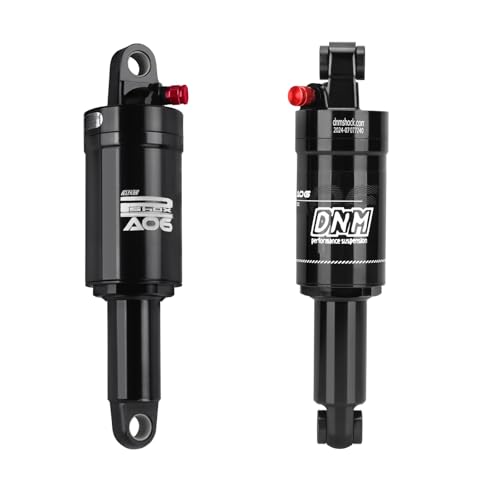
The DNM AO-6 offers versatile sizes (100x9mm to 190x51mm) and a lightweight aluminum alloy body designed for mountain bikes, folding bikes, and even scooters. With high-pressure air adjustment up to 250psi, it enables precise tuning for rider weight and terrain. The shock’s range supports a variety of frames, making it a flexible choice for custom builds or upgrades to older bikes seeking improved bottom-out resistance and overall tunability.
Performance notes focus on the balance between stiffness and a smooth ride. Its adjustability helps riders tailor the feel from cruisy climbs to gnarly descents. Installing this model requires confirming eye-to-eye length and bushing compatibility with the frame to prevent binding or misalignment under load.
DNM AO-39RC Mtb Rear Shock
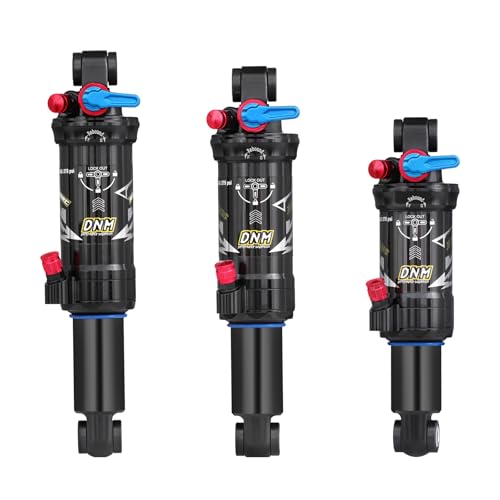
This DNM AO-39RC model provides a more feature-rich setup with adjustable rebound, lockout, and air pressure. Available in sizes like 165x35mm, 190x50mm, and 200x55mm, it’s geared toward XC and trail riding. Hard-anodized AL-7075 shafts and AL-6061 bodies provide durability, while the main air chamber supports up to 250 psi. The combination of rebound control and lockout helps maintain traction on climbs and reduces pedal feedback on rough sections.
Riders should evaluate their terrain profile and riding weight to select the right travel and eye-to-eye length. The lockout feature is useful for efficient climbs but may reduce small-bump compliance on rough ascents, so its use should be context-driven for best results.
CNCLOL Mountain Bike Rear Shock (Hydraulic)

The CNCLOL hydraulic rear shock supports a wide range of eye-to-eye lengths (120x15mm up to 200x60mm) and offers a 550lbs to 1000lbs load range, making it a robust option for heavier riders or tougher trails. The oil-pressure spring system provides smooth, stable damping comparable to air-sprung shocks but at a more affordable price point. This makes it appealing for riders upgrading older bikes or experimenting with different travel options.
Important considerations include ensuring the chosen size matches the bike’s mounting points and the rider’s weight class. The hydraulic design reduces the risk of bottoming on aggressive terrain, but proper setup of spring rate and preload remains critical for optimal performance.
CNCLOL Mountain Bike Rear Shock (Second Variant)

This CNCLOL model mirrors the same principles as the other CNC shocks, offering multiple travel options from 120mm to 200mm along with a 550lbs-1000lbs load capacity. The design emphasizes the hydraulic rear suspension approach, combining soft, controlled damping with long service life. It remains a cost-conscious solution for riders wanting reliable performance without the premium price tag of some high-end shocks.
As with other hydraulic options, compatibility with frame geometry and bushings is essential. Confirming eye-to-eye lengths and bushing sizes prevents fitment issues, while testing different rebound settings helps dial in traction for varied courses and rider weights.
DNM BURNER-RCP 2S Downhill Rear Shock

The Burner-RCP 2S is designed for downhill and aggressive AM riding, with a 220mm eye-to-eye and 66mm travel. It uses a coil spring and a hard-anodized AL-7075 shock body for durability under high-impact landings. The bushing size is standardized (24mm x 8mm) to support straightforward installation on compatible frames. Riders should verify fitment and frame allowance for confident operation on steep descents and rough terrain.
Buying Guide: Key Purchase Considerations
- Rider weight and riding style: Heavier riders or downhill-focused riders often need higher spring rates and stiffer damping. Look for adjustable spring preload or multiple weight options to match your weight and terrain.
- Eye-to-eye length and travel: Verify compatibility with your frame’s mounting points and suspension geometry. Mismatches can cause binding, rubbing, or degraded performance.
- Air vs hydraulic vs coil: Air shocks are lightweight and adjustable; hydraulic shocks offer smooth, consistent damping with fewer air-spring tendencies; coil shocks excel in bottom-out resistance and consistent feel on rough trails. Some riders prefer a hybrid approach for a balance of weight and performance.
- Damping adjustments: Preload, rebound, compression, and lockout controls affect traction and pedaling efficiency. Fine-tuning helps maintain grip on technical sections while preventing unwanted pogo or harshness.
- Durability and maintenance: Look for aluminum or steel bodies with corrosion resistance. Consider serviceability, parts availability, and expected lifetime of bushings and seals.
- Compatibility and install effort: Ensure bushings, shaft diameter, and mount types match your bike. Some shocks require pressure gauges or specialized tools for setup.
- Terrain alignment: Match shock travel and damping characteristics to your typical terrain—cross-country, trail, all-mountain, or downhill—to optimize performance across climbs and descents.
In summary, each option above provides distinct advantages depending on your bike, weight, and terrain preferences. When selecting, prioritize compatibility checks, the availability of service parts, and the ability to tune for your local trails. The right rear shock can transform handling, comfort, and confidence on challenging routes.