Best Auto Code Reader: Top OBD-II Scanners for 2026
For American drivers, a reliable auto code reader is essential for quickly diagnosing why check engine lights come on, reading live data, and deciding whether a repair is needed. This guide highlights five top OBD-II scanners that balance accuracy, ease of use, and value. Each product section includes key features, compatibility, and practical diagnostic capabilities to help you pick the right tool for your vehicle.
Overview Of Selected Products
| Product | Brand | Key Benefit | Link |
|---|---|---|---|
| ANCEL AD310 Classic Enhanced Universal OBD II Scanner | ANCEL | Fast codes, live data, compact design | Amazon |
| ANCEL AD410 Enhanced OBD2 Scanner | ANCEL | Wide compatibility, extensive DTC lookup | Amazon |
| MOTOPOWER MP69033 Car OBD2 Scanner | MOTOPOWER | Wide protocol support, clear LCD | Amazon |
| FOXWELL NT301 OBD2 Scanner | FOXWELL | Live data, emissions status, VIN read | Amazon |
| ZMOON ZM201 Professional OBD2 Scanner | Zmoon | Massive DTC database, live data with printing | Amazon |
Note: Availability and features vary by vehicle and year. Always verify compatibility with your specific make/model before purchase.
ANCEL AD310 Classic Enhanced Universal OBD II Scanner
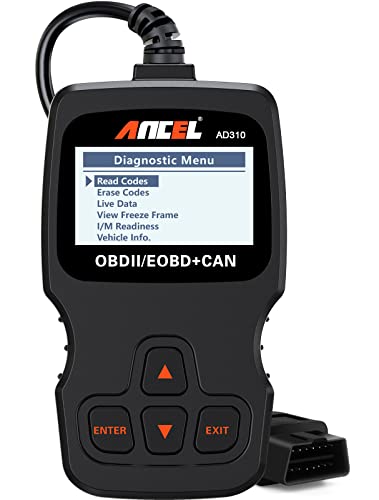
The ANCEL AD310 is a best-selling OBD II scanner widely recommended for home and professional use. It detects the cause of the check engine light, reads and clears diagnostic trouble codes, and displays live data and freeze-frame information. Users can review I/M readiness, access memory data, and obtain vehicle information quickly. Its compact, sturdy design features a 2.5-foot cable and clearly labeled buttons with a readable display. Power is sourced directly from the vehicle’s OBDII port, so no extra battery or charger is needed. This model emphasizes speed and ease of use, delivering fast results to help you diagnose issues without technical expertise.
Key features include: quick code reading/clearing, live data display, freeze-frame data, and a simple, durable build for on-the-go diagnostics. It’s a practical starter tool for everyday maintenance and common repairs.
ANCEL AD410 Enhanced OBD2 Scanner

The AD410 is designed for broad compatibility across OBDII vehicles, including US, EU, and Asian models from 1996 onward. It supports multiple communication protocols and provides a robust database with more than 42,000 DTC lookups. This scanner can quickly read and clear fault codes, reset the MIL, and check monitor readiness, which is helpful for smog testing. While it emphasizes comprehensive diagnostics, it does not clear all vehicle systems; its strongest area is emission-related fault analysis and EVAP/O2 sensor diagnostics. No external battery is needed since it draws power directly from the vehicle’s OBDII port. It’s ideal for users who want detailed fault code information and broad vehicle coverage.
MOTOPOWER MP69033 Car OBD2 Scanner

The MP69033 offers multi-function OBD2 diagnostics with a built-in code library and a 2.8-inch LCD display. It supports a wide range of 9 protocols compatible with most 1996 US-based, 2000 EU-based, and Asian vehicles, including newer OBD II and CAN vehicles. It provides real-time data, I/M readiness, and vehicle information with data flow and curves. It draws power from the vehicle via the OBDII connector, eliminating the need for batteries or chargers. This model is well-suited for users who want clear visuals and multi-language support for international use.
FOXWELL NT301 OBD2 Scanner

The NT301 delivers professional-grade diagnostics with a color display and live data capabilities. It can read DTCs, access emission readiness, turn off the CEL, and reset monitors. The device excels in presenting live data streams with graphing, enabling users to observe sensor trends for better fault identification. It is designed for typical cars, light trucks, and 12V diesels that are OBD2 compliant. Notably, it does not support certain specialized systems (ABS, SRS, TPMS, SAS) in the base package, making it a focused tool for engine and emissions diagnostics. It is popular among professional mechanics for its reliable performance and upgrade potential through ongoing support.
ZMOON ZM201 Professional OBD2 Scanner

The ZM201 provides a comprehensive OBDII experience with a strong emphasis on deep diagnostics and data handling. It reads and clears codes, displays live data with graphing, retrieves VIN, and supports a battery voltage test. A standout feature is its large built-in DTC library (35,901 codes), which significantly expands troubleshooting capabilities beyond many budget models. It also offers enhanced data printing via computer connection, helping users document issues for repairs. The tool is suitable for serious DIYers and professionals seeking in-depth fault analysis and robust data export options.
Buying Guide: Key Purchase Considerations
- Vehicle compatibility and protocols: Confirm the scanner supports your vehicle’s year, make, model, and OBD protocol (OBDII, CAN, ISO9141, etc.).
- Diagnostic depth vs. simplicity: Choose based on whether you need basic code reading and clearing or advanced live data, EVAP testing, and OEM-style reset capabilities.
- Live data and graphing: If you want to monitor sensor trends, ensure the device offers real-time data with graphing and logging.
- Data access and printing: Some models provide VIN retrieval and data export/printing, which can be helpful for record-keeping or shop use.
- Power source and portability: Most scanners draw power from the OBDII port; ensure the design fits your workspace and portability needs.
- Update support: Look for devices with ongoing firmware updates to access new DTCs and features.
- Language and regional support: Multilingual options improve usability for a diverse set of users.
- Price vs. features: Higher-end models offer broader capabilities (ABS/SRS/DPF/reset, 12+ functions) but weigh against your budget and actual needs.
- Warranty and support: Check manufacturer warranty and customer service responsiveness for long-term reliability.
- Ease of use: A clear display, intuitive menus, and quick code reading contribute to faster diagnostics for non-technical users.