Best Automotive Heat Insulation Solutions for Your Vehicle
Looking to cut engine heat, reduce road noise, and keep your car cabin more comfortable? Automotive heat insulation mats and liners offer practical, DIY-friendly options. This article spotlights five highly relevant insulation products designed to block radiant heat, dampen vibrations, and provide a reliable thermal barrier for hoods, engines, roofs, trunks, and firewalls. Read on to compare materials, installation ease, and performance features to help you choose the right solution for your ride.
| Product | Coverage | Thickness | Key Benefit |
|---|---|---|---|
| ALLWIN Car Heat Sound Deadening Insulation Mat (40″ x 40″) | 10.8 sqft | 394 mils | High radiant heat blocking and moisture resistance |
| Siless Liner 157 mil (Open) 36 sqft | 36 sqft | 157 mils | Excellent thermal barrier with adhesive reliability |
| Fynxir Self-Adhesive Aluminized Fiberglass Cloth | Per panel (trim to fit) | Not specified on listing | Extreme heat protection up to 1000°F with reflective surface |
| Storystore 394 mil (10mm) 16.5 sqft Mat | 16.5 sqft | 394 mils | Broad coverage with strong heat and noise reduction |
| KILMAT 80 mil 36 sqft | 36 sqft | 80 mils | Sticky, easy DIY installation with enhanced dampening |
The following selections emphasize strong heat reflection, moisture resistance, and straightforward installation. Each section includes a quick overview, notable features, and installation considerations to help you tailor choices to your vehicle and environment.
ALLWIN Aluminum Foil Heat Shield Mat, 40×40 Inches

ALLWIN’s heat shield mat combines a sturdy aluminum foil finish with a closed-cell foam core designed for automotive heat insulation and vibration dampening. The 40×40 inch sheet delivers a nominal thickness of 394 mils, offering substantial thermal resistance for commonly exposed areas such as the engine bay, hood, firewall, or trunk lid. The material is self-adhesive, waterproof, and lightweight, helping it stay in place during driving conditions and temperature changes. Its temperature tolerance ranges from -40°F to 300°F, effectively blocking a high percentage of radiant heat transfer while also reducing audible vibrations that travel through metal panels. This product aims to keep the cabin cooler in summer and warmer in winter, contributing to a more comfortable driving experience.
Installation notes: Clean, dry surfaces work best. Press firmly to ensure full adhesion. The large 10.8 square feet coverage is suitable for broad areas, but you may need additional pieces for complex shapes. It offers odor-free operation and compressible closed-cell foam that resists moisture absorption, minimizing mold risk in humid climates.
Siless Liner 4 mm (157 mil) 36 sqft Aluminum Foil Finish

The Siless liner uses a closed-cell polyethylene foam core with an aluminum foil exterior, delivering a reliable thermal barrier and moisture resistance. With a generous 36 square feet of coverage, this option is well-suited for large sections of a vehicle, including engine compartments or trunk interiors. The adhesive layer ensures strong bonding, and the product claims to block a high percentage of radiant heat transfer—up to about 98% in claimed performance—while remaining lightweight and flexible. This combination makes it a popular choice for DIY enthusiasts seeking cost-effective insulation without sacrificing durability.
Considerations: While highly effective, installation may require careful surface prep and smooth rolling to avoid air pockets. The material’s flexibility aids fitment around curves, but you may need to cut pieces accurately for tight gaps. It’s water-resistant and odor-free, which helps in long-term vehicle maintenance and comfort.
Fynxir Self-Adhesive Aluminized Fiberglass Cloth
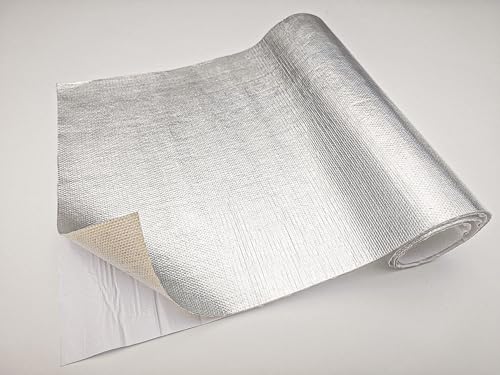
Fynxir offers a high-temperature shield with an aluminized fiberglass cloth surface. This product is designed to reflect radiant heat up to 1000°F, helping to protect sensitive components such as exhaust paths, firewall surfaces, and nearby plastics. The reflective aluminum backing helps minimize heat absorption while the fiberglass core provides durability against heat cycling and road debris. The self-adhesive backing enables quick, tool-free installation, reducing installation time for DIY projects. Its multi-layer design—comprising fiberglass, aluminized coating, and adhesive—enhances durability against oils, chemicals, and weathering while maintaining flexibility for curved or irregular shapes.
Ideal use cases include areas facing high radiant heat sources or surfaces requiring a robust thermal barrier. Keep in mind the need for clean, dry surfaces and careful trimming to fit irregular contours. While it excels at heat reflection, ensure surface compatibility with automotive coatings and verify clearance from moving parts to prevent contact.
Storystore 394 mil Heat Sound Deadening Mat, 16.5 Sqft

Storystore presents a high-thickness insulation mat designed for significant heat and noise reduction across a substantial area. With a nominal thickness of 394 mils and a total coverage of 16.5 square feet, this product is suitable for broader sections of the vehicle such as the engine bay, door panels, or trunk floors. The self-adhesive, waterproof formula uses a closed-cell foam structure that resists moisture while remaining compressible for a tight fit. The material’s primary advantages lie in its combined ability to dampen road noise and block thermal radiation, helping maintain cabin temperature and reduce heat transfer from engine and exhaust sources.
Installation suggestions: Because of its larger size, plan measurements ahead of time to minimize waste. Ensure surfaces are clean and dry, and use a roller to achieve full adhesion and eliminate air pockets. The durable construction should hold up well under heat cycles typical in American driving conditions.
KILMAT 80 mil Car Sound Deadening Mat

KILMAT’s 80 mil butyl-based deadening mat emphasizes robust sound dampening and heat reduction in a DIY-friendly package. The material’s self-adhesive foil layer simplifies installation, making it a practical choice for novice installers and experienced enthusiasts alike. The 36 square feet expansion allows coverage across larger panels—hoods, doors, floorboards, and other areas prone to vibration and heat transfer. The listing highlights that the thickness translates to higher effectiveness, suggesting a noticeable improvement in cabin quietness and thermal stability after installation. The composition prioritizes low weight while delivering strong dampening performance for automotive applications.
Usage tips: For best results, clean the surface, lightly roughen glossy areas, and press rigorously to ensure adhesive bond. Work in moderate temperatures to improve adhesive curing. Consider pairing with reflective shields or additional layers in areas with intense heat exposure for enhanced results.
Buying Guide: Key Purchase Considerations for Automotive Heat Insulation
- Heat tolerance and reflective capacity: Choose materials rated for the temperature range you expect in your vehicle, and consider aluminized or reflective finishes for radiant heat protection.
- Coverage needs and fit: Larger sheets simplify broad coverage but may require trimming for curves. Plan panels in advance and measure surfaces to minimize waste and seams.
- Material composition and moisture resistance: Closed-cell foams and waterproof backing help prevent moisture intrusion and mold, especially in humid climates.
- Adhesive quality and installation: Self-adhesive tapes save time, but ensure surfaces are clean and dry. A roller tool can improve bond and reduce air pockets.
- Weight impact and OEM clearance: Heavier mats can affect vehicle weight distribution; verify that insulation does not interfere with mechanical parts, hinges, or moving components.
- Durability and environmental resistance: Look for products engineered to withstand oils, chemicals, and road grime, particularly under the hood and near exhaust systems.
- Cost per square foot: Compare per-square-foot cost in relation to coverage, thickness, and performance to determine the best value for your needs.
- Sound deadening vs. thermal insulation balance: Some products emphasize vibration damping, others focus on heat reflection; choose a balance that matches your primary goal (quiet cabin vs. heat reduction).