Best Automotive Short Circuit Finders for Quick, Accurate Diagnostics
Finding open circuits and shorts in automotive wiring can save time, money, and frustration. This guide highlights five top automotive short circuit finders that help technicians, DIYers, and professionals quickly trace wires, locate breaker points, and test continuity in 6–42V systems. Each model supports standard DC automotive voltages, uses transmitter and receiver signals, and offers audible or visual indicators to pinpoint faults without damaging insulation.
| Product | Brand | Key Benefit |
|---|---|---|
| VDIAGTOOL V210 Wire Tracer | VDIAGTOOL | Open/short finder, flexible probe, 6–42V DC |
| AWBLIN Wire Tracer | AWBLIN | Multifunction tracing with LED indicators and low-battery alert |
| UT-LNTELA EM415Pro | UT-LNTELA | Non-invasive tracing behind panels, 6–42V |
| CrysGuard EM415Pro | CrysGuard | Accurate short/open detection, versatile DC 6–42V |
| allsun EM415Pro | allsun | All-in-one short finder with flexible probe |
VDIAGTOOL V210 Wire Tracer Review

The VDIAGTOOL V210 is designed for automotive short and open circuit detection using 6–42V DC systems. It includes a transmitter and receiver that indicate open or short circuit conditions via LEDs and an audible buzzer on the receiver. The system helps locate breaker points, trace wires, and identify current leaks without compromising insulation. Its flexible 7-inch probe enhances reach to hard-to-access areas, and the device works with standard car electrical environments. Users should note that signal strength may vary with wiring complexity and shielding, and adjusting probe position can improve accuracy.
AWBLIN Wire Tracer: Open & Short Finder
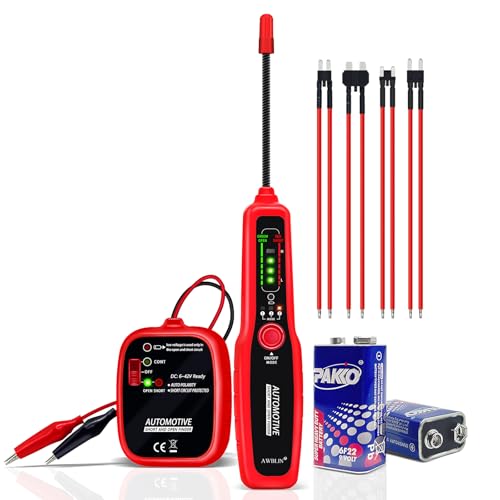
The AWBLIN model is a multifunction wire tracer built to locate open circuits, shorts, and broken wires while tracing wires behind insulation. It provides both sound and LED indicators, plus a low-battery alert to ensure reliable operation. The receiver mode offers adjustable sensitivity to tailor detection in noisy electrical environments. It is designed for 6–42V DC automotive systems, making it useful for service work on cars, boats, trailers, and other vehicles with complex harnesses.
UT-LNTELA EM415Pro: Non-Invasive Wire Tracing

The EM415Pro from UT-LNTELA emphasizes non-invasive wire tracing for 6–42V DC systems. It enables technicians to locate circuits behind dashboards, under carpets, and within engine compartments without removing insulation. The transmitter and receiver work together to provide audible feedback and LED signals, helping identify open or short conditions efficiently, making it suitable for car and home diagnostics alike.
CrysGuard EM415Pro: Precise Short/Open Detection

The CrysGuard EM415Pro focuses on accurate short and open circuit detection for 6–42V DC automotive systems. It supports tracing hidden wires behind panels and through harnesses with a transmitter that signals the path to the fault. The device is designed to facilitate quick diagnostics across cars, motorcycles, trailers, and boats, with an emphasis on minimizing invasive inspection and speeding up fault isolation.
allsun EM415Pro: All-In-One Short Finder
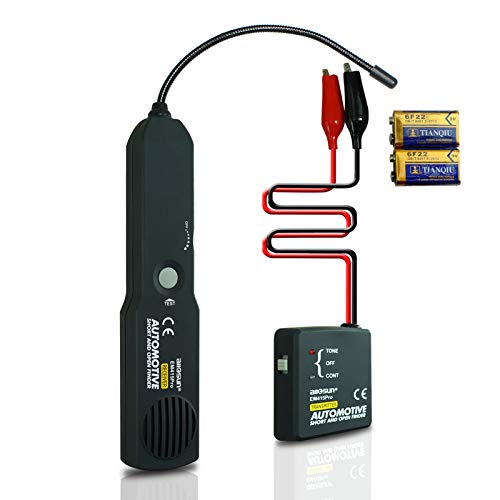
The allsurn EM415Pro combines short finder and wire tracer capabilities in a single tool, designed for 6–42V DC systems. It features a transmitter and receiver with LED indicators and audible cues to guide users to the fault. The 7-inch flexible probe aids access in cramped spaces, enabling women to bend and position the tip to maximize signal pickup for accurate fault localization in automotive harnesses.
Buying Guide: Key Purchase Considerations
- Voltage range: Ensure the tool supports 6–42V DC to cover most cars, motorcycles, trailers, and boats.
- Signal indicators: Look for audible feedback and LED indicators, plus adjustable sensitivity for challenging wiring environments.
- Probes and reach: A flexible or long probe improves access to hard-to-reach areas under dashboards or within engine bays.
- Open vs. short detection: Confirm the device can identify both open circuits and shorts, and can trace wires behind insulation without damage.
- All-in-one capability: Some models combine multiple tests (voltage, resistance, continuity, diode, polarity) for broader diagnostic use; assess whether you need this versatility.
- Ease of use: Intuitive controls, clear indicators, and a reliable battery status display help reduce diagnostic time in field work.
- Durability and compatibility: Choose models built for automotive environments with robust housings and compatibility with vehicle types you service most.
- Documentation and support: Access to manuals, tutorials, and responsive support helps maximize tool effectiveness over time.
When selecting a short circuit finder, balance the need for precise detection with practical considerations like tool reach, battery life, and ease of use in tight automotive spaces. For technicians working across different vehicle types, a versatile, all-in-one tester can streamline diagnostics, while hobbyists may prioritize simplicity and readability of signals. Cross-check the included features with typical service scenarios to ensure the tool aligns with your workflow and vehicle systems.