Best Batteries for Trolling Motors: Reliable Lithium and AGM Options for Your Boat
Choosing the right battery for trolling motors impacts run time, performance, and reliability on the water. This guide covers five well-regarded options that balance weight, cycle life, and safety. From LiFePO4 lithium batteries with smart features to sealed AGM models, you’ll find choices that fit small craft to larger marine setups. Each product highlights a blend of capacity, protection, and compatibility to help you compare for day trips or extended voyages.
| Product | Brand | Type | Capacity | Key Feature |
|---|---|---|---|---|
| LiTime 12V 100Ah Trolling Motors LiFePO4 Battery (Group 31) | Litime | LiFePO4 | 100Ah | Bluetooth monitoring, low-temperature protection |
| Autocessking 12V 100Ah LiFePO4 Battery | Autocessking | LiFePO4 | 100Ah | Bluetooth, 120A BMS, robust protection |
| CHITOLI 12V 100Ah LiFePO4 Battery Group 24 | CHITOLI | LiFePO4 | 100Ah | Smart BMS, long cycle life |
| FLLYROWER 12V 100Ah LiFePO4 Battery | FLLYROWER | LiFePO4 | 100Ah | 16500 cycles, multiple protections |
| Newport 12V50Ah Deep Cycle AGM | Newport Vessels | AGM Lead-Acid | 50Ah | Lightweight, sealed, trolling motor compatible |
Note: All five options are suitable for trolling motors, with a focus on 12V systems. Lithium options offer deeper cycles and lighter weight, while AGM provides a budget-friendly, sealed alternative. When selecting, consider weight, depth of discharge, cold-weather performance, and whether you prioritize built-in monitoring and BMS features.
LiTime 12V 100Ah LiFePO4 Battery

LiTime’s 12V 100Ah Group 31 LiFePO4 battery combines lightweight construction with a smart Bluetooth monitor. The auto-connect feature lets you check battery status, manage discharge, and perform system checks from a phone app. Built-in features emphasize safety and reliability for marine use, including protections against overcharge, overheating, and shorts. Low-temperature safeguards prevent charging and discharging at extreme cold, preserving longevity. With IP65-level dust and water resistance, this unit is rated for harsh environments on boats, yachts, and RV setups.
Key advantages include its 15000-cycle potential and a 100A BMS, which supports consistent power delivery. The battery’s rugged design and Bluetooth visibility make routine maintenance simpler, reducing downtime on long trips. Potential considerations are cost relative to traditional lead-acid options and the need for a compatible charging system to leverage its full cycle life.
Autocessking 12V 100Ah LiFePO4 Battery

This Autocessking model emphasizes a balanced mix of compact design and robust performance. It weighs noticeably less than a traditional lead-acid equivalent, helping to improve vessel efficiency and handling. A built-in Bluetooth BMS interface supports monitoring and real-time status checks via a mobile app, offering insight into discharge rates and overall health. The battery is designed to tolerate marine conditions, with protections for overcharge, short circuiting, and temperature extremes. It includes a 120A continuous discharge capability, making it suitable for trolling motors requiring steady, high-current output.
Its longevity—advertised as over 4000 deep cycles at 100% DOD—provides long-term reliability for frequent anglers or commercial use. Users should ensure their charger and BMS settings align with the 100A rating to achieve optimal performance and safety, particularly in cold climates when low-temperature protection is activated.
CHITOLI 12V 100Ah LiFePO4 Battery

CHITOLI’s Group 24 LiFePO4 battery targets replacement of lead-acid with significantly lighter weight and higher energy density. The company highlights a wide lifecycle range—up to 15,000 cycles at 60% DOD—while maintaining the promise of safe, automotive-grade cells. A smart BMS guards against over-charge, over-discharge, and short circuits, helping to stabilize performance across temperatures. Note that this unit is optimized for energy storage rather than starting power, so it suits trolling motors and cabin systems more than engine cranking.
Its compact mass—roughly 22.57 lbs—helps yachts and RVs optimize space. Engineers and boat owners should verify compatibility with their trolling motor’s voltage and ensure parallel or series configurations stay within BMS allowances to maintain safety and cycle performance.
FLLYROWER 12V 100Ah LiFePO4 Battery

FLLYROWER touts a 16500-cycle claim for this 100Ah LiFePO4 battery, highlighting a Grade A cell lineup and comprehensive BMS protections. It is designed for deep cycling with no need for intense monitoring, making it well-suited for off-grid and marine uses where trolling motors demand reliable, sustained power. The BMS manages overcharge, over-discharge, short circuiting, and temperature extremes, including low-temperature cutoffs to preserve life in cold environments. The kit supports up to 5S configuration for higher voltages, although sailing setups commonly remain at 12V.
While offering high durability and a flexible system, prospective buyers should consider overall system voltage and compatibility with existing charging hardware. Ensuring safe installation and proper venting for any auxiliary hardware remains essential even with the sealed LiFePO4 chemistry.
Litime 12V 100Ah Trolling Motor LiFePO4 Battery
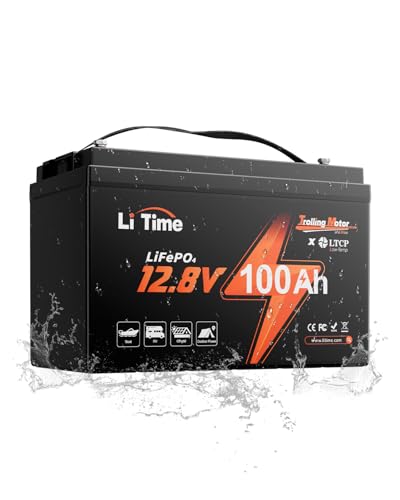
This LiTime battery emphasizes ABYC-grade protection with triple safeguards against dust, water, and salt spray, alongside protections against overcharge and overheating. The low-temperature feature prevents charging below 32°F and discharging below -4°F, which helps extend lifespan in winter conditions. It also includes a trolling motor-ready design with TVS protection against voltage spikes, contributing to stability on rough waters. The built-in 100A BMS supports substantial current needs for trolling motors and related devices on boats and RVs.
For boaters in cooler climates, this model’s cold-weather protection is a notable advantage. Users should ensure their trolling motor and charge controllers can leverage the BMS to maximize cycle life and maintain consistent voltage across the day’s voyage.
Newport Trolling Motor Smart Battery Box

The Newport Smart Battery Box combines a practical power center with USB and DC ports, designed to simplify trolling motor connections and accessory use. Its external battery ports enable quick hookups without opening the box, reducing setup time on deck. Dual integrated circuit breakers provide protection against electrical faults, while the included USB charger and 12V accessory port support charging and powering peripheral devices. This option is well-suited for anglers seeking a modular, plug-and-play approach to their trolling motor system.
As a sealed, maintenance-free option, it appeals to users who prioritize straightforward maintenance and safe, compact storage. Compatibility with a range of trolling motors is an important consideration, as is ensuring adequate capacity for longer trips or multi-day excursions.
Buying Guide: Key Purchase Considerations
- Battery chemistry: LiFePO4 batteries deliver longer life, lighter weight, and deeper discharge than AGM lead-acid options, but at a higher upfront cost. AGM versions are typically lower price and maintenance-free but heavier with shorter cycle life.
- Cycle life and depth of discharge (DOD): Look for higher cycle life and usable capacity. LiFePO4 batteries often advertise 3000–15,000 cycles depending on DOD, which translates to longer service life.
- Cold-weather performance: Low-temperature protection helps prevent damage from freezing and improves reliability in winter conditions on the water.
- BMS features: A robust Battery Management System prevents overcharge, over-discharge, short circuits, and temperature extremes, extending life and safety.
- Weight and space: Lithium options are significantly lighter, freeing up space and improving vessel handling. AGM options are heavier but can be sufficient for compact setups or budget-conscious buyers.
- Monitoring and connectivity: Bluetooth-enabled monitoring allows remote status checks, improving maintenance efficiency and trip planning.
- System integration: Ensure compatibility with your trolling motor’s voltage, charger, and any series/parallel configurations. Some batteries support multi-battery fleets or higher-voltage arrangements via stacking.
- Warranty and support: Check manufacturer warranties and access to service in your region to protect your investment over time.
In selecting a battery for trolling motors, balance upfront cost against long-term operational benefits such as lifespan, weight savings, cold-weather resilience, and monitoring capabilities. For frequent use or extended trips, lithium options with strong BMS and shielding are often the most economical over the life of the vessel. For casual use or budget constraints, sealed AGM batteries remain a reliable, maintenance-free alternative with solid performance in moderate climates.