Best Batteries for Van Life: Reliable Power on the Road
Van life demands power you can depend on, even in remote spots. The following selections cover AGM, LiFePO4, and portable options, balancing weight, cycle life, temperature tolerance, and charging compatibility for off-grid living, camping, and mobile work setups. This guide highlights five top batteries tailored for vans, with practical considerations to help you choose the right fit for your needs.
Summary of chosen products:
| Product | Type | Capacity | BMS / Protection | Notes |
|---|---|---|---|---|
| Mighty Max MM-H7 Start and Stop | AGM Car Battery | 80Ah | 850 CCA, sealed, spill-proof | Strong cold-start power; long reserve |
| GRNOE 2-Pack 12V 100Ah LiFePO4 | LiFePO4 Battery | 100Ah each | Built-in 100A BMS, low-temp protection | Lightweight, deep cycle capability |
| GRNOE 4-Pack 12V 100Ah LiFePO4 | LiFePO4 Battery | 100Ah each | Built-in 100A BMS, low-temp protection | High density, long lifespan |
| GREENOE 12V 100Ah LiFePO4 | LiFePO4 Battery | 100Ah | Built-in BMS, low-temp cut-off | Durable, 15000+ cycles |
| Interstate MTZ-34 | AGM Automotive Battery | 63Ah | 800 CCA, pure lead AGM | Trusted automotive performance |
Mighty Max MM-H7 Start and Stop Car Battery
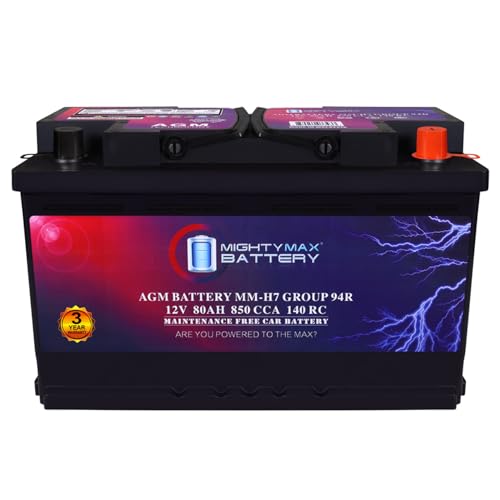
The Mighty Max MM-H7 is a 12V AGM battery rated at 80Ah with 850 CCA. It is designed for robust cold starts and reliable performance in diverse weather. Its 140-minute reserve capacity supports longer, steadier run times, and the sealed, spill-proof AGM design reduces maintenance while improving safety in tight van layouts. This battery’s high-discharge output and strong recovery characteristics help maintain stable power when it matters most, whether you’re running a fridge, lighting, or essential electronics on the road.
GRNOE 2-Pack 12V 100Ah LiFePO4 Battery

This 2-pack from GRNOE delivers 12V 100Ah LiFePO4 batteries with a built-in 100A BMS and low-temperature protection. Weighing about 22.5 pounds each, they offer high energy density at roughly 57 Wh per liter, yielding substantial power with significantly less weight than traditional lead-acid equivalents. The advanced BMS guards against overheating, overcurrent, overcharge, and short circuits. Note that a higher charger voltage (around 14.6V) is recommended for full charging, and cold-weather operation is enabled down to roughly -4°F.
GRNOE 4-Pack 12V 100Ah LiFePO4 Battery

This 4-pack from GRNOE presents four 12V 100Ah LiFePO4 batteries with built-in 100A BMS and low-temp protection. They share the same lightweight, space-saving design and long cycle life (often cited as 15000 cycles in comparable models). The BMS actively defends the pack from temperature extremes, overcurrent, overcharge, and short circuits. As with LiFePO4 configurations, ensure proper charging voltage and system compatibility to maximize lifespan and performance in a van setup.
GREENOE 12V 100Ah LiFePO4 Battery

GREENOE’s 12V 100Ah LiFePO4 battery emphasizes safety and longevity. It is UL-certified and constructed with Grade A+ LiFePO4 cells to minimize thermal risk and ensure stable energy density. The battery is designed for quiet, long-lasting power with an expected practical life of around 10 years or more, depending on usage. Its built-in BMS includes protections against overheating, overcurrent, over-discharge, and short circuits, and recommends charging at a controlled 14.6V to reach full capacity.
GREENOE 3-Pack 12V 100Ah LiFePO4 Battery

This 3-pack option from GREENOE offers identical 12V 100Ah LiFePO4 cells with a built-in 100A BMS and robust low-temperature protection. The pack emphasizes a long cycle life, claiming up to 15,000 deep cycles and a practical 10-year service horizon with proper care. A key consideration is ensuring your charging setup uses an appropriate charger voltage (at or near 14.6V) and that your load management aligns with the capacity and number of packs used.
Interstate Batteries MTZ-34 Automotive Battery

The Interstate MTZ-34 is a 12V automotive AGM with 800 CCA, offering solid cranking power and reliability for vehicles with varied accessory loads. As a pure lead AGM battery, it’s well-suited for van life scenarios where one needs straightforward, maintenance-free power for vehicle systems, auxiliary electronics, and apps that demand dependable startup performance. It may be heavier than LiFePO4 options but benefits from established availability and proven performance in automotive contexts.
Buying Guide
- Battery chemistry: LiFePO4 offers long cycle life, lighter weight, and stable performance in cold environments, making it ideal for van dwellers aiming for deep cycling and off-grid use. AGM lead-acid options provide robust starter power and reliability with straightforward maintenance.
- Capacity and cycle life: For van life, prioritize higher Ah ratings if you run refrigerators, lighting, and charging stations overnight. Look for cycle life claims (how many full charge-discharge cycles) to estimate total lifespan and replacement intervals.
- Temperature tolerance: Off-grid life often goes without consistent climate control. BMS features such as low-temperature cut-off protect LiFePO4 batteries from damage in freezing weather, while AGM batteries perform well in moderate climates with proper ventilation.
- Weight and space: LiFePO4 packs are lighter for the same capacity, which matters for roof racks or under-seat installations. Consider the physical dimensions and enclosure compatibility with your van’s layout.
- BMS protections: A built-in BMS is essential for LiFePO4 to guard against overcharge, over-discharge, short circuits, and overheating. Ensure the BMS matches your charging source (solar, alternator, or AC charger) and voltage target (commonly 14.4–14.6V for LiFePO4).
- Charging compatibility: If using a mix of solar and vehicle power, confirm that your charger and inverter/charger system can support the battery’s charging profile. Some LiFePO4 cells require a higher charging voltage to reach full capacity.
- System design: Decide how many distinct battery packs you’ll need and how you’ll wire them (parallel for increased capacity, or separate banks for critical loads). Always follow manufacturer guidance to avoid misconfiguration.
- Lifecycle economics: While LiFePO4 cells carry a higher upfront cost, their longer lifespan and deeper cycles can reduce replacement frequency and total cost of ownership over time.