Best Battery for Your RV: Top 5 Power Options for Off-Grid Travel
Choosing the right RV battery is essential for reliable camping, smooth solar setups, and peaceful road trips. This guide highlights five highly compatible options, balancing safety, longevity, and performance. From AGM to LiFePO4, each option suits different RV routines, climates, and charging methods. The table below provides quick at-a-glance details to help you compare capacity, chemistry, and typical use cases.
| Product | Chemistry | Typical Use | Approx. Capacity | Notes |
|---|---|---|---|---|
| Weize Deep Cycle AGM 100Ah | AGM | RV/Off-grid | 100Ah | Maintenance-free; low self-discharge |
| GRNOE 2-Pack 100Ah LiFePO4 | LiFePO4 | RV/Van/Solar | 2 x 100Ah | Built-in 100A BMS; cold-temperature protection |
| ECO-WORTHY 280Ah LiFePO4 | LiFePO4 | Off-grid/Camper | 280Ah | Bluetooth app; 200A BMS |
| Renogy Deep Cycle AGM 100Ah | AGM | RV/Boat | 100Ah | Safe, maintenance-free; scalable |
| ELEFAST 330Ah LiFePO4 | LiFePO4 | Full RV power | 330Ah | 200A BMS; high capacity |
Weize 100Ah AGM Battery for RV and Off-Grid
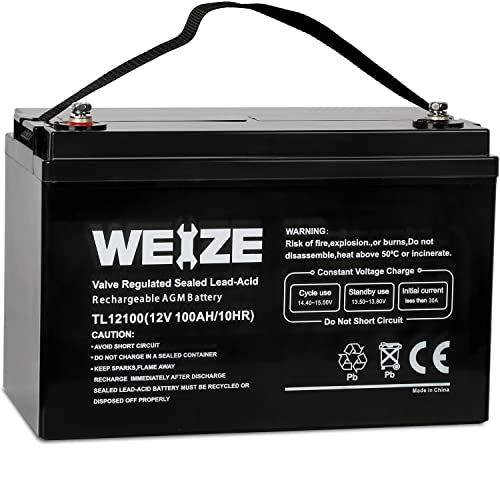
The Weize Deep Cycle AGM 12V 100Ah battery delivers a maintenance-free option for RV users. Manufactured with absorbed glass mat (AGM) technology, it minimizes acid leakage and reduces maintenance tasks. Its compact dimensions are suited for spaces where weight and fit matter. The battery supports a broad charging temperature range and offers a max discharge current around 1150A for short bursts, making it suitable for starting and running essential appliances during trips. Low self-discharge helps with longer storage between use, provided it’s kept within recommended temperatures.
GRNOE 2-Pack 100Ah LiFePO4 for RVs

The GRNOE 12V 100Ah LiFePO4 option comes as a smart, compact solution for RVs needing long, deep cycles. Each battery measures 12.9 x 6.7 x 8.6 inches and weighs about 22.5 pounds, offering higher energy density than traditional SLA/AGM packs. A built-in BMS provides protection against overcharge, over-discharge, overcurrent, and short circuits, while a low-temperature cutoff helps preserve performance in cold weather. The set typically requires compatible charging gear and attention to wiring when using multiple units in series or parallel.
ECO-WORTHY 280Ah LiFePO4 RV Battery with Bluetooth

This ECO-WORTHY 280Ah LiFePO4 battery integrates a real-time monitoring app to track voltage, current, and capacity. Its 200A BMS provides multi-level protection, including low-temperature cutoffs to prevent damage during cold starts. A durable metal frame and internal compression fixtures enhance durability and shock resistance, suitable for rugged RV environments. Real-time data helps RV owners optimize charging cycles, especially when paired with solar or generator systems.
Renogy 100Ah AGM Deep Cycle Battery

Renogy’s Deep Cycle AGM 12V 100Ah battery offers a safe, maintenance-free option with a long track record. AGM chemistry provides stability and resistance to vibrations—useful for road trips and off-grid setups. The design supports series and parallel connections (up to four in parallel) to scale capacity for larger RV systems. While not as light as lithium options, these batteries have solid performance with fewer charging requirements and broad compatibility with standard RV charging equipment.
ELEFAST 330Ah LiFePO4 RV Battery

The ELEFAST 330Ah LiFePO4 battery delivers high capacity for RVs that run multiple appliances or large power loads. With a built-in 200A BMS and Bluetooth monitoring, users can track performance intimately and manage charging cycles. The battery supports series and parallel configurations to scale up power, and low-temperature protection helps maintain performance in cold climates. It’s well-suited for enthusiasts seeking extended autonomy and the flexibility to power advanced RV amenities such as air conditioning and high-demand devices.
Buying Guide: Key Purchase Considerations for RV Batteries
Battery chemistry matters: AGM batteries are maintenance-free and robust for typical RV use, but LiFePO4 packs offer longer lifespans, higher cycle counts, lighter weight, and deeper discharge capabilities. If you plan frequent long trips or extensive solar charging, LiFePO4 can be more cost-effective over time, despite higher upfront costs.
Capacity and load needs: Start by listing essential devices (refrigerator, lights, water heater, inverter). Multiply their combined wattage by the number of hours you expect to run them daily to estimate amp-hours needed. Choose a battery with a buffer above that figure to avoid deep discharges that shorten life.
Battery management system (BMS): A strong BMS protects against overcharge, over-discharge, short circuits, and high temperatures. For LiFePO4, look for a BMS with at least 200A to support high-demand appliances and potential expansions.
Temperature and climate: Cold-weather operation varies by chemistry. LiFePO4 performs well in a wide range and often includes low-temperature protections. AGM can tolerate some cold but may discharge faster in extreme conditions.
Charging compatibility: Verify compatibility with your RV’s charging system, solar controller, and alternator. Some LiFePO4 packs require specific charging voltages or dedicated lithium chargers. Ensure the system can safely handle your chosen battery type.
Weight and space: Lithium options are lighter per amp-hour, which benefits larger RV layouts or limited storage. Heavier AGM batteries may still be preferred for cost-sensitive setups or where weight is less critical.
Maintenance and warranties: AGM batteries tend to require less monitoring than flooded lead-acid but still benefit from regular checks. LiFePO4 batteries usually offer longer warranties and a much longer cycle life, but verify warranty terms and return policies with the seller.
Scalability: If you anticipate growing your solar array or adding more loads, select batteries that are easy to connect in series or parallel and that maintain safe operating margins when expanded.
Cost of ownership: Consider the total cost of ownership, including purchase price, replacement frequency, charging equipment, and potential savings from reduced maintenance and longer lifespan.
Safety and compliance: Choose products with robust safety certifications and documented testing. Proper venting is less of a concern with AGM and sealed LiFePO4 designs, but general handling and installation safety remain important.
Summary: For light RV use with occasional camping, an AGM pack can be sufficient and budget-friendly. For full-time or heavy-load RV users, LiFePO4 options offer longer life, better efficiency, and easier management, especially when paired with solar charging and smart monitoring.