Best Battery for RV Trailer: Top Picks for Reliable Power on the Road
Finding the right battery setup for an RV trailer ensures dependable power for lights, appliances, and comfort while camping or traveling. This guide highlights five well-regarded options that fit a variety of RV or trailer configurations, from box-style batteries to maintenance-free deep cycle options. Each product is evaluated for durability, ease of installation, and suitability for RV living. Use the buying guide at the end to compare key features and help determine the best match for your setup.
style=”display:none;”>Summary Table of Chosen Products
| Product | Brand | Type | Approximate Capacity | Key Benefit |
|---|---|---|---|---|
| NOCO Snap-Top BG31 Battery Box | NOCO | Battery Box (Group 24-31) | Group 24-31 compatibility | Rugged, easy install, protective enclosure |
| Weize Deep Cycle AGM 12V 100Ah | WEIZE | AGM Deep Cycle Battery | 100Ah | Low self-discharge, maintenance-free |
| Camco Double Battery Box | Camco | Double Battery Box | Two 6V or two 12V configurations | Durable, corrosion-resilient enclosure |
| NOCO Snap-Top BG27 Battery Box | NOCO | Battery Box (Group 27) | Group 27 compatibility | Rigid, easy mounting, versatile |
| NOCO Snap-Top BG24 Battery Box | NOCO | Battery Box (Group 24) | Group 24 compatibility | Snap-top design, straightforward install |
NOCO Snap-Top BG31 Battery Box

The Snap-Top BG31 is designed to hold Group 24–31 batteries, including automotive, marine, and RV types. Its rugged construction provides a stable, easily mounted enclosure with a snap-top design for quick access. Installation is simplified by pre-drilled internal pilot holes and a strap mount system for demanding setups, reducing the need for additional hardware. This box suits RVs needing a secure, weather-resistant battery housing that accommodates common large 12V batteries while keeping wiring protected.
Weize Deep Cycle AGM 12V 100Ah Battery
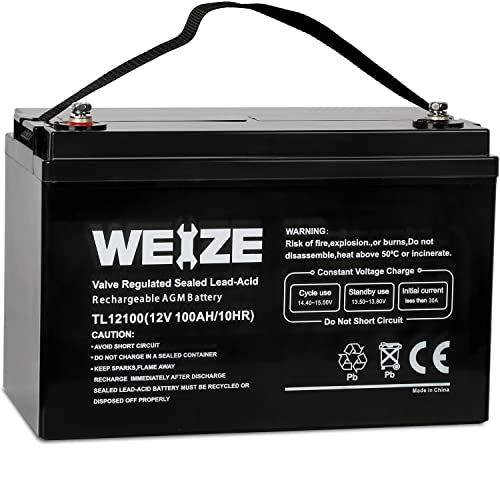
The Weize 100Ah AGM battery provides maintenance-free operation with a low self-discharge rate. Its sealed design minimizes the risk of acid leaks, making it suitable for RVs with limited venting. The battery supports 14°F to 122°F charging temperatures and up to 1100A peak discharge, offering reliable performance for camping seasons. The left-right terminal arrangement simplifies wiring in tight spaces, and the overall size fits many RV battery compartments.
Camco Double Battery Box
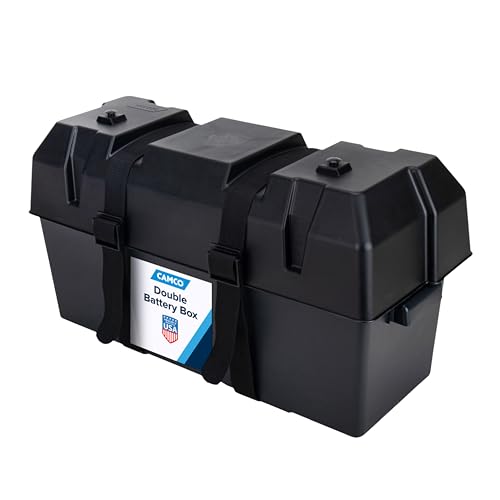
Camco’s Double Battery Box is designed to safely store two batteries, whether two 6V units or two 12V units such as Group 24/24M. The unit measures internal space to accommodate common RV configurations and uses a heavy-duty, corrosion-resilient polymer for durability in trailer environments. This enclosure helps protect batteries from impacts and weather while providing organized wiring space for dual-battery systems in RV trailers and boats.
NOCO Snap-Top BG27 Battery Box

The BG27 is tailored for Group 27 batteries and shares the SnapTop design that enhances rigidity and installation ease. Like the BG31, it uses pre-drilled holes and strap-mount options for robust installations in RV setups. This box is a good pick for trailers requiring a larger 12V battery in a secure, accessible enclosure with straightforward maintenance and access for periodic checks.
NOCO Snap-Top BG24 Battery Box

The BG24 option targets Group 24 batteries and emphasizes a rigid, snap-top enclosure designed for quick installation. It’s ideal for RV travelers who need a compact yet sturdy battery box that fits common Group 24 units, ensuring a neat, secure mounting solution that simplifies maintenance and accessibility on the road.
Buying Guide: Key Purchase Considerations
- Battery type and chemistry: AGM and LiFePO4 options offer maintenance-free operation, while traditional flooded batteries may require more care. For RVs, AGM and LiFePO4 typically provide better resistance to vibration and longer life in off-grid use.
- Capacity and runtime: Estimate daily power consumption to pick a battery with adequate amp-hour (Ah) capacity. For longer trips or higher power use, consider higher Ah ratings or a dual-battery setup.
- Box or enclosure compatibility: If choosing a battery box, ensure it fits the battery size (Group 24, 27, or 31) and matches your mounting space. Look for pre-drilled holes and strap-mount options to simplify installation.
- Durability and weather resistance: RV installations face vibration and exposure. Enclosures made from corrosion-resistant polymers or steel with waterproofing features help protect the battery system.
- Installation simplicity: Models with pre-drilled pilot holes and strap-mount systems reduce the need for extra brackets and hardware, speeding up DIY setups.
- Temperature considerations: Some chemistries and BMS systems perform better across a range of temperatures. Consider low-temperature protection if camping in cold climates.
- Maintenance needs: Maintenance-free options (AGM, LiFePO4) reduce upkeep. For users who prefer easy replacements, ensure compatibility with standard 12V RV systems.
- Expansion potential: If you foresee upgrading to a larger system, choose a box or enclosure that accommodates additional batteries or a dual-battery configuration.
Choosing the right combination of battery type and enclosure depends on RV size, power needs, and travel plans. The selections above emphasize compatibility with common RV battery sizes, ease of installation, and durability to withstand road conditions. Always verify the exact battery dimensions and terminal configurations to ensure a proper fit in your trailer’s battery compartment.