Best Battery Solutions for a Solar Generator Setup
The following article highlights top battery-powered options designed to pair with solar generators for reliable off-grid living, camping, RV trips, and emergency power. Each product is evaluated for capacity, charging speed, and output versatility to help you choose a system that fits your power needs and travel lifestyle.
| Product | Brand | Capacity (Wh) | Max Output (W) |
|---|---|---|---|
| Solar Generator 1000 V2 | Jackery | 1070 | 1500 |
| Delta 2 Portable Power Station | EF ECOFLOW | 1024 | 1800 |
| HomePower 3000 Portable Power Station | Jackery | 3072 | 3600 |
| OUPES Mega 1 Portable Power Station | OUPES | 1024 | 2000 |
| SOLIX C300 | Anker | 288 | 300 |
Jackery Solar Generator 1000 V2 With 200W Solar Panel

The Jackery Solar Generator 1000 V2 combines a 1,070Wh LiFePO4 battery with a robust 1,500W AC output and a 3,000W surge peak. The system weighs around 23.8 pounds and includes a foldable handle for portability, making it well-suited for camping, RV trips, and emergency readiness. Its one-hour fast charging feature accelerates recharge times using emergency charging via the Jackery App, while ChargeShield 2.0 technology enhances safety and efficiency. A long 10-year lifespan with high-cycle endurance adds peace of mind for ongoing use.
Portable Solar Generator With Foldable 60W Panel

The ZeroKor 300W portable power station includes a foldable 60W solar panel and a 280Wh lithium battery. It provides multiple charging outlets including two 110V/300W AC outlets, USB ports, and a quick-charge USB-C option. A built-in flashlight with SOS mode supports outdoor use, and its MPPT-enabled solar charging provides a flexible off-grid charging solution. This compact system is ideal for light-duty camping, RV trips, and on-the-road power needs with straightforward operation.
EF ECOFLOW Delta 2 Portable Power Station

The Delta 2 delivers 1,024Wh of LiFePO4 capacity with expandable options and up to 1,800W AC output (with 15 outlets total in some configurations). Fast charging supports rapid top-ups from AC or solar inputs, and the LFP chemistry provides long life with more than 3,000 cycles under typical use. It’s designed for home backup, camping, and RV scenarios where quiet, reliable power with flexible recharging is essential.
Jackery HomePower 3000 Portable Power Station

The HomePower 3000 offers a high-capacity 3,072Wh LiFePO4 battery with a 3,600W continuous output and a 7,200W surge, making it well-suited for essential home backup and larger RV setups. An included 20ms UPS feature helps maintain continuity for devices that require consistent power, such as routers, medical equipment, and security cameras during outages. The system supports expansion with solar panels for off-grid resilience.
OUPES Mega 1 Portable Power Station
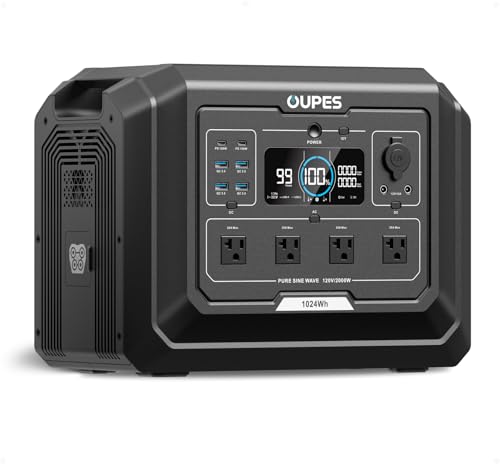
The OUPES Mega 1 features a 1,024Wh LiFePO4 battery and a powerful 2,000W continuous output (4,500W peak). It is designed for home backup and off-grid use with expandability up to 5kWh via additional batteries. Dual fast charging options allow 0-80% in 36 minutes, enhancing readiness for rapid power recovery after outages. The unit operates well for refrigerators, CPAP machines, and other essential appliances in diverse environments.
Anker Solar Generator SOLIX C300

The SOLIX C300 delivers 288Wh of portable power with 300W continuous output and 600W surge. It features 8 charging ports, including multiple USB-C options and AC outlets, along with a compact, travel-friendly design. Its 140W two-way USB-C fast charging supports rapid recharging from a wall or solar input, ensuring you stay powered during outdoor expeditions or power interruptions.
Buying Guide: Key Purchase Considerations
- Battery chemistry and lifespan: LiFePO4 batteries offer longer cycle life and stability in temperature extremes, which is advantageous for extended off-grid use.
- Capacity vs. load needs: Compare watt-hour ratings against your typical daily energy consumption. Heavy use (air conditioners, refrigerators) benefits from higher capacity and higher continuous output.
- AC vs. DC output options: Ensure the unit provides enough AC outlets and appropriate USB-C/USB-A ports for charging devices, plus any specific equipment you rely on.
- Charging speed and methods: Fast charging (e.g., 0-80% in under an hour) is valuable for time-sensitive needs. Check compatibility with solar panels, wall outlets, and car charging.
- UPS and surge performance: A low UPS response time and solid surge capacity protect sensitive electronics during outages.
- Expandability: Some models support additional batteries to scale capacity up to several kilowatt-hours, useful for long outages or larger households.
- Portability: Weight and handle design influence how easily you transport the unit on camping trips or in a vehicle.
- Warranty and support: A longer warranty and responsive support help safeguard your investment in off-grid power.
- Cost of ownership: Consider not only the initial price but potential tax credits, energy rebates, and long-term efficiency gains when evaluating value.
- Solar compatibility: Verify compatibility with your solar panel setup, including MPPT features, to optimize charging efficiency in varying light conditions.
Across these options, users seeking portable, versatile power for camping typically prioritize lighter weight with decent capacity, while home backup scenarios favor higher capacity and robust UPS performance. For emergency planning, systems with expandable capacity and reliable LiFePO4 chemistry provide strong long-term resilience. Align your choice with your typical use case, climate, and travel plans to maximize return on your investment.