Best Bike Carriers for Trucks: Top 5 2-Inch Receiver Racks
Choosing the right bike carrier for a truck involves factors like capacity, compatibility with fat tires, ease of loading, and how well the rack protects your bikes. This guide highlights five strong options that fit 2-inch receivers and are well-suited for American trucks. Each product below includes load capacity, tilt or fold features, and security considerations to help you compare at a glance.
| Product | Brand | Capacity | Notes |
|---|---|---|---|
| Young Electric E-Bike Rack with Ramp | Young Electric | 200 lbs total (100 lbs per bike) | Fits up to 5″ tires; V-groove ramp; anti-wobble |
| Young Bike Rack Hitch for Car | Young Electric | 200 lbs total | Tilts for trunk access; folds for storage |
| MAXXHAUL 50025 Hitch Mount 2 Bike Rack | MAXXHAUL | 200 lbs total | 1-1/4″ and 2″ hitch adapters; versatile |
| Hitch-Mount Bike Rack For Ebike Heavy-Duty | XtraEzzy | 300 lbs | 2-in-1 cargo carrier and rack; fits up to 5.5″ tires |
| MaxxHaul 70210 4-Bike Rack | MAXXHAUL | 150 lbs towing capacity | Swing-down for rear access; accommodates up to 4 bikes |
Below are five detailed product sections to help compare performance, installation, and practical use on typical American pickup trucks or large SUVs. Each section includes a direct link to Amazon, an image, and the key features relevant to truck owners.
Young Electric E-Bike Rack With Ramp

The Young Electric E-Bike Rack with Ramp is designed for heavy-duty electric bikes and fat-tire bikes, supporting up to 200 lbs total (100 lbs per bike). It features a V-groove ramp for smoother loading and unloading, accommodating tires up to 5″ wide and wheelbases up to 50″. Compatible with 2-inch receivers, the setup requires no extra bar for heavier step-thru e-bikes. A patented anti-wobble design and improved grip on support bars enhance stability during transit. The rack uses a three-point ratchet strap system with padding to prevent scratches and damage to frames. Installation can be completed with the included manual or E-manual.
Young Bike Rack Hitch for Car
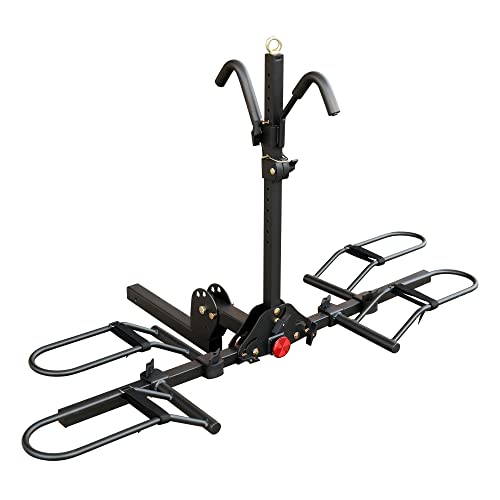
This hitch rack offers secure, wobble-free transport for two bikes up to 200 lbs total. Soft padded hooks prevent frame scratches and sway, while a hitch tightener ensures a snug fit on 2-inch receivers. The rack includes a rear safety reflector to improve night-time visibility. When not in use, it folds for easy storage, and the quick-release lever tilts the rack down for trunk access without removing bikes. It accepts wheels ranging from 20″ to 29″ and tires up to 5 inches wide, accommodating mountain, road, and hybrid bikes.
MAXXHAUL 50025 Hitch Mount 2 Bike Rack
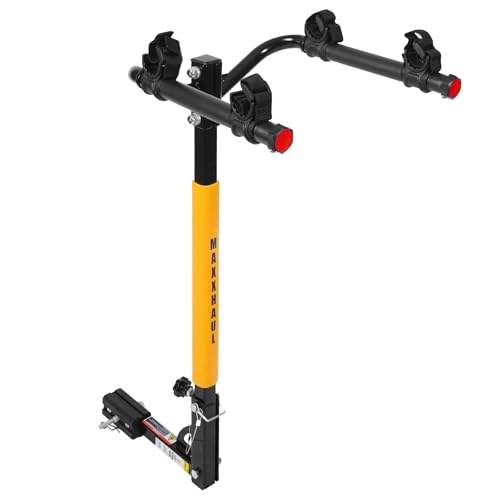
MAXXHAUL’s 50025 model focuses on durable hitch mounting for a broad range of vehicles. It includes adapters to fit both 1-1/4″ and 2″ hitch receivers, making it compatible with Class I through IV hitches. The design centers on secure bike transportation with improved rubber cradles and buckle-type straps to keep bikes stable during travel. This rack is positioned as a practical, budget-conscious choice for two bikes, with straightforward installation and reliable performance across car, truck, SUV, or minivan platforms.
Hitch-Mount Bike Rack For Ebike Heavy-Duty

The XtraEzzy 2-in-1 carrier combines a cargo carrier and a bike rack in a single 2-inch receiver unit with a 300 lbs capacity. It supports heavy-duty bikes and fat tires up to 5.5 inches wide, with wheelbases up to 51 inches. The product can be configured as a spacious cargo carrier or unfolded into a sturdy bicycle rack, making it versatile for long trips, camping gear, or equipment hauling. Its design targets travelers and enthusiasts who require modularity and strong load-bearing capability for diverse bike collections.
MaxxHaul 70210 4-Bike Rack
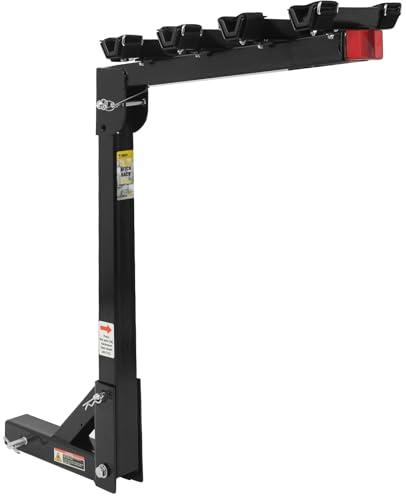
MaxxHaul’s 70210 is a 4-bike hitch rack designed for vans, SUVs, pickup trucks, and sedans with receiver hitches. It features a convenient swing-down function to provide rear access without removing bikes, along with a straightforward installation process. The rack’s design emphasizes safe, organized transport for multiple bikes, including secure hold-down straps and reflectors for enhanced visibility during travel. It is ideal for families or groups needing to haul several bicycles on a single trip.
Buying Guide
- Weight capacity: For trucks and larger bikes, prioritize racks that offer at least 200 lbs total capacity, with per-bike support if you carry e-bikes or fat-tire bikes.
- Bike compatibility: Check tire width and wheelbase ranges. Fat tires (up to 5–5.5″) require rugged clamps and wider cradles.
- Receiver compatibility: Most trucks use a 2-inch hitch; some racks also support 1-1/4″ adapters. Verify your vehicle’s hitch class and compatibility.
- Stability and security: Look for anti-wobble features, padded hooks or cradles, and locking hitch pins or security options to prevent theft and movement during travel.
- Loading and access: Tilting or folding racks ease trunk or tailgate access. Swing-down options can be particularly helpful for rear-door clearance on larger trucks.
- Easy installation and maintenance: Consider racks with straightforward assembly, clear manuals, and minimal maintenance requirements to keep setups ready for trips.
- Multi-use versatility: If you need extra cargo space, consider 2-in-1 cargo rack models or those with folding or removable components to switch between bikes and cargo hauling.
- Durability and materials: Aluminum and steel blends balance weight and strength; premium coatings improve corrosion resistance, especially for outdoor use.
- Security features: Prioritize racks with soft padding to prevent frame scratches and built-in reflectors or compatible locking options for nighttime visibility.
For truck owners, the right bike carrier balances capacity, ease of loading, and long-term durability. When evaluating options, prioritize models that handle heavier e-bikes, accommodate fat tires, and offer secure mounting without frame damage. Consider how often you’ll use the rack, whether you need rear access or extra cargo space, and how you store the rack when not in use. Always ensure your setup aligns with your vehicle’s hitch type and the overall weight limits of your truck’s rear axle.