Best Blind Spot Detection Systems for Safer Driving
Modern driving safety relies on reliable blind spot detection systems that alert you to vehicles in adjacent lanes. This article analyzes five top options to help American drivers compare features, performance, and installation considerations. Each product section includes its official listing and key capabilities so you can choose the right system for your vehicle and driving style.
| Product | Brand | Detection Type | Approx. Detection Range | Power |
|---|---|---|---|---|
| EASYGUARD EBS001 | EASYGUARD | Radar/LED alert | 6-12 meters | DC12V |
| BlueDex Universal Blind Spot Monitoring | BlueDex | Millimeter wave (24GHz) | 0.3-10 m (1-32.8 ft) | DC12V |
| TOTMOX Ultrasonic BSD Kit | TOTMOX | Ultrasonic | 0-5 m (customizable to 5 m) | Vehicle electrical |
| Pyle Ultrasonic BSD System | Pyle | Ultrasonic | 0-5 m | Vehicle power |
| BY-J 24GHz BSD System | BY-J | Millimeter wave | Not stated (BS detection typical) | Vehicle power |
EASYGUARD EBS001 Car Blind Spot Monitor System

The EASYGUARD EBS001 is designed as a lane-change assistance device that helps drivers identify moving objects in the near lane. It provides visual LED alerts when a vehicle enters the blind area and can alert during lane changes to reduce traffic risks. The system detects nearby objects within a range of 6 to 12 meters and responds to different driving states with distinct signaling, including rapid LED flashing and audible cues when the steering is engaged for lane changes.
BlueDex Universal Blind Spot Monitoring Assistant

The BlueDex system uses two 24GHz millimeter-wave sensors to monitor the vehicle’s blind spots. It enhances safety in low-visibility conditions and during adverse weather by detecting side and rear objects. The device features multiple alert modes: LED illumination when the turn signal is off, flashing LEDs with three buzzer beeps when the signal is on, and a double-flash warning combined with a three-beep alert for added caution during lane changes.
LivTee Blind Spot Mirror Kit
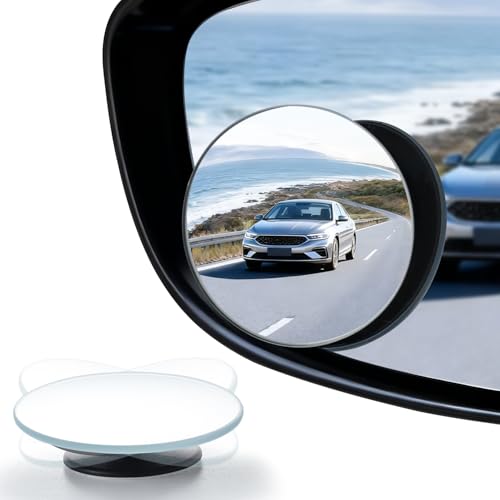
LivTee’s blind spot mirrors offer a low-cost enhancement to vehicle visibility through 360-degree rotating convex mirrors. Sold in a two-pack, these frameless mirrors expand the driver’s field of view, reducing lane-change risk. The mirrors are designed for easy installation with adjustable swivels and are built with durable HD glass for a clear, haze-free view in cars, SUVs, vans, and trucks.
LivTee Blind Spot Car Mirror – Frameless
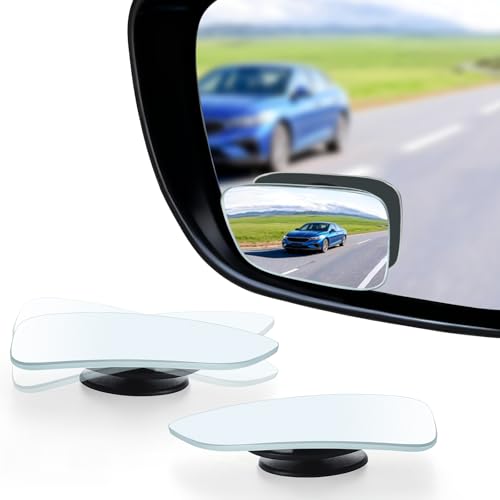
This LivTee model emphasizes a frameless, low-profile design with 360-degree adjustability. The pair aims to minimize blind spots across various vehicle types, including trucks and SUVs. The mirrors use HD glass and a slim profile to maintain a clean exterior while improving rear and side visibility, particularly in urban driving and complex lane changes.
Car Blind Spot Monitoring System (Wilove)

The Wilove BSD system uses 58 kHz ultrasonic sensors to detect vehicles in adjacent lanes and rear blind spots. It provides LED indicators and alert signals to warn drivers during lane changes. The system covers a detection range up to five meters, supporting safer maneuvering in everyday driving conditions and poor visibility scenarios.
BY-J 24GHz Millimeter Wave Blind Spot System

The BY-J system uses 24GHz millimeter-wave radar to detect moving objects in the rear and blind spots. It integrates BSD with lane-change assist functions and optional open-door warnings. The device emphasizes multi-function support to enhance lane-change safety and situational awareness in varying traffic conditions.
Buying Guide: Key Purchase Considerations
Detection method and range: Ultrasonic, infrared, and millimeter-wave sensors each have strengths. Millimeter-wave systems tend to perform better in rain or fog, while ultrasonic options can be cost-effective for basic BSD needs. Consider your typical driving environment and the required detection distance, especially for highway merging or city driving.
Alert methods: LED indicators, audible buzzers, and visual dashboards affect how quickly you respond. Some drivers prefer gentle LEDs with optional buzzer alerts, while others want rapid, multi-sensor warnings during lane changes. Testability and customization options matter for comfort and safety.
Installation and compatibility: Compatibility with your vehicle’s electrical system (DC12V common for aftermarket BSDs) and ease of installation are important. Some kits are DIY-friendly; others may require professional installation. Check mounting options, sensor placement, and whether trims or panels need modification.
Power consumption and reliability: Look for low power draw and robust connectors to withstand vibrations and environmental exposure. Durable housings and water resistance ratings help ensure long-term performance in diverse climates.
Extra features and integration: Some systems offer reverse parking integration, dual-sensor configurations, or multi-LED indicators for left and right sides. Consider whether you want mirror-based add-ons, standalone monitor boxes, or fully integrated vehicle alerts.
Warranty and support: A solid warranty and clear support channels reduce risk. Confirm the return policy, firmware updates, and access to replacement parts, especially for more niche or older models.