Best Booster Cables for Car: Top Picks for Safe Jump Starts
Choosing the right booster cables can mean the difference between a quick, safe jump start and a frustrating roadside moment. This guide highlights five highly rated options that balance conductivity, safety features, and durability for a range of vehicles from compact cars to SUVs. Each product includes thick insulation, sturdy clamps, and generous lengths to reach a distant battery. Use the buying guide below to compare specs and decide which cables best fit your vehicle and typical driving needs.
| Product | Gauge / Length | Key Benefit | Clamps / Safety |
|---|---|---|---|
| Energizer Jumper Cables | 6-Gauge, 16 Feet | Balanced power for most vehicles; durable protection | Thick vinyl coating; carrying case included |
| NOONE Jumper Cables | 10-Gauge, 10 Feet | Lightweight option with solid conductivity | Rubber insulated; high-quality clips |
| TOPDC TD-P0812 | 8-Gauge, 12 Feet | Strong clamps; good flexibility | Insulated rubber; secure grip |
| TOPDC TD-P0420 | 4-Gauge, 20 Feet | Long reach for hard-to-reach batteries | UL-listed; rugged vinyl coating |
| CARTMAN 4 Gauge | 4-Gauge, 20 Feet | Versatile, compatible with many battery types | Non-conducting rubber clamps; durable |
Energizer Jumper Cables for Car Battery
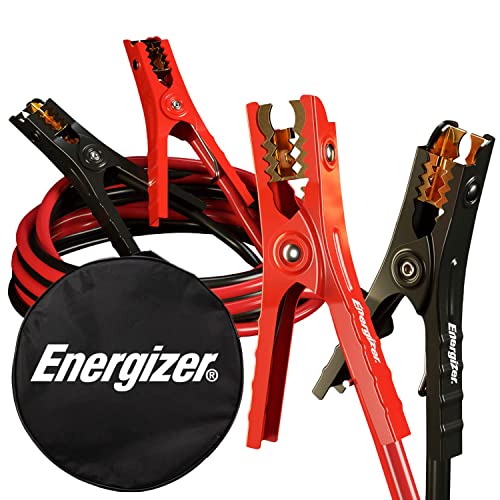
Energizer’s 16-foot, 6-gauge jumper cables are designed for a broad range of vehicles, including trucks and SUVs. The thick vinyl coating helps resist rust and corrosion, and the cables come with a carrying case for neat storage. The 16-foot length allows you to reach a battery in most mid-size to large cars with ease, while the 6-gauge construction provides solid current flow for reliable jump starts in cold or crowded spaces. These cables balance durability and flexibility, making them a safe, everyday choice for roadside emergencies.
NOONE Jumper Cables for Car Battery

NOONE offers a 10-foot, 10-gauge option suitable for vehicles with up to 3.0L gas engines. The rubber-covered insulation provides protection against leaks and heat, while copper-clad aluminum conductors support conductivity across temperature ranges from -40°F to 140°F. Strong clips and a robust PVC sheath add to safety and durability. This cable set is a practical lighter-weight option for those who don’t routinely jump-start larger engines.
TOPDC TD-P0812 8 Gauge 12 Feet Jumper Cables

TOPDC’s 8-gauge, 12-foot set focuses on safety and grip. It features four large alligator clamps with pronounced teeth and springs for strong bite force, plus insulating rubber to reduce shock risk. The design prioritizes easy connections and consistent performance in moderate weather, making it a capable mid-range option for standard sedans and compact SUVs. The durable clamps and protective coating contribute to long-term reliability.
TOPDC TD-P0420 4 Gauge 20 Feet Jumper Cables

TOPDC’s 4-gauge, 20-foot jumper cables maximize reach for larger vehicles or when the battery is located in a difficult-to-access area. They combine high-conductivity copper-clad aluminum with a thick vinyl coating that resists wear and corrosion. UL-listed, these cables are designed to perform under a wide temperature range (-40 °F to 140 °F). The clamp design emphasizes a secure grip on both top-post and side-terminal batteries, making it a versatile option for many cars, SUVs, and trucks.
CARTMAN 4 Gauge 20 Feet Jumper Cables

CARTMAN’s 4-gauge, 20-foot jumper cables feature patented non-conducting rubber-clad clamps for repeated safe use. They use copper-coated aluminum (CCA) conductors to balance conductivity and flexibility. The generous 20-foot length enables access from the far side of a vehicle or from around a full-size car, making them well suited for urban garages or cramped parking spots. The durable construction and wide clamp opening simplify clasping onto both top-post and side-terminal batteries.
Buying Guide: Key Purchase Considerations
- Gauge and length: A lower gauge (4–6) supports higher current for quick starts, while longer lengths (12–20 ft) extend reach in tight spaces or for larger vehicles.
- Clamps and insulation: Look for insulated, corrosion-resistant clamps with deep, secure bites. A thick vinyl or rubber coating protects against abrasion and weather exposure.
- Cable construction: Copper-clad aluminum (CCA) offers cost-effective conductivity with flexibility; pure copper is best for peak performance but tends to be pricier and heavier.
- Safety features: Fireproof or flame-resistant insulation, protective sleeves, and robust protective housings add safety during handling and use near hot engine bays.
- Portability and storage: A carrying bag or case helps protect cables in storage and makes transport easier for road trips or emergencies.
- Vehicle compatibility: For two- or three-battery setups or high-energy diesel engines, consider heavier gauge and longer cables to ensure reliable starts.
- Temperature tolerance: Choose cables rated to perform in extreme temperatures to avoid stiffness or reduced conductivity in winter or summer.
- Warranty and durability: A reliable warranty reflects quality and manufacturer confidence, reducing long-term replacement costs.
When selecting booster cables, balance the need for strong, safe performance with practicality for your vehicle type and typical parking scenarios. The options above provide varied combinations of gauge, length, and safety features to cover most common jump-start situations, from compact cars to larger SUVs. Always follow vehicle manufacturer recommendations and safety guidelines when using jumper cables.