Best Brake Pads for Honda Pilot to Ensure Safe and Quiet Driving
Choosing the best brake pads for your Honda Pilot is essential for maintaining safety, performance, and minimizing noise. This guide covers top-quality ceramic brake pad options compatible with Honda Pilot models from various years, focusing on durability, noise reduction, and braking efficiency. Below is a summary table outlining some of the best products selected for their compatibility, features, and reliability.
| Product Name | Brand | Compatibility | Key Feature |
|---|---|---|---|
| Bendix Premium SBC943 Ceramic Front Brake Pads for Honda Pilot 2008-2003 | Bendix | Honda Pilot 2003-2008 | OE replacement with enhanced safety and durability |
| cciyu D914 D865 8pcs Front & Rear Ceramic Brake Pads Kits 2003-2008 | cciyu | Honda Pilot 2003-2008 | Noise reduction and longer service life |
| BOSCH BC1281 QuietCast Premium Ceramic Disc Brake Pad Set (Rear) | BOSCH | Honda Pilot (select years), Acura MDX | Quiet operation with Molded Shim Technology |
| BOSCH BC1280 QuietCast Premium Ceramic Disc Brake Pad Set (Front) | BOSCH | Honda Pilot (select years), Acura MDX | QuietCast quiet braking with low dust |
| Power Stop 17-1723 Z17 Front Ceramic Brake Pads with Hardware | Power Stop | Honda Pilot 2016-2020 | Low dust formula and fast break-in |
Bendix Premium SBC943 Ceramic Front Brake Pads for Honda Pilot 2008-2003

Bendix delivers OE replacement brake pads designed specifically to meet original equipment manufacturer specifications for perfect fit and reliable function on Honda Pilot models from 2003 to 2008. These ceramic pads contain high-quality, durable materials that resist wear and corrosion, ensuring long lifespan and consistent braking performance. Bendix brake pads are engineered to minimize brake fade, which enhances safety by providing reliable stopping power even under demanding conditions. Their formulation also helps to provide quiet braking with reduced noise and dust generation.
cciyu D914 D865 8pcs Front & Rear Ceramic Brake Pads Kits 2003-2008 for Honda Pilot
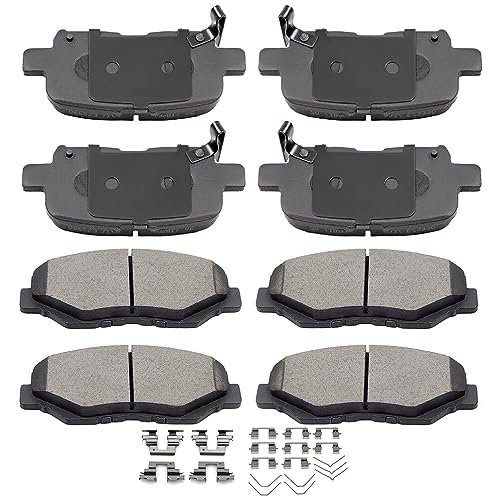
This set includes both front and rear ceramic brake pads compatible with 2003-2008 Honda Pilot models. The design incorporates gaskets acting as buffers between the caliper piston and the pad back plate, which reduce noise and vibration for quieter operation. The brake pads are thermal scored to speed up the break-in period and improve longevity. Their slots and chamfered edges enhance the brake bite and help absorb vibrations, further reducing brake noise and ensuring a smooth, consistent braking experience.
BOSCH BC1281 QuietCast Premium Ceramic Disc Brake Pad Set – Rear

The BOSCH QuietCast BC1281 rear ceramic brake pad set is engineered with Molded Shim Technology to reduce noise and vibrations. The multi-layer rubber core shims enhance bonding strength and corrosion resistance. Specifically designed for select Acura and Honda models, including the Pilot, these pads use carefully formulated ceramic friction material for exceptional stopping power, quiet operation, and minimal dust production. They are rigorously tested to uphold high durability and consistent performance.
BOSCH BC1280 QuietCast Premium Ceramic Disc Brake Pad Set – Front

Designed as the front counterpart to the BC1281 rear pads, the BOSCH QuietCast BC1280 front brake pads share the same innovative features, including Molded Shim Technology for superior noise reduction and rust-resistant coatings to extend life. These front pads offer consistent and quiet braking with low dust buildup, making them suitable for Honda Pilot drivers seeking reliable performance with less maintenance.
Power Stop 17-1723 Z17 Front Ceramic Brake Pads with Hardware

The Power Stop Z17 front brake pads are formulated with a low dust ceramic compound that keeps your wheels cleaner while providing effective braking power. Thermal scorching ensures a fast break-in period for consistent performance right from installation. Featuring chamfered and slotted designs similar to OEM pads, these units minimize noise and vibration, providing smooth, quiet stops on Honda Pilots made between 2016 and 2020. The included hardware simplifies installation and enhances operational reliability.
Buying Guide: Key Considerations When Choosing Brake Pads for Your Honda Pilot
When selecting brake pads for your Honda Pilot, it’s important to evaluate the following factors to ensure you get the best fit and performance for your driving needs:
Compatibility and Fit
Make sure the brake pads you buy specify compatibility with your Honda Pilot’s model year. Fitment ensures installation ease and optimal brake performance. Pads designed to OEM specifications often fit best and offer reliable braking characteristics.
Material Type
Ceramic brake pads are preferred for their quiet operation, low dust production, and longevity. They typically provide smooth braking and less wear on rotors compared to semi-metallic pads. Consider ceramic pads if you prioritize noise reduction and cleaner wheels.
Noise Reduction Technology
Look for features like molded shim technology, rubber core shims, or specialized gaskets that dampen vibration. These innovations minimize squealing and rattling noises often associated with brake pads.
Durability and Wear Resistance
Brake pads undergo wear based on material quality and driving conditions. Opt for pads with corrosion-resistant coatings and thermal scorch treatment to extend service life and maintain consistent friction performance over time.
Breaking-In Time
Some brake pads come pre-conditioned or scorched to shorten the break-in period. A quick break-in reduces the chances of uneven pad wear and improves immediate braking response.
Dust Levels
Brake dust accumulates on the wheels, affecting appearance and requiring frequent cleaning. Ceramic pads generally produce less dust, which helps keep wheels cleaner.
Performance Needs
Consider your driving habits – daily city driving, frequent towing, or spirited highway driving. Select pads that align with your performance expectations, whether it is longer pad life, better fade resistance, or soft-but-responsive braking.